


ILO, Labour Ministry partner to empower journalists with capacity building workshop
By Eberechi Obinagwam
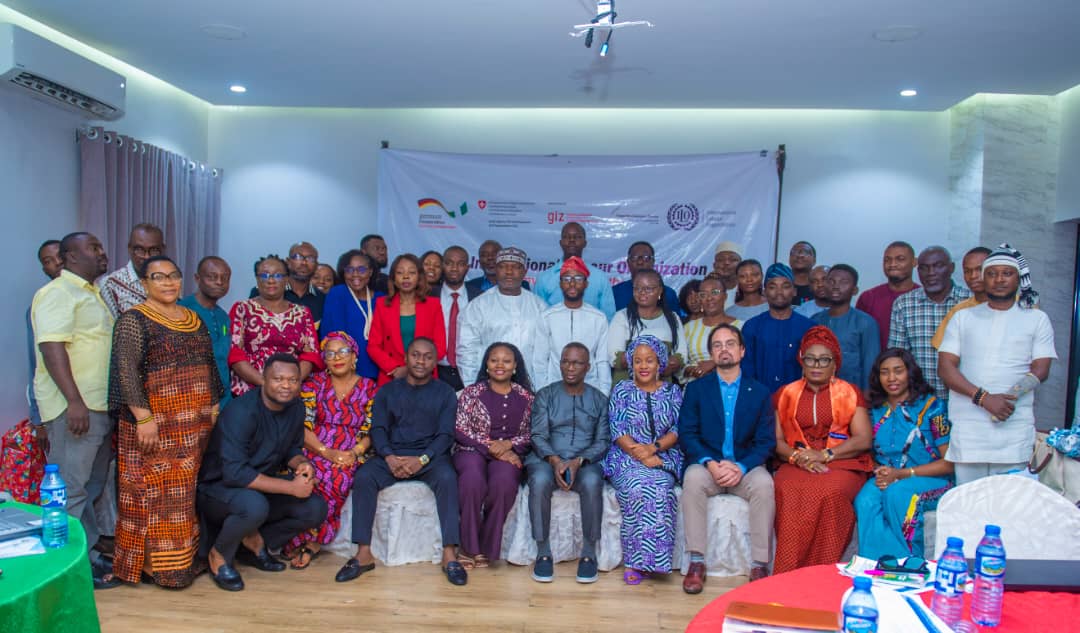
The International Labour Organization (ILO) and the Nigerian Federal Ministry of Labour and Employment have partnered to empower journalists, editors, and communication professionals in Nigeria through a two-day capacity-building workshop, tagged “Dialogue Series II” in Abuja.
At the workshop conducted within the strategic framework of Nigeria’s Decent Work Country Programme III (DWCP III) for 2023–2027 recently, journalists were taught on ILO reporting standards and national frameworks, including the National Employment Policy (NEP 2025), National Policy on Labour Migration (NPLM) and the National Migration Policy, while equipping them with practical tools such as the Global Media Toolkit on Reporting Forced Labour and Fair Recruitment, which has been adapted in several countries, including Nigeria.
Anders Johnsson, ILO Regional Communication and Public Information officer for Africa in his teaching on key labour market statistics, introduced journalists to ILOSTAT, and how to utilize it to access relevant data that would enhance their reporting. Example: where to find ILO data on employment via ILOSTAT and other data visualization tools like Flourish, Datawrapper, and Canva Graphics.
He also put journalists through on avoiding common pityfalls in labour reporting and oversimplifying a problem. Eg. Equaling unemployment with economic hardship while ignoring the massive role of underemployment.
Earlier, in a goodwill message by Dr. Vanessa Phala, director, ILO country office for Nigeria, Ghana, Liberia, Sierra Leone, and Liaison Office for ECOWAS said the event was convene to strengthen the capacity of journalists and sensitize tripartite constituents on inclusive and effective reporting on Employment, decent work and Labour Migration within the Framework of the DWCP III (2023–2027).
Phala who was represented by the Chinyere Emeka-Anuna, country officer, said in a dynamic and ever-evolving landscape of global labour markets, the role of media remains indispensable, adding that, accurate and responsible reporting shapes public perception, influences policy, and ultimately impacts the lives of countless individuals, hence the workshop.
The workshop was organised within the ambit of two GIZ-Funded ILO Projects: the Strengthening Employment and Employability Systems in Nigeria (SEESIN) Project under the framework of SKYE II programme and the Action for Improving Labour Migration Governance in Nigeria (ACTION Project) under the framework of GIZ-ZME Programme.
According to Chinyere, they directly contribute to the Decent Work Country Programme (DWCP III, 2023–2027) outcomes on strengthening labour market governance, improving access to decent jobs, improving labour migration governance and strengthening the capacities of relevant stakeholders on labour migration management.
Also, Halima Bitrus-Austin, Assistant Chief Labour Officer, Ministry of Labour and Employment commended ILO and all partners for convening the timely engagement and all participants for their commitment to improving the quality of labour and migration reportage in Nigeria. “Your collaboration is vital in ensuring that narratives around employment and migration reflect accuracy, balance, and the dignity of workers everywhere,” she said.
“The Federal Ministry of Labour and Employment remains fully committed to supporting initiatives that promote decent work, fair recruitment, and gender-responsive labour migration governance. We believe that the insights gained from this workshop will contribute significantly to strengthening Nigeria’s labour market information and enhancing the visibility and understanding of decent work priorities nationwide,” she added.
Aishatu Dirisu, National Project Coordinator– CO Abuja from Strengthening Employment and Employability Systems in Nigeria (SEESIN), said the project has supported to ensure advancements in the employment governance policy frameworks, including; the launch of a revised National Employment Policy (NEP)2025, which is the culmination of tripartite consultations led by the Federal Ministry of Labour and Employment.
The National stakeholders including the National Employment Council (NEC) have been capacitated to implement Nigeria’s gender-responsive and inclusive NEP 2025 and ongoing generation of evidence to strengthen the delivery of quality apprenticeships and skills development in response to labour-market needs in Nigeria.

