How corruption forced me out of Nigeria’s oil industry – Uma Eleazu
- Says nothing is happening under Tinubu’s watch
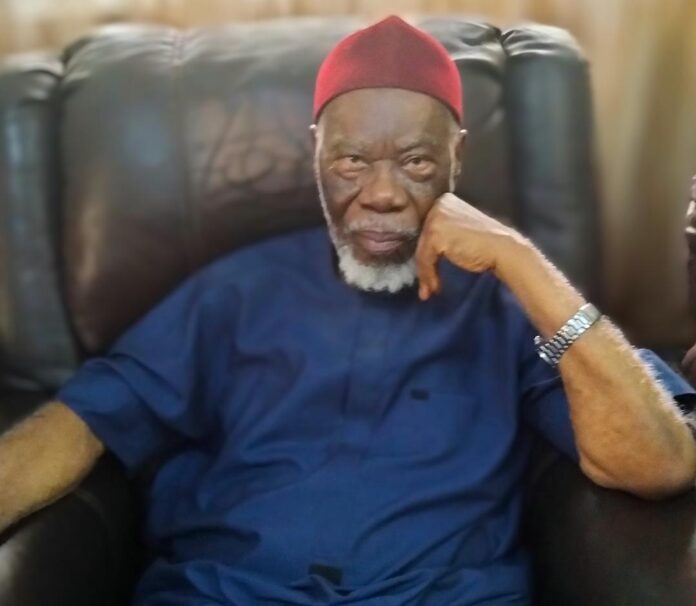
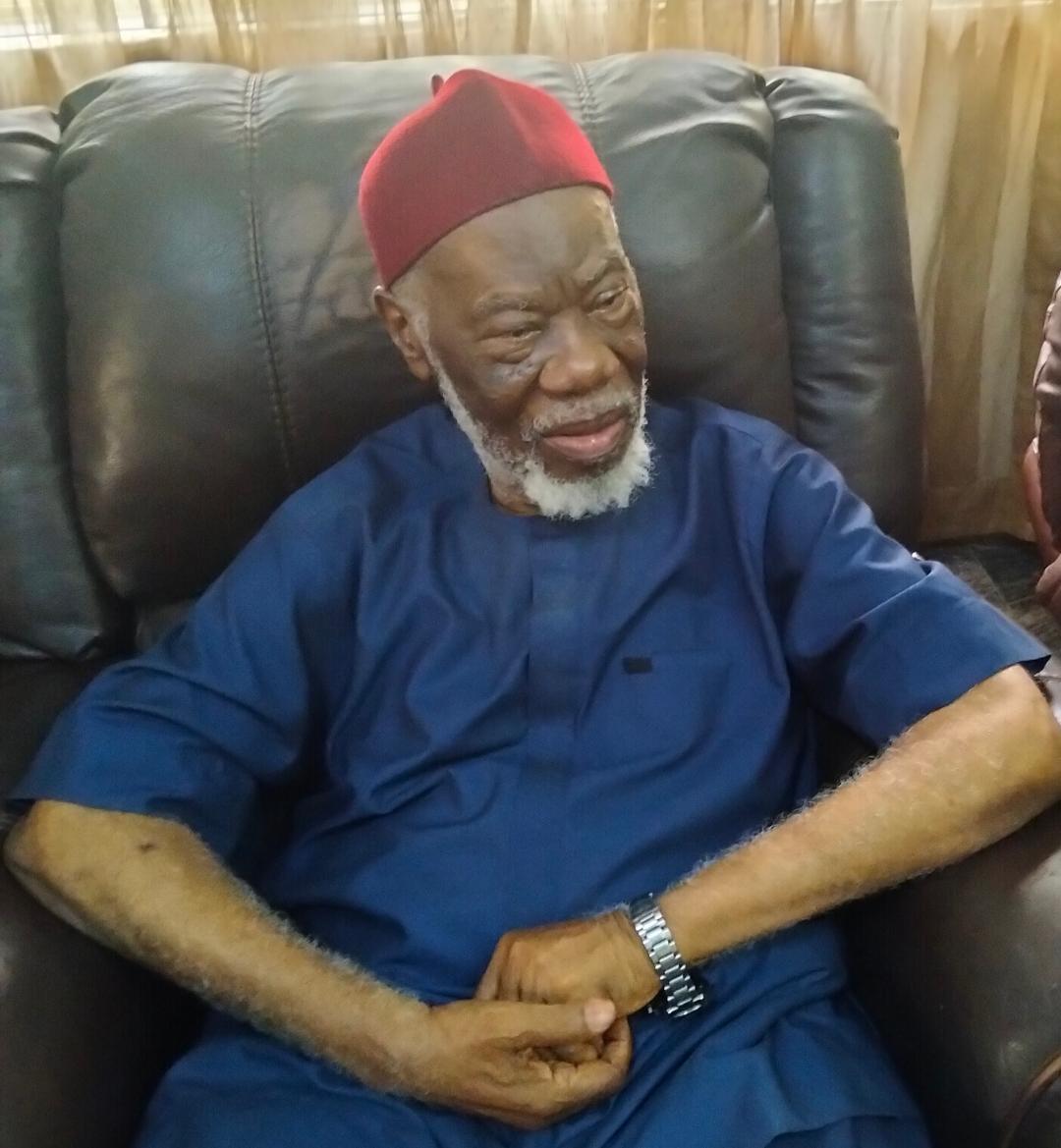
On Monday, June 16, elder statesman, Dr. Uma Eleazu, will be 95 years old. Preparatory to the celebrations which will start on Saturday, June 14, TheNiche trio of IKECHUKWU AMAECHI, EMEKA ALEX-DURU and EUGENE ONYEJI sat down with the nonagenarian almost two months ago on April 17 at his Lekki home for an exclusive interview that lasted three hours.
And it was a bumper harvest, a treasure trove of information about the county’s heritage and failings – what was, what is and future possibilities. At 95, Elder Eleazu remains razor sharp remembering the minutest details of events that happened decades ago. He is an encyclopedia of sorts and an intellectual extraordinaire who has seen it all and his life is intertwined with the history and story of Nigeria.
He was doing his Ph.D. when the civil war started. He regrets not being around to defend Biafra as most of his age mates did.
Nevertheless, when he eventually returned, he served Nigeria fervently in various capacities in both the public and private sectors: He set up the National Institute for Policy and Strategic Studies (NIPSS), Kuru, served in the 1978 Constitution Drafting Committee (CDC) set up by General Olusegun Obasanjo to midwife the 1979 Constitution and was also a member of the Constituent Assembly.
Uma Eleazu was invited by General Abdulsalami Abubakar to be part of the Constitution Debate Coordinating Committee that midwifed the 1999 Constitution and served as chairman of Pipelines Products Marketing Company (PPMC) with the mandate to commercialise its operations. He once headed the Manufacturers Association of Nigeria (MAN). Pa Eleazu had consulted for both the United Nations Development Programme (UNDP) and United Nations Industrial Development Organisation (UNIDO).
When General Ibrahim Babangida started his ill-fated transition programme, he threw his political hat in the ring, aspiring to be president but got his fingers badly burnt in the political arena.
READ ALSO: Frederick Forsyth: Life as a thriller writer, fighter pilot, journalist and spy
To mark his 90th birthday, he authored a book, “Nigeria, As I See It: Reflections on the Challenge of Leadership,” where he lamented Nigeria’s precarious state: “It looks as if we are in a vehicle that is going downhill, and the driver and the conductors are fighting so that they cannot even apply the brakes and they don’t even know that they are not just drifting down hill, but there is a precipice, which they are going to fall into. The state of the nation is very precarious.”
At 95, he is still writing another book. “Hopefully, I will finish it,” he says.
He does not believe that Nigeria’s problem lies with the 1999 Constitution as some people think.
“I have argued elsewhere that our problem is not the Constitution because well-meaning politicians can use the same Constitution that we put together in 1999 and run this country well. It is a bad workman that quarrels with his tools. So, the problem is not the constitution,” he insists.
But he believes, and rightly so, that corruption is a huge problem. Narrating his experience at the PPMC when Prof Jubril Aminu was the Minister of Petroleum, he, literally dismisses Nigeria’s oil industry as a cesspool of corruption.
Unlike the false hope raised by the immediate past management of the NNPCL, Dr. Eleazu discloses that the Warri Refinery has no capacity to produce PMS.
“Right from the word go, Warri Refinery was not producing PMS, it was producing only diesel, LPFO etc. Port Harcourt refinery was producing PMS up to a point but also suffered the same thing that Warri Refinery suffered, which is not having a Fluid Catalytic Cracking (FCC) unit, also known as a “Cat Cracker,” which is a critical piece of equipment in oil refineries that converts heavy crude oil fractions into lighter, more valuable products like gasoline.”
And the question is: Didn’t the Mele Kyari-led NNPCL management know this?
But that was not the only thing he found out as the PPMC board chairman. He also discovered that “all this noise about subsidy was mere thrash.”
“There was no subsidy. Nobody ever put subsidy on oil. Right down to Mrs. Alison-Madueke. What was happening was that they were subsiding importers to go and bring back Nigeria’s oil taken as crude to somewhere near Saudi Arabia and United Arab Emirates and refined there… Many people don’t believe me when I say it but I think they are finding out now,” he said.
When he could not stand the corruption in the oil industry, he threw in the towel.
He was nostalgic discussing his first encounter with Dr. Nnamdi Azikiwe, his role model in the Sabo Yaba office of the West African Pilot.
He likens his first encounter with Zik to seeing God. “For me, it was like going to see God… When he settled down and they called me in, that was how I was just looking at him, tongue tied. After greeting him, he said, young man they said you want to see me. I couldn’t say anything. I became tongue-tied. I couldn’t say a word and he said again, they said you want to see me, I said yes sir but kept mopping at him. He asked me if there was anything I wanted, I said no, just seeing him in person was enough for me,” he reminisced, his eyes dreamy. “Till he died, he was my role model,” he said.
Then waxing rhetorical, he asked, “But these days, if I ask you, if you were to go into politics, which Nigerian politician is your role model, who will you say?”
He says nothing is happening under President Bola Tinubu’s watch and laments that transactional politics will destroy democracy in Nigeria.
His verdict on the Tinubu presidency: “Nothing is happening in his government. We thought he will be stronger than Buhari health-wise but where is he now? I don’t see anything that Tinubu is doing or has done since he was elected except palliatives. Does that solve any problem? No!”
Elder Eleazu spoke about the problems of Ohanaeze Ndigbo and the role of Anya-Ndi-Igbo of which he is the chairman of the board of trustees. He talked about the lack of governance in Alaigbo but sees a glimmer of hope with the charismatic leadership of Abia State governor, Dr. Alex Otti.
But it was not all about lamentations. At 95, Dr. Eleazu’s face dramatically lit up when he spoke about his wife, a woman he has lived with for 61 years.
“I used to be handsome and girls liked me,” he reminisced. “There was no question about it. Some will make handkerchiefs in those days and draw flowers on it, give it to someone to give me. I will just put it in my pocket and that was all. I was not interested.”
For a man who didn’t go to secondary school, reading was his priority. But by the time he came back from the United Kingdom with a degree in economics, settling down became a priority.
At 95, Dr. Uma Eleazu is too alert. He remembers things that happened decades ago as if they happened yesterday.
Because of the length of the interview, we will run it for three consecutive days. But we can assure you, it is an interview like no other. Unputdownable!
Just keep a date with your favourite online newspaper – TheNiche from Wednesday, June 11 through Friday, June 13. Visit www.thenicheng.com. You will be glad you did.