
Hope is a discipline: Jesse Jackson and the craft of civic leadership
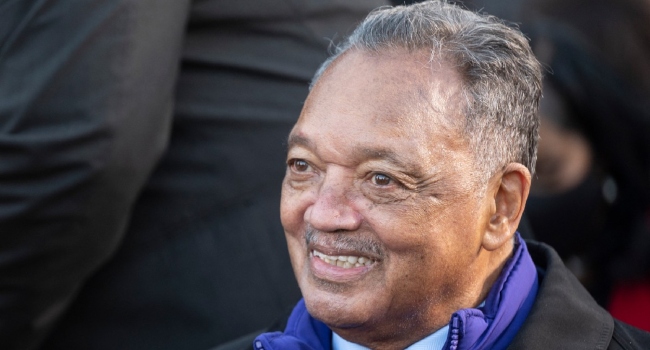
By Anthony Kila
The passing of Jesse Jackson marks the end of a significant chapter in global civic history, but it leaves the powerful story he helped shape unfinished. Jackson represented a generation that saw struggle not just as spectacle, but as the core of societal change; not merely as outrage, but as organised action. His departure prompts deep reflection far beyond the United States’ borders, especially across Africa, where urgent questions of leadership, justice, inclusion, and governance still demand immediate attention and resolution.
Understanding Jesse Jackson requires the discipline of avoiding oversimplification. He wasn’t just a civil rights activist in a narrow sense; he was also a political organiser, a moral rhetorician, a bridge-builder, and occasionally, a confrontational mirror reflecting power. His life demonstrates that civic leadership is seldom straightforward, often imperfect, and constantly challenged.
One of Jackson’s most profound lessons is that protest alone, without organisation, fades quickly into the background. While marches can generate immediate visibility, it is institutions that ensure lasting impact. Jackson understood this principle intuitively. From his collaboration with Dr. Martin Luther King Jr. to his pioneering leadership of the Rainbow/PUSH Coalition, he committed himself not only to moral outrage but also to building enduring organisational frameworks.
Today I write from Lagos, Nigeria, and I can’t help but notice that this lesson is particularly relevant for African audiences. Across the continent, civic energy is strong. Youth movements emerge, protests unfold, slogans spread quickly. However, this momentum too often fades because it is not translated into structures—such as political parties, civic institutions, policy platforms, or sustainable movements.
Jackson’s life reveals a piercing truth: while anger has the power to ignite action and mobilisation, it is organised effort that truly drives transformation. Civic leadership demands patience with the slow grind of process, discipline in maintaining structure, and unwavering commitment that extends well beyond moments of crisis.
Jesse Jackson employed moral language not merely as decoration but as a powerful instrument of influence. His iconic rallying cry— “Keep hope alive”—was never based on naive optimism; it was a deliberate rhetorical tactic. Jackson recognised that politics goes beyond interests to include imagination. People are motivated to act when they feel their dignity is recognised and safeguarded. This insight is particularly meaningful for Africa’s civic and political leaders. Too often, governance on the continent becomes trapped in dry technocratic jargon or slips into empty populism. Jackson’s example demonstrates that moral speech can be both clear and compelling—passionate without being reckless, principled without ambiguity. His legacy highlights the transformative power of articulate morality in shaping progressive leadership.
He articulated economic justice, voting rights, and inclusion not merely as sectional interests but as fundamental, universal principles. In African civic landscapes—where ethnic, religious, and regional divisions are often exploited for political gain—this perspective offers a vital beacon. Leaders who sincerely seek to unite must communicate in a language that transcends identity, affirming diversity without allowing it to divide.
Jackson’s concept of the “Rainbow Coalition” was far from simple sentimental multiculturalism; it was an ingenious act of strategic inclusion. He recognised that in a diverse society, power is built by constantly expanding the boundaries of who we consider part of the collective: broadening the definition of “we”. For Jackson, inclusion was not an act of charity but a deliberate, tactical move—an essential strategy for strengthening through unity in diversity.
This insight is especially pertinent to the political landscapes of Africa. Numerous African nations grapple with the challenges of managing diversity, often perceiving inclusion as merely a concession or favouritism rather than a deliberate strategy for stability and growth. Jackson’s perspective challenges this notion, asserting that inclusion is far from a sign of weakness—it’s a robust framework essential for progress and cohesion.
For civic leaders, this involves creating and nurturing vibrant platforms that bring together labour, youth, women, professionals, minorities, and marginalised communities—not just as symbolic gestures but as essential stakeholders in the machinery of governance. A society that overlooks talent wastes its potential; conversely, a genuinely inclusive society utilises diversity to build resilience and promote innovation.
Any serious reflection on Jesse Jackson must recognise complexity. His career was not free from controversy or contradiction. He made tactical misjudgements. He attracted criticism. At times, his methods divided opinion. His life, therefore, also serves as a lesson on the imperfection and ethics of leadership. And here lies a vital lesson for African civic leadership: waiting for flawless leaders only leads to stagnation. Jackson’s life serves as a powerful reminder that leadership is a human endeavour, not the domain of saints. It’s not the absence of imperfections that defines a leader, but a clear sense of purpose, a commitment to accountability, and an unwavering capacity to learn and grow.
In African civic spaces, a recurring and destructive cycle often unfolds: hero-worship giving way to bitter disillusionment. Jackson’s legacy offers a wiser, more nuanced path—demand accountability from leaders, yes, but also acknowledge that meaningful progress is driven by imperfect individuals navigating imperfect systems. It’s a call for maturity, resilience, and realism in the pursuit of change.
Jackson also redefined the boundaries of leadership. He did not rely solely on public office to exercise influence. Although he ran for the presidency, his impact did not depend on winning elections. He shaped agendas, expanded participation, and brought issues onto the national stage—all of which offered lessons and reflections on civic leadership beyond the state or public office.
In African societies where access to formal power is often limited, this insight is vital. Civic leadership isn’t about holding office; it’s about influencing outcomes. Academics, faith leaders, professional associations, youth organisers, and policy advocates all contribute to the governance ecosystem.
Jackson’s life demonstrates that the state does not solely own public space. It belongs to citizens who organise, speak out, and persevere.
Jackson’s engagement with Africa and the global Black diaspora was genuine rather than merely symbolic. He recognised the historical and moral connections between struggles against racism, colonialism, and economic exclusion. His opposition to apartheid and his involvement with African leaders demonstrated a belief in the indivisibility of justice.
For African audiences, this global perspective is significant. Civic leadership today must be globally aware. Economic systems, climate issues, migration, and security are transnational in scope. Jackson’s work highlights that local struggles are reinforced, not weakened, by global understanding.
Jesse Jackson’s death does not close a chapter of struggle; it reveals unfinished pages. Inequality endures. Exclusion evolves. Democracy remains delicate in many areas. His life urges us not to romanticise the past but to question the present and strive to shape the future.
For future civic leaders, the challenge is clear: organise, not just protest; build institutions, not just movements; speak morally, but act strategically; include broadly, but govern competently; accept imperfection, but demand accountability.
To be clear, Jackson did not provide a ready-made blueprint to be copied verbatim. Instead, he presented a method: harness power, organise people, speak passionately, and stay persistent. In this regard, Jesse Jackson is a part of both American and global civic history. His legacy isn’t just a monument; it’s a duty.
And perhaps the most enduring lesson he leaves us—especially in societies still debating and negotiating the meaning of leadership—is this: hope is not a feeling; it is a discipline.
- Anthony Kila is a Jean Monnet Professor of Strategy and Development at the Commonwealth Institute of Advanced and Professional Studies (CIAPS). He also serves as the Pro-Chancellor and Chair of the Governing Council of the Michael and Cecilia Ibru University (MCIU).