Football community pays tribute to Nigeria’s first indigenous World Cup coach, Onigbinde, who dies at 88
By Uzor Odigbo
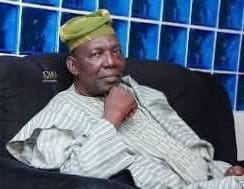
Nigeria’s football community is in deep mourning following the death of High Chief Festus Adegboye Onigbinde, the pioneering tactician widely hailed as one of the foundational pillars of Nigerian football coaching. He was 88.
The revered former Super Eagles coach passed away peacefully on Monday, March 9, 2026, in Osun State, according to a family statement signed by Mrs. Bolade Adesuyi.
The family expressed profound gratitude to God for “a life well spent,” describing the late coach as a devoted father, husband, grandfather, great-grandfather, brother, friend, and Modakeke high chief whose influence extended far beyond the football field.
Tributes poured in swiftly from across the Nigerian football landscape, underscoring Onigbinde’s enduring legacy.
Football entrepreneur and former Gombe United manager Hon. Ahmed Shuaibu Gara-Gombe called him “a football gem whose contributions to Nigerian football will be greatly missed.”
Communication and football expert Tony Dara praised Onigbinde’s tireless efforts in building Nigerian football to an enviable level, noting he would be remembered for his vast knowledge, insight, and technical expertise.
National Institute for Sports Director-General Philip Shaibu described him as “a pillar in the foundation of Nigerian football,” recalling a recent visit to Onigbinde’s Modakeke residence on February 9, 2026, where the institute hoped to draw further from his experience.
“Coach Onigbinde represents an era of discipline, courage, and football intelligence,” Shaibu said. “He has left footprints on the sand of time and a legacy that future coaches will continue to follow.”
World Olympians Association Secretary General and Nigeria Olympic Committee Vice President Olumide Oyedeji hailed him as a patriotic Nigerian and father figure whose dedication shaped the sport.
“Coach Onigbinde was more than just a coach; he was a father who set a good example for coaches, players, and administrators,” Oyedeji said. “His greatest legacy lies in the discipline, courage, and deep football intelligence he instilled in generations.”
Onigbinde holds an indelible place in Nigerian football history as the first indigenous coach to lead the Super Eagles to a FIFA World Cup, guiding the team to the 2002 edition in South Korea and Japan after rebuilding the squad post-2002 Africa Cup of Nations.
Despite a tough group-stage exit—losses to Argentina and Sweden, followed by a draw with England—his bold decision to field a youthful, inexperienced side marked a significant chapter in the team’s evolution.
Earlier, from 1982 to 1984, he steered Nigeria to the 1984 Africa Cup of Nations final, where the Super Eagles fell 3-1 to Cameroon.
At club level, Onigbinde enjoyed success with Shooting Stars Sports Club of Ibadan, taking them to the 1984 African Cup of Champions Clubs final (lost to Zamalek SC).
Beyond coaching, he contributed globally as a technical instructor for CAF and FIFA, helping elevate coaching standards across Africa.
Born in Modakeke, Osun State, Onigbinde famously adopted the name “Adegboye” (meaning “a child born to reclaim a chieftaincy title”) in 1960 after discarding “Festus,” a decision that became synonymous with excellence in Nigerian football.
As tributes continue from stakeholders, players, and fans, Onigbinde is remembered not only for his tactical acumen but for nurturing generations through discipline and passion for the game.
Funeral arrangements will be announced by the family in due course.