FG cautions Nigerians in Iran, Gulf States as international community reacts
By Emma Ogbuehi
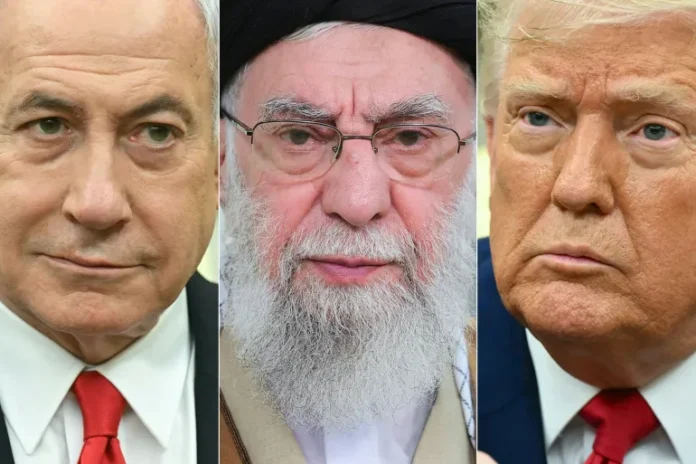
As the global community continues to react to the US, Israeli strikes on Iran, the Federal Government has advised Nigerians living in the Middle East, particularly in the Islamic Republic of Iran and surrounding Gulf nations, to take extra security precautions.
In a statement released on Saturday by the Ministry of Foreign Affairs, the government said it is closely watching developments involving military operations carried out by Israel and the United States against targets in Iran, as well as subsequent retaliatory actions affecting parts of the Gulf.
Authorities urged Nigerian citizens in the affected areas to remain alert and avoid locations considered strategic or sensitive, such as military bases and government installations, which could become flashpoints for further conflict.
The advisory recommended limiting non-essential movement and avoiding public gatherings or demonstrations until the security environment improves.
Nigerians were also advised to comply with instructions from local security agencies, noting that cooperation with authorities is vital for personal safety.
Diplomatic missions, including the Nigerian Embassy in Tehran and consular offices across neighbouring Gulf countries such as Qatar, Bahrain, Kuwait, the United Arab Emirates, and Saudi Arabia, have been placed on high alert to assist citizens and facilitate communication where necessary.
The government reiterated that the safety of Nigerians abroad remains a priority and pledged to continue monitoring the situation while providing updates as developments unfold.
It also appealed to parties involved in the conflict to de-escalate hostilities and return to negotiations in the interest of global peace and stability.
Meanwhile, countries in the Middle East and around the world have voiced fear of a regional conflagration.
African Union expressed concern over the potential impact on regional and global stability, urging restraint from all sides.
The European Union warned the situation in the region was “perilous” and called for civilians to be protected in any ensuing conflict.
The European Council President António Costa noted that developments in Iran were troubling and that European leaders remained in contact with regional partners.
Russia called on its citizens to leave Iran, with former president Dmitry Medvedev saying that talks with the United States had just been a “cover”.
“The peacekeeper is at it again,” Medvedev, now the chair of Russia’s Security Council, said in a post on X.
“The talks with Iran were just a cover. Everyone knew that. So who has more patience to wait for the enemy’s sorry end now?” he added.
Qatar, which hosts a US military base, initially said it was secure after the US and Israeli attacks on neighbouring Iran but was monitoring developments closely.
An official later told AFP that Qatari defence systems had intercepted an Iranian missile, and the defence ministry said it had repelled “a number of attacks”.
The European Union warned the situation in the region was “perilous” and called for civilians to be protected in any ensuing conflict.
European Commission chief Ursula von der Leyen, on X, urged “all parties to exercise restraint”, stressing it was “critical” to “ensure nuclear safety” after the US indicated Iran’s nuclear sites were in its crosshairs.
EU’s top diplomat, Kaja Kallas, who said the situation was dangerous, announcing the withdrawal of the bloc’s non-essential personnel from the region.
The UK government feared the strikes could blow up into a broader Middle East conflict, and urged its citizens in Bahrain, Kuwait, Qatar and the UAE to find shelter.
“We do not want to see further escalation into a wider regional conflict,” a government spokesperson said, adding that the UK’s “immediate priority” was the safety of its citizens in the region.
Reza Pahlavi, the son of Iran’s last shah and a leading critic of Tehran, said that “we are very close to final victory” following the strikes.
“I want to be by your side as soon as possible so that together we can take back and rebuild Iran,” Pahlavi — who lives in exile in the Washington area — said in a message to Iranians.
Jordan’s military said its air force was at work on Saturday to protect the kingdom and its people while the strikes were ongoing.
A military official later said that two ballistic missiles targeting the kingdom’s territory “were successfully intercepted by Jordanian air defence systems”.
Ukraine argued that the Iranian government’s “violence against its own people and other countries” had triggered the US and Israeli attacks against Tehran.
“The reason for the current events is precisely the violence and arbitrariness of the Iranian regime, in particular the murders and repressions against peaceful protesters, which have become particularly large-scale in recent months,” the foreign ministry said in a statement.
France, which has several military bases in the Middle East, notably in Qatar, the United Arab Emirates and Jordan, said that Paris’s priority was the safety of its citizens.
“Obviously our priority in these sort of cases is the protection of our nationals, the protection of our forces in the region and the monitoring of the situation in real time, which we are doing,” Alice Rufo, a deputy defence minister, told France 2 television.
The African Union called “for restraint, urgent de-escalation and sustained dialogue” after the strikes, warning that conflict could risk harming people on the continent.
“Further escalation risks worsening global instability, with serious implications for energy markets, food security, and economic resilience — particularly in Africa, where conflict and economic pressures remain acute,” said the pan-African body’s head, Mahamoud Ali Youssouf.