


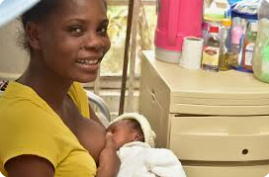
Exclusive breastfeeding in Nigeria drops, UNICEF seeks “at least 24 months” recommended by UNICEF and WHO
By Jeph Ajobaju, Chief Copy Editor
Exclusive breastfeeding in Nigeria has reduced to one in three babies, laments the United Nations Children’s Fund (UNICEF), citing a survey by the Nigeria Demographic and Health Survey (NDHS) which shows that early breastfeeding declined from 42 per cent in 2018 to 36 per cent in 2023.
Ijeoma Ogwe, UNICEF Enugu Field Office Communication Specialist, also disclosed that exclusive breastfeeding remained stagnant at 29 per cent between 2018 and 2023, quoting NDHS data.
Ideally, she said, breastfeeding should continue for at least 24 months, as recommended by UNICEF and the World Health Organisation (WHO).
“Only 1 in 3 babies are given breastmilk in the first hour after birth which stands at 36% and only 1 in 3 babies is exclusively breastfed for up to six months which stand at 29%,” Ogwe explained.
She made the disclosure at a Media Dialogue on the Dissemination of Key Advocacy Messages during 2025 World Breastfeeding Week, organised by UNICEF Enugu Field Office in collaboration with the Broadcasting Corporation of Abia State (BCA) Umuahia.
Ogwe stressed that healthcare workers play a vital role in supporting breastfeeding but expressed concern that many lack the tools, time, and training to provide adequate care.
She named only 10 states – Lagos, Kwara, Ekiti, Oyo, Cross River, Kaduna, Niger, Ondo, Enugu, and Plateau – out of the 36 in the country that implement paid maternity leave for up to six months for public workers.
“26 out of 36 states in Nigeria have not created an enabling environment, which includes paid maternity leave, breastfeeding breaks and workplace facilities for effective breastfeeding, therefore undermining mothers’ ability to sustain breastfeeding practice,” she said.
“Most work places in formal and informal sectors lack policies and facilities favourable for effective breastfeeding.”
Ogwe reiterated that breastfeeding improves maternal health and reduces healthcare costs, and urged the government to integrate breastfeeding promotion into national health policies, maternal and child health programmes, and insurance schemes.
The theme for the 2025 edition is “Prioritise Breastfeeding: Create Sustainable Support Systems,” per reporting by the News Agency of Nigeria (NAN).
UNICEF Chief of Enugu Field Office Juliet Chiluwe said breastfeeding is “a cornerstone of child survival, growth and healthy development”, and this year’s theme underscores the urgent need to build lasting systems that support mothers to breastfeed.
“Breast milk is all a baby needs for the first six months; no substitutes compare. Mothers need time, support and protection from families, workplaces, communities and the government,” she stressed.
Chiluwe sought the establishment of breastfeeding corners in workplaces to give mothers a dignified and convenient space to breastfeed, as well as the enviornment for working mothers to successfully breastfeed with the right support.
UNICEF Enugu Office Social Behavioral Change Specialist Hillary Ozor urged all stakeholders into action on agenda-setting for breastfeeding.
“We should set the agenda and the media can lead the call for action on breastfeeding. A clear sign of love for my child is to exclusively breastfeed my child,” she said.
BCA Director General Francis Nwubani said it is time to recognise breastfeeding as a powerful foundation for lifelong health, development, and equity.
“World Breastfeeding Week shines a particular spotlight on the ongoing support women and babies need from the healthcare system through their breastfeeding journey,” he pitched.
“This means ensuring every mother has access to the support and information she needs to breastfeed as long as she wishes to do so.”
But he added that breastfeeding can be challenging when parents are not fully supported.
Read also:
Sylva joins lawmakers, policymakers to sound warning over rising number of children out of school

, citing a survey ,,)