The Urhobo are the main ethnic group in the original Delta Province. Asaba was a strange addition. Its choice as the capital of the newly created state, was seen as a great loss by every Urhobo man and woman.
By Abraham Ogbodo
When a convention runs unbroken, it strengthens into a culture and even law. This is where we are with the governorship politics in Delta State. At the onset in 1999, the Governor, Chief James Onanefe Ibori had good reason to preach inclusion. His sermon on rotation of the governorship among the three senatorial zones of Central, South and North sounded sweet. It was fair to all concerned. It meant, after Ibori who represented the Central, the governorship of the State must move elsewhere to either Delta South or Delta North Senatorial District.
On the surface, no other deal for the distribution of political power appeared more altruistic and equitable. But beneath, the grand architect of the plan, Governor Ibori, was focused on a direction. He only wanted to take everyone along in the voyage to anchor the governorship at a designated port in 2007. This was the arrangement that made Dr. Emmanuel Uduaghan’s occupation of Government House, Asaba after the eight years of Ibori, look and sound very fair. It was taken as an equitable movement of power from one zone and ethnic stock to another. It didn’t look like a filial transmission (from cousin to cousin) of the governorship. Rather, it came across as a consequence of normal political horse-trading in a multi-party democracy.
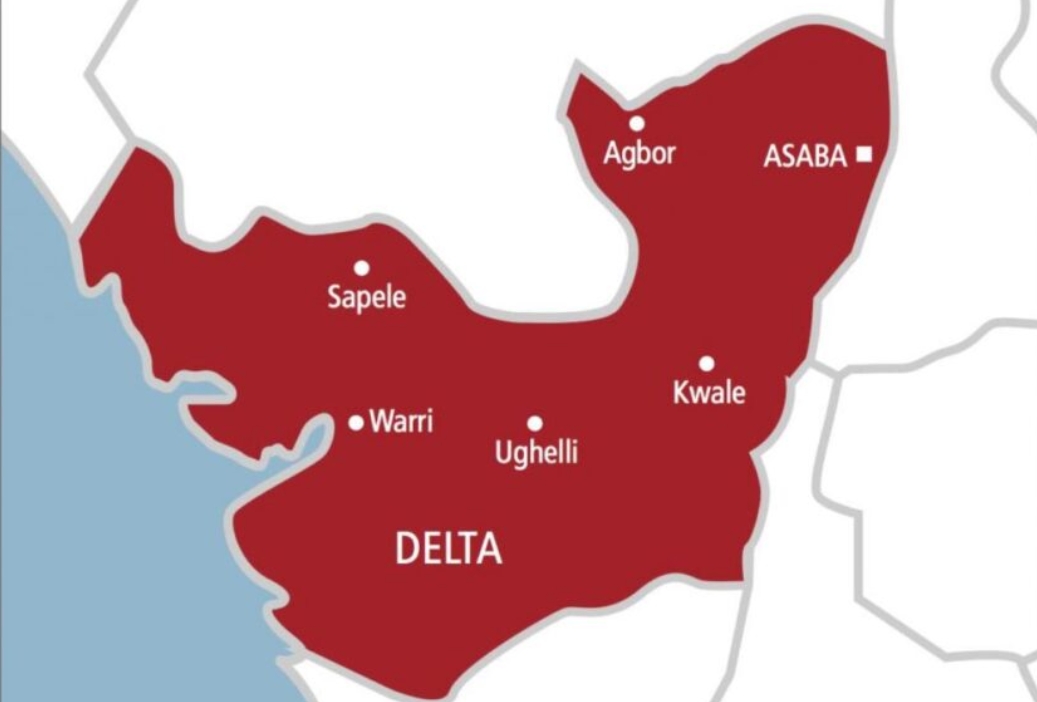
Ibori was applauded. This singular act of correctness upped his stakes and rating in Delta politics. But as an Urhobo man, Chief Ibori was adequately guided by the prevalent sentiments. The siting of the headquarters in Asaba at the creation of Delta State on August 27,199I was, and perhaps still, the only issue in Delta politics. The Urhobo are the main ethnic group in the original Delta Province. Asaba was a strange addition. Its choice as the capital of the newly created state, was seen as a great loss by every Urhobo man and woman. Yielding the governorship so soon was therefore double jeopardy. In this context, Ibori might have intended his power rotation formula as a default mode to achieve a narrow interest in the short run after which he would return quickly to normal mode. Others, however, saw the enduring beauty and joined massively to promote the formula into a standard mode for the management of the governorship seat among ethnic stakeholders. Inadvertently, Chief Ibori had written the operating manual of the governorship contest in Delta State. It is a turn-by-turn arrangement that requires patience and sincerity of purpose on all sides for the governorship to make the agreed turns and return to the starting point.
This has not meant an untroubled consensus. Each time, there had been some reason, good or bad, for the incumbent to offset the formula for a narrow consideration. It almost happened in 2015. After the Central and South, the North was the next anchor point. But when Governor Uduaghan came short of his own scheme to enthrone a successor from Delta North, he had back-tracked to the Centre in a move that threatened the Ibori-created power-sharing formula for the state. Former Governor, Ifeanyi Okowa was set to lose big at the PDP primary to elect the governorship candidate until principalities in the Central and South districts rose gallantly to the occasion. In the end, the formula prevailed to ensure Okowa.
Actually, after Ibori, there had been an attendant practice of testing the formula for further fitness and resilience. This was what Uduaghan was practising when he hesitated on the choice of Okowa as his successor. And at the peak of his glory as Governor, Okowa himself described the equitable formula as an unwritten agreement that did not enjoy the protection of law. He was a kind of saying that he could still leave the governorship in the North or elsewhere outside the Central after his eight years and the heavens would not fall. In 24 years and outside the manipulations of players, the formula had assumed a life of its own. Killing it would have amounted to a culpable homicide in Delta politics.
Thus, after the initial political tough-talking, Governor Okowa climbed down to the village square to speak the language everybody understood. He chose not to commit a political murder. In Sheriff Oborevwori, he found comfort to continue with the unwritten agreement on power rotation in Delta State. It should be noted also that the arrangement was not a multi-party therapy. It was strictly a PDP’s antidote. Other parties ran their own shows. It was the dominance of the PDP on the political landscape that made its formula seem like an almighty formula for the determination of the hard political equation.
ALSO READ: By localising empowerment, Nigerian women are shaping peace
The most challenge often came from elements within the zone in power. They would give reasons why the incumbent was unfit for a second term in office. The lead challenger would purport a piety unknown in political transactions in Nigeria. He would ask for a tenure to complete the zonal allocation of eight years and then back down for the zone in waiting to retain the equity value of the turn-by-turn arrangement. Notwithstanding, the formula has a way of coming out of these trials alive. The other two senatorial districts waiting to have their turn prefer to help an incumbent to the gamble of a challenger that might insist on full measure.
The 1999 Constitution does not stop a first-time governor from contesting after the first four years. It allows a renewal that runs for another four years to make it eight years in all for the incumbent. The zones which are in the waiting room of power know this. They also know for sure that the challenger posing as a beautiful angel and offering beautiful promises just to get by, may become the real Satan upon becoming the champion. If the opportunity exists, everyone likes a full cup and a complete loaf of bread. The waiters are therefore guided to stay with the devil they know instead of cutting new deals with the unknown angel. This reluctance on all sides to switch the champion midstream has helped to keep the rotation formula insulated from tempest.
And nothing has changed even in 2026. The migration of the PDP to the APC did not affect the formula. Afterall, the PDP only changed medium and not substance. All ongoing consequential political conversations in the State are still centered around how the formula can be kept working.
Last Tuesday, the PDP now APC, held its congress to elect party leaders in the State. Amid reports of dissensions, the party seems set, overall, to face 2027. The complaint by those feeling short-changed is that, he that was invited to the dinner table has washed his hands beyond the elbow. They also say that the guest is appropriating every empty plate around to load more food for himself. Well, that is the way of politics in Nigeria. No half measures. And no real accommodation either. It is a zero-sum game where the impact is extreme at both the winning and losing ends.
What should matter now is that, the stage is set for sundry calculations. Emerging groups, like the ADC, are hoping to exploit the reported cracks in the APC to spring surprises. The battle lines are defined. Friends of yesteryears have separated and camped in stiff opposition against one another. Delta Central is the epic-centre. Challengers to the Oborevwori’s throne are expected to emerge in droves in the months ahead from the zone. But there is good reason to believe that amid the cacophony and contestations, the golden rule will still rule supreme. Going by the rotation formula, the heir apparent is Delta South. That will be in 2031 after Delta Central is done. The waiter has only four years to wait. It has a responsibility to keep the waiting years constant. This is the option that is somehow guaranteed by the constitution. The other option is not guaranteed. It only runs on the promise of the challenger to do a tenure and back down. That promise can be broken and the injured cannot even go to court.
Observers know that the mad quest is for power and not performance. Unfortunately, this has been the pattern. This is also where Governor Sheriff Oborevwori enjoys a slight edge. To some of us outside the partisan belt, his performance speaks louder than his politics. While politicians are attracted to politics, the people are attracted to performance. Therefore, in battling the forces that want his job in 2027, the Governor stands better with performance than he does with politics. I am saying his performance will help his politics but his politics cannot help his performance in equal measure. It is a familiar battle. But any winning formula outside performance, may portend danger. This is why the Governor must retain his street credibility even as he gazes intensely at 2027.