


CAPPA steps up fight against non-communicable diseases, train journalists on salt limits
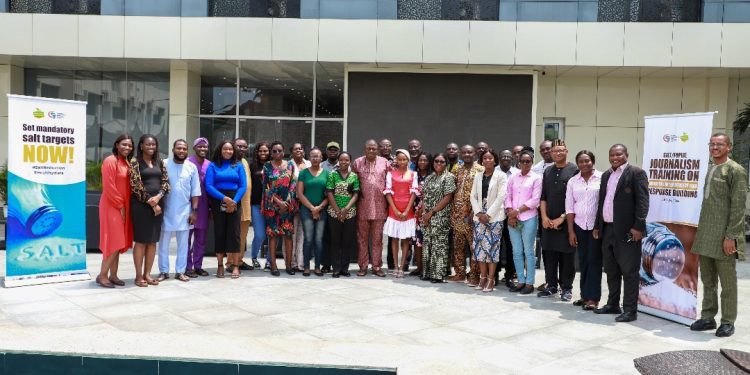
The Corporate Accountability and Public Participation Africa (CAPPA) on Thursday, July 24 held a one-day journalism training on salt reduction and front of pack warning labels (FOPWL), in Lagos.
The training equipped journalists with the knowledge and skills to effectively report on the growing public health crisis posed by non-communicable diseases (NCDs) in Nigeria.
The training emphasized the critical role that journalists can play in shaping public awareness and influencing policy on NCDs and FOPWL.
According to Akinbode Oluwafemi, Executive Director of CAPPA, NCDs such as hypertension, diabetes, and stroke are on the rise in Nigeria, largely due to the consumption of foods high in salt and sugar.
He noted that the food industry’s aggressive marketing and lack of transparency in labeling are contributing factors to this crisis.
Oluwafemi emphasized the importance of FOPWL in empowering consumers to make informed choices about their diet. He cited examples of countries like Chile, Mexico, and Brazil, which have implemented FOPWL and seen positive results in reducing the consumption of unhealthy foods.
Said Oluwafemi “Countries that have embraced front of pack warning labelling such as Chile, Mexico, and Brazil are already reaping the benefits. In Chile, for example, warning labels led to a drop in purchases of sugary drinks and prompted companies to reformulate their recipes to avoid using warning labels.
“This is regulation doing exactly what it should by influencing behaviour, fostering accountability in the food industry, and rebalancing power in favour of the public.
“By adopting a mandatory, interpretive front-of-pack warning labelling system that clearly alerts consumers when a product is high in salt, sugar, or saturated fat.”
Oluwafemi, however, warned that the food industry is likely to resist the implementation of FOPWL in Nigeria, using tactics such as lobbying and public relations campaigns to protect their interests. He urged journalists to be vigilant and to hold the industry accountable for their actions.
Oluwafemi said that by reporting accurately and effectively on these issues, journalists can help to promote a healthier and more informed society.
The CAPPA journalism training on salt reduction and FOPWL according to participants is a timely initiative that highlighted the need for a multi-stakeholder approach to addressing the growing public health crisis in Nigeria.
Also, participants were unanimous in agreeing that by working together, journalists, policymakers, and civil society organizations can help to promote a healthier and more equitable food environment for all Nigerians.
Bukola Odele, Project Officer, Cardiovascular Health at CAPPA, lamented that ultra-processed foods that are high in salt/sodium have replaced traditional home-made meals thereby limiting healthy options for Nigerians.
She also reiterated how aggressive marketing by the industry is fueling the decisions of Nigerians to make unhealthy choices, and how bouillon (seasoning) cubes and food with high preservatives are positioned as healthier options.
Odele re-emphasised the need for a front of pack warning labelling policy in Nigeria, so that Nigerians can make informed decisions about the products they consume, and also safeguard their health.
Also speaking during his 45 minutes session, Dr. Joseph Ekiyor, a health advocate and medical practitioner, who revealed that 1.6 million lives could be saved annually by reducing sodium intake by 30% stressed that “reducing salt intake and dietary change will help to reduce health complications such as heart attack, and reduce the overall burden of NCDs.
Ekiyor called for strict adherence to WHO guidelines on salt reduction, which include front-of-pack labelling of nutrients of concern –sugar, salt, and fat, as well as reformulation targets or maximum limits for sodium in food.
He noted that adhering to the guidelines is imperative because by 2030, NCDs global cause of death and disability is projected as 52 million, and it must be curtailed.
He also charged the media to intensify efforts on behavioural communication because “repetition is necessary to inform change”.
He called for “increase mass media campaigns to reduce sodium intake and strengthen Nigeria’s health system.”
According to Ekiyor ” Excessive salt intake raises blood pressure, which is the leading cause of strokes, heart attacks, and kidney failure.
“Most people don’t know they’re hypertensive until their organs start failing.
” In Nigeria, only 3% of the population has access to universal health coverage. For most, a diagnosis of kidney failure due to salt-induced hypertension spells financial ruin
“Dialysis costs about ₦500,000 a month. But many patients earn less than ₦100,000. This is how families are pushed into poverty by food they thought was safe.
“We are seeing teenagers with dangerously high blood pressure. This is no longer a future problem, it’s a present-day disaster.”
Also speaking during his session on the topic ” Flipping Industry Strategies for news articles and features to promote healthy food policies, Robert Egbe, CAPPA’s Communication Officer, encouraged media professionals to write stories “that will expose industry lobbying and policy manipulation, flip industry funded research into stories on scientific bias and use FOI requests to seek information that the industry wants to hide.

