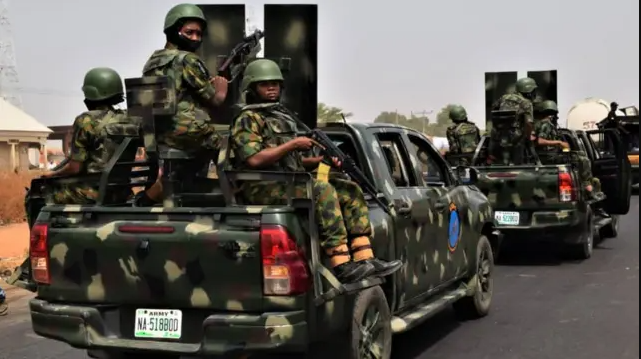
Brigadier general, 17 soldiers feared killed in Boko Haram attack
A brigadier general has been killed in an attack by terrorists on a military installation in northeast Nigeria, marking the second death of a senior officer in less than five months, according to an AFP report.
The incident occurred overnight in Benisheikh, a town roughly 75 kilometres from Maiduguri, the Borno State capital. During the assault, gunmen reportedly stormed the base, killing no fewer than 18 soldiers and setting military vehicles ablaze.
“Unfortunately, the brigade commander, Brigadier General O.O. Braimah, lost his life,” Kaga Local Government Chairman Zannah Lawan Ajimi told AFP in a phone interview.
Two intelligence officials also confirmed the death of the senior officer.
One of the sources said, “They overran the brigade,” putting the casualty figure at “at least” 18.
Another intelligence source noted that “the terrorists killed several troops” and “burnt vehicles and buildings before they withdrew,” without specifying the total number of casualties.
Military authorities, including the army and Defence Headquarters, had yet to respond to requests for official comments at the time of filing this report.
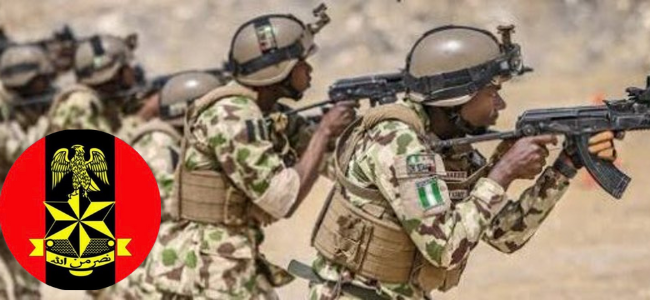
The killing comes months after Brigadier General Musa Uba was slain by fighters of the Islamic State West Africa Province in November, the highest-ranking officer lost in the conflict since 2021.
Nigeria has battled a persistent insurgency in its northeast since 2009, when Boko Haram launched its uprising. Over time, the conflict has splintered into multiple factions, including ISWAP, making the security situation more complex.
Security analysts have warned that violence has escalated since 2025, with a resurgence of attacks in key areas. Maiduguri, the epicentre of the insurgency, has witnessed two suicide bombings since December, echoing the deadly urban assaults seen at the peak of the crisis.
Concerns over worsening security were highlighted on Wednesday when the United States State Department authorised “non-emergency US government employees” to leave Abuja “due to the deteriorating security situation”.
Although insurgent activities have largely been concentrated in the northeast, there are growing signs of expansion. Armed groups linked to terrorist networks in the Sahel have pushed into parts of western Nigeria, where criminal gangs—commonly referred to as bandits—have long targeted rural communities.
In northwest Nigeria, gunmen have reportedly killed at least 90 people across several villages this week, based on figures compiled by AFP from local and humanitarian sources.
One of the attacks took place in Kebbi State, where police attributed the violence to a group known as Mahmuda, believed to have ties to Al-Qaeda. The state, bordering Benin and Niger, has experienced a rise in such incidents since 2025.
Data from conflict monitoring organisation ACLED indicates an increase in attacks in the region by groups linked to both Al-Qaeda and the Islamic State.
Elsewhere, in neighbouring Kwara State, militants associated with the Al-Qaeda-linked Jama’at Nusrat al-Islam wal-Muslimin claimed responsibility for an attack in October, reinforcing fears that the Sahel conflict is spreading toward coastal West Africa.
In December, the United States, in collaboration with Nigerian authorities, carried out airstrikes in Sokoto State targeting fighters of the Islamic State Sahel Province, a group typically active in Niger, Mali and Burkina Faso.