Beyond the challenges: A reboot for Nigeria’s failing conviction, commitment and competence
By Elsie-Bernadette Onubogu
Contextual perspective
In an earlier piece titled “the pandemic of idiocy” ravaging Nigeria, I reflected on the worrisome trajectory of a nation gripped by dysfunction, disillusionment, distrust, anger, hunger, poverty corruption, and a precarious moral vacuum. There, I drew from the English poet John Donne, who reminded us that, in the face of death — we are all bound by a common thread of humanity: not knowing for whom the death bell tolls.
As a child of hope in this moment, and as Nigeria and Nigerians are on the brink of despair, I am convinced that there is a flicker of light and opportunity if only a few more people can dig deep into their courage, conviction and commitment bank to save Nigeria. Thus, I turn not to death, but to life. Specifically, to Ubuntu, the South African philosophy that teaches: “I am because we are.” This ancient wisdom affirms that our humanity is rooted not only in shared mortality but in how we live together — how we treat one another, uplift one another, and shape the societies we inhabit – in communal spirit. This is where Nigeria must situate its people and reboot. And, this can only happen with a reboot from the failings in courage, conviction, commitment and competence.
The reboot must entail both individual transformation and systemic reform. However, it must be noted from the outset that, effective systems such as adopting a new People’s Constitution or electoral reform can only be successful with the help of the human agency. Indeed, bad leadership and or docile followership can frustrate the success of the most beautifully crafted system.
Presently, Nigeria is a country where selfish ambition trumps service, where power is pursued for profit rather than purpose, and mediocrity trumps merit. The result is a national psyche that mirrors lines from W. B. Yeats’s post-World War I poem, The Second Coming — the poem from which the literary giant Chinua Achebe found the title of his most famous work, Things Fall Apart. In that poem, Yeats wrote:
“The best lack all conviction, while the worst
Are full of passionate intensity.”
That, in Yeats’ lines, is Nigeria today. The few who might lead with clarity, vision, and moral courage have retreated into silence, apathy or into the diaspora. Meanwhile, the loudest voices — often the least qualified — dominate our public discourse, policy, and politics with reckless certainty. This is not just a leadership crisis; it is a communal crisis, a failure of the social contract teetering into moral decadence.
Consequently, Nigeria stands at a historical crossroads that reaffirms an urgency that falls under what President Barack Obama once described as the “FIERCE URGENCY OF NOW.” Despite its abundant resources, brilliant minds, and expected regional and continental influence, Nigeria and its people continue to grapple with a deeply fractured national identity that exposes deep feelings of not belonging – isolation, deep hurts, divisions and continued cries of marginalization.
To address this urgency, Nigeria needs a reboot – a reset that will entail both individual transformation and systemic reform. It must involve a reorientation of attitudes and mindsets of the people who will ensure result-oriented implementation. As noted earlier, empirical evidence shows that the effectiveness of any system ultimately depends on the people who operate it.
To proceed, allow me to be clear: there are and will be no quick fixes. It has taken Nigeria over 60 years to arrive at this level of institutional decay, distrust, disillusionment and mal-development. We did not fall into this crisis overnight—and we will not rise out of it overnight either.
Yet, acknowledging how long it took to grow this rot should not be a reason for despair. I am optimistic that the damage can be reversed. What it demands is time, honesty, commitment, courage, and political will. More importantly, it demands a new kind of leadership: servant leaders who are altruistic, selfless, and grounded in a vision beyond personal gain. Only such leadership can build an enabling environment for sustainable and equitable development. In addition, it requires a ‘followership’ – citizenry that will wield the courage, conviction and sustained commitment to demand accountability, integrity and results from elected officers and fellow citizens.
READ ALSO: The pandemic of idiocy: Why I keep breaking my oath of silence on Nigeria
For over six decades, we’ve danced around the cracks in our foundation, hoping they’ll seal themselves. They haven’t, they won’t. What Nigeria urgently needs isn’t another political cycle of promises and policies — it needs a national reboot. Not a patchwork or a quick fix. A complete reset, which must involve the people – adopting a bottom-up approach, as well as cutting the cost of governance, constitutional and electoral reforms, a redirection of national resources to provide basic needs (education, health and shelter, security) and infrastructure for the people. Also, there is need to draw lessons from other countries’ experiences with necessary adjustments, remembering there is no ‘one size fits all.’
- Overarching issues: Trust deficit, reconciliation – healing and beyond
An effective reboot must begin with acknowledging and addressing the psycho-social, economic and political consequences of unresolved national traumas, particularly the Nigerian Civil War, which continues to reverberate in our collective national psyche. Ignoring these wounds only perpetuates and exacerbates the trust deficit that undermines bona-fide unity and progress.
At the heart of this reboot is the unresolved trauma from the 1967 war, which continues to create currencies of distrust. We have tiptoed around it for too long, hoping that time would blur the pain. In fact, just recently, there was an attempt to rewrite part of the narrative.
The truth is, time hasn’t healed the wounds of the war for all. If anything, it’s reinforced them. We see this in the anger, the fear, ethnic mistrust, outbursts, and attacks recorded over time. You see it in the not-so-quiet resentments passed from one generation to the next. These are not signs of a healed nation.
I am aware that many readers will dismiss this as if it does not matter. After all, the “Oputa Panel” sought to make this reconciliation happen. In all honesty, Chukwudifu Oputa (JSC) and his commission did the best within their terms of reference. Was the panel’s intervention enough and successful?
Perhaps, it is time to ask why the country seems to be going in circles since 1970. For me, this is one of the major reasons. I urge each Nigerian to take a moment and allow the honest truth to marinade you as you mull over this issue. In fact, as I began to write this article, a group parading as Yoruba Conservative, put out a ‘disturbing’ narrative demanding the removal of ‘non-Yoruba’ campaign posters across Lagos State. Now, whether this is real or imagined, perception they say is everything. Many Nigerians recall the disturbing footages of non-indigenes of Lagos harassed and being prevented from casting their votes during the 2023 elections. This is not unique to Lagos State. It simply says, all is not well.
Therefore, we must stop pretending that silence equals peace. Indeed, both anecdotal and empirical evidence has shown that the absence of war does not mean the prevalence of peace. To say there is no peace in Nigeria is an inconvenient truth – what with the level of insurgency, insecurity, ethnic and religious tensions and attacks (real and imagined), and majority of people living in fear.
Trust deficit
Across the world, countries that have rebuilt after societal divisions like — South Africa, Rwanda, Germany, did so not by sweeping their past under the rug, but by dragging it into the open, confronting it, and choosing truth over denial. Nigeria can and must do the same, for no union, relationship or association succeeds where there is trust deficit.
A Truth and Reconciliation Commission (TRC), tailored to our history, can help us come to terms with the war, its aftermath, and the deep scars it left on both the victor and the vanquished. This is not about revenge. It’s about healing. It’s about replacing the existing currencies of suspicion and trust deficits with that of forgiveness and shared humanity. It is simply saying, ‘I, we, got it wrong. We have learnt the lessons, and we are willing to make applicable amendments.’
A good example is South Africa that captured their rise from ashes in the Preamble of the People’s Constitution thus:
“We, the people of South Africa,
Recognize the injustices of our past;
Honour those who suffered for justice
and freedom in our land;
Respect those who have worked to build
and develop our country; and,
Believe that South Africa belongs to all
who live in it, united in our diversity.”
A word of note: the South African TRC established in 1995, functioned from 1996 – 2002 before it concluded. While the Oputa panel sessions went from October 2000 to November 2001 (with their writings lasting 3 years). SA has approximately 63 million people while Nigeria has approximately 227 million people.
To the nitty-gritty of the way forward, I propose a three-broad rubric approach. What I term the ‘OMM’ strategy – i.e., a) the Overarching; b) the Micro; and c) the Macro.
The way forward – overarching
- Establish a TRC
Consequently, and specifically, Nigeria should set up a “Truth and Reconciliation Commission” (TRC) modelled after South Africa and or Rwanda, to review and underscore the vast impact of the war, promote forgiveness and healing. It will take time, effort, the right expertise and commitment to move on.
- Design and integrate inclusive national narratives in educational pedagogy and school curricula that admits the pain of the past, but charts a positive way forward for succeeding generation.
- Prevent the politicization or erasure of history through public education campaigns and robust archival protection.
Beyond healing
Healing must be accompanied and aligned with the transformation of mindsets —starting from the ground up. The entire system from ground up is fractured and broken. Greed has replaced integrity. Vulgarity, opulence, larceny and debauchery reigns supreme. Opportunism has replaced service and in the local parlance, “if na another person, na corruption, but, wen e reach myside, na connection be dat.” In many quarters, wealth — no matter how it’s earned — has become the only badge of success and the self-proclaimed ‘elite’ are really “nouveau riche” with the tendency to use and flaunt their ill-gotten wealth to oppress others.
B) Micro-level transformation – Relating to individual reforms
At the individual level, there must be structured reorientation to rebuild the moral, ethical, civic and cultural foundations of society to transform individual attitudes, mindsets and community values to align with societal transformation. This must include:
a) Nationwide civic programs to resuscitate values, integrity, discipline, empathy, inclusivity, strong work ethic,
b) Civic education to integrate democratic values, rights, responsibilities, citizen engagement to assist citizen’s understanding of democracy, their rights and privileges.
c) Reinstate merit as the standard for appointments, with limited affirmative action to correct historical injustice.
d) Integrate seamless transition of generational leadership by empowering young people – shadow cabinet/junior ministers as young people under 35 at the regions.
e) Encourage transparency and ethical wealth scrutiny – not as a witch-hunt, but as a foundation for equitable taxation and social justice.
f) Create a non-partisan platform to recognize past leaders, officers, patriots as eminent persons for ‘knowledge hubs’ to mentor young people and semi-retire the old guards.
C) Macro-level reform and streamline
a) Regionalism: a federated system that offers regional autonomy and devolution of power and resources to the local level, and a deliberate cut to the cost of governance.
b) Constitutional Reform that must involve wide consultation with Nigerians’ participation and not just their representatives. Electoral reform that mandates electronic voting/result transmission to make every vote count.
ii) Regulate campaign financing and allow for independent candidates.
iii) Revamp and resource the security architecture, prioritize protection and enforcement to address threats at all levels.
c) Devolve power, strengthen local governance and enhance citizen participation. Conduct only four regional parliaments (if necessary) in local dialects or Pidgin English.
d) Rebuild Independent Institutions: Autonomy of the executive, judiciary, legislature with functional checks and balances.
e) Without prejudice to religious freedom, ‘prohibit government funding and donation for religious and traditional activities including pilgrimages and festivals.
f) Public Service Reform, so political office is seen as a call to serve, not a path to personal enrichment, and monitor.
g) Reform regional parliaments (no NASS) as part-time service and refine salary/emoluments commensurate with the assignment.
h) Anti-Corruption Revamp: create independent institutions with legal and prosecutorial power to punish any breach.
i) Institutionalize and mandate leadership development programs {NIPSS} that emphasize servant leadership, accountability, integrity, and civic responsibility.
j) Limit active political office to same retirement age, to give room for younger minds to lead and innovate.
Conclusion
In concluding, let me say, this is not just a wish-list. It is a call to action. A blueprint built on truth, transformation, and structural reform. It will take courage, political will, and the collective resolve of a citizenry exhausted by mediocrity and mismanagement. It is pertinent to mention that, there is global precedent for most of the proffered solutions for Nigeria’s consideration and modification where necessary.
In all, Nigerians must remember, that systems and structures alone will not make this reboot. Meticulous systems become inert and inept without human agency which could be in the form of good/bad leadership and or docile/active followership. As effective as these systems may appear on paper (such as a new People’s Constitution) if effected, their success ultimately depends on the people who implement them.
The ‘fierce URGENCY OF NOW’ demands that, in order for Nigeria to regain hegemonic relevance within the global stage, she must go beyond the present business as usual and ‘bandaging’ the spiraling decline. Nigeria and Nigerians must take bold steps to rebuild and transform by initiating a total reboot of individual and structural levels. This reboot will require TIME and COMMITMENT – no quick fixes. In such a reboot, Nigeria and Nigerians can regain the failing conviction, commitment and competence to forge ahead. The time to reboot is NOW.
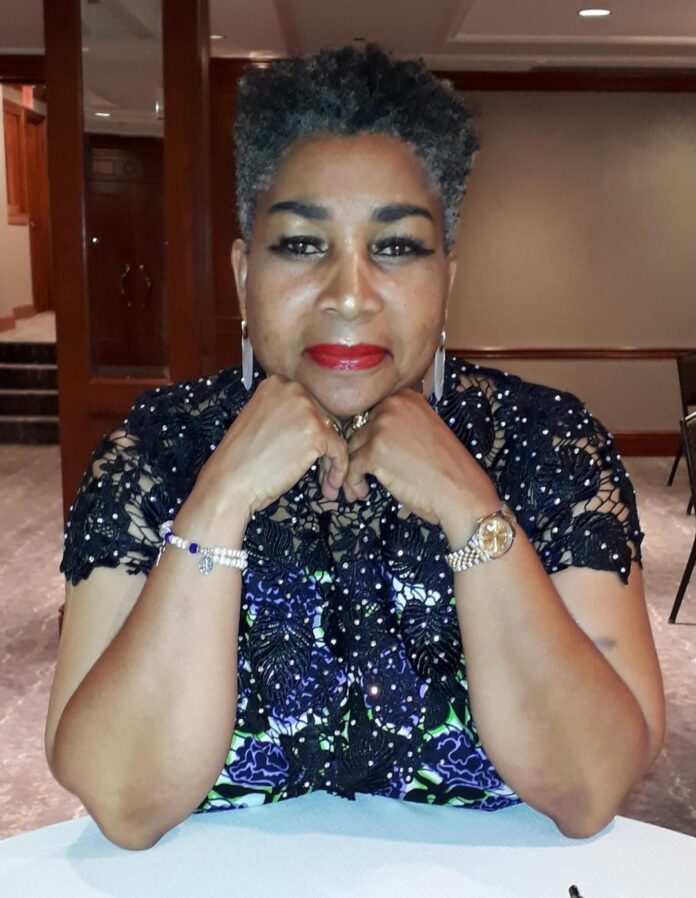
- Elsie-Bernadette Onubogu is an independent consultant, international lawyer, public policy & mainstreaming expert. An erstwhile Senior Policy Advisor with the United Nations, she investigated war crimes, rape and sexual assault as part of her work with the UN International Criminal Tribunal for Rwanda. She served as a Senior Gender, Peace and Governance Expert with the Commonwealth, and was appointed in 2015 by the UK Government to serve as a deployable civilian expert. A trailblazer in global diplomacy, she holds the distinction of being the first Nigerian woman invited to address the United Nations Security Council on issues of International Peace and Security.