115 years of International Women’s Day: Celebration is not enough, systems must change
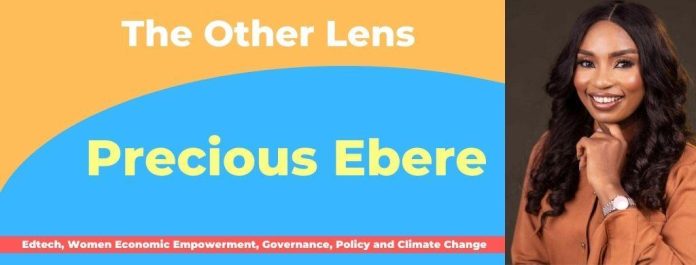
By Precious Obi
In 2026, International Women’s Day (IWD) marks 115 years of collective action for gender equality. That number is both inspiring and unsettling. Inspiring because few social movements have endured with such global relevance; unsettling because a movement born in 1911 to demand fair wages, safe work, and political voice is still grappling with many of those same fundamentals.
History matters here. IWD emerged in the same era Marie Curie won her second Nobel Prize and women across Europe and North America organised labour rights and suffrage. Over a century later, women lead nations, run corporations, shape science and culture, progress that cannot be dismissed. But longevity does not equal completion. The persistence of IWD for 115 years is itself evidence that equality has never been automatic.
Globally, women today are more educated than ever before. UNESCO data shows that girls’ enrolment in primary education has nearly reached parity worldwide. Yet the World Economic Forum’s Global Gender Gap Report estimates that at the current pace, full gender parity will take over a century to achieve.
The contradictions are stark: Women earn, on average, 20% less than men globally (International Labour
Organization); They hold less than one-third of parliamentary seats worldwide (Inter-Parliamentary Union); In Africa, women make up the majority of the informal economy but have the least access to credit, land ownership, and social protection (African Development Bank).
So while individual success stories multiply, systemic inequality remains deeply embedded.
Gender equality is often framed as a moral argument. It is also an economic one. McKinsey Global Institute estimates that closing gender gaps in labour markets could add $12 trillion to global GDP. The World Bank consistently finds that women’s control over income leads to better health, education, and nutrition outcomes for families.
Societies that invest in women are more resilient, innovative, and stable. Those that do not pay a measurable price in lost productivity and social cohesion.
IWD has become a powerful mainstream moment and that visibility matters. But there is a growing risk that the day becomes heavy on symbolism and light on accountability.
We see this when organisations celebrate women one day a year while maintaining gender pay gaps the rest of the time; governments endorse equality rhetorically while underfunding girls’ education, healthcare, and protection systems; women are included in conversations but excluded from decision-making power.
The OECD has repeatedly noted that policy intent without implementation mechanisms produces little change. Equality does not advance because it is acknowledged; it advances because budgets, laws, and institutions are redesigned.
Marking 115 years of IWD should shift the conversation from celebration to systems. This means asking harder questions: Are pay transparency laws enforced, not just announced? Are women meaningfully represented where economic and climate decisions are made? Are girls’ education and women’s health treated as long-term investments rather than social add-ons?
It also means recognising intersectionality that women do not experience inequality equally.
Rural women, women with disabilities, displaced women, and women in informal economies face compounded barriers that generic solutions cannot fix.
One reason IWD has endured is that it has always been a catalyst, not just a commemoration.
Across decades, it has helped movements gain momentum and pushed inequality into public discourse. Its relevance in 2026 depends on whether it continues to do so with measurable outcomes.
The next phase of gender equality will not be driven by slogans alone. It will be driven by data-backed policies, accountable leadership and sustained investment in women and girls.
Equality is not inevitable. It is engineered through choices, trade-offs, and persistence.
As we mark 115 years of International Women’s Day, the most honest tribute we can offer is not applause for how far we have come, but commitment to how deliberately we move forward. The work continues and it must become sharper, braver, and harder to ignore.
- Precious Ebere-Chinonso Obi, CEO of Do Take Action is an independent consultant on edtech, climate change, public policy, and women’s procurement empowerment.
.