Mandela was transformed from a revolutionary into a global symbol of reconciliation. Today, he’s synonymous with ethical leadership. Atiku could echo that grace. By endorsing a successor, he wouldn’t just salvage the opposition’s 2027 bid; he would etch himself into the pantheon of leaders who prized nation over self.
By Ogochukwu Ikeje
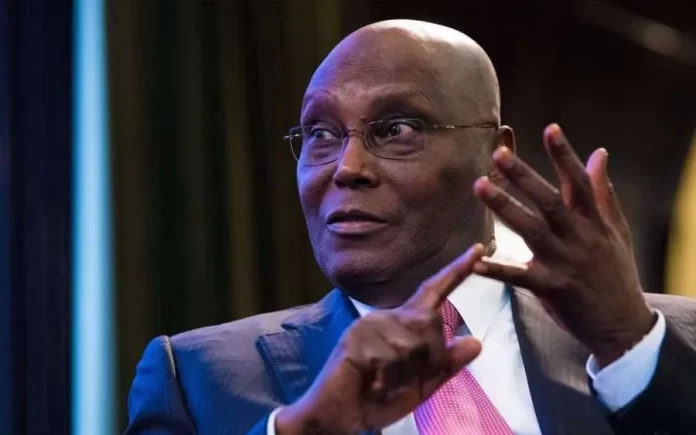
Nigeria’s opposition landscape ended last week in a haze of disarray, as Atiku Abubakar’s staunch rebuttal to retirement rumours sent ripples of frustration through the ranks. The veteran politician swatted away suggestions that age would force him from the 2027 presidential race. “I will only step aside,” he declared, “if a younger aspirant defeats me fair and square in the primaries.”
That defiant flex of enduring ambition delighted President Bola Tinubu’s camp, who watched gleefully as the opposition’s fragile unity frayed further, a reminder that personal legacies often eclipse collective strategy in the cutthroat arena of Nigerian politics.
The opposition chatter is fixated on one goal—dethroning Tinubu in 2027. Yet, the “how” remains an unsolved puzzle, a jigsaw of egos, alliances, and arithmetic. Atiku and Peter Obi have long been the frontrunners, but lately, Goodluck Jonathan has joined the fray, his media vibes adding another layer of intrigue. With no anointed standard-bearer, the opposition risks splintering into irrelevance, handing Tinubu a second term on a platter of discord.
Atiku Abubakar, at 78, stands at a crossroads that could redefine his storied legacy. A consummate survivor, he has weathered storms that would have sunk lesser men. Consider his volatile partnership with Olusegun Obasanjo, yet he emerged unscathed, serving out two full terms as vice president from 1999 to 2007. Whispers of corruption have dogged him like shadows—allegations of shady deals in privatisation scandals and offshore fortunes—but they remain just that: whispers. No courtroom has ever pinned him down, no verdict has tarnished his babanriga.
His presidential quests? A record six bids, from the aborted 1993 Social Democratic Party primaries under military shadow to his near-miss in 2023. It’s a testament to grit, but also to an unyielding hunger that now borders on the quixotic.
Atiku has every right to run again—the constitution sets no age cap. But rights and wisdom are uneasy bedfellows. In 2027, he will be 81, teetering on the edge of a club no leader should aspire to join: Africa’s aging autocrats, those “dinosaurs” who cling to power until frailty forces their hand. Think Robert Mugabe, shuffling Zimbabwe into ruin at 93, or Paul Biya, Cameroon’s eternal octogenarian, presiding over stagnation. Atiku can do better. He can choose history’s brighter path: to bow out not in defeat, but in deliberate magnanimity, yielding the stage to a younger torchbearer. This is the elite fraternity that elevates icons beyond electoral tallies—the one popularised by South Africa’s Nelson Mandela.
Mandela’s true apotheosis came not in the Union Buildings’ corridors of power, but in his 1999 decision to forgo a second term. At 81, after dismantling apartheid’s iron cage, he stepped aside for Thabo Mbeki, entrusting a bruised nation to fresher hands. It wasn’t weakness; it was statesmanship, the ultimate concession that burnished his global halo brighter than any policy win. Mandela’s presidency stabilised South Africa, but his voluntary exit cemented him as a moral colossus.
Despite overwhelming popularity and pressure to extend his term, he stepped down after one term in 1999, prioritising democratic transitions over personal rule.
READ ALSO: Fubara returns as fallen hero
Legacy earned: Mandela’s decision transformed him from a revolutionary into a global symbol of reconciliation. Today, he’s synonymous with ethical leadership—his autobiography Long Walk to Freedom remains a bestseller, and his model influences global leaders and activists alike.
Atiku could echo that grace. By endorsing a successor, he wouldn’t just salvage the opposition’s 2027 bid; he would etch himself into the pantheon of leaders who prized nation over self.
Atiku should throw his weight behind Peter Obi, the most compelling choice, sparing a nascent opposition coalition like the ADC the ugly spectacle of primaries auctioned to the highest bidder. Nigeria’s delegate system, riddled with cash-for-votes infamy, has devolved into dollar-driven debacles, where loyalty is leased and ideals are liquidated. Atiku’s deep pockets could dominate such a farce, but victory there would ring hollow, breeding resentment and fracture. Better to broker unity now, anointing Obi as the flagbearer and fusing their strengths into an unstoppable force.
At 64, Obi is a generation removed from Atiku’s era—fitter, sharper, unencumbered by the baggage of yesteryear’s scandals. No whispers trail him; his record as Anambra’s governor gleams with fiscal prudence, transforming a debt-saddled state into a surplus machine through ruthless cost-cutting and infrastructure bets.
Obi arrived in 2023 as a political outsider, bereft of the godfather machinery that props up Nigeria’s barons. His only “structure” was the electric pulse of the Obidients—a youthquake of millennials and Gen Z, galvanized by TikTok manifestos and WhatsApp war rooms. They didn’t just vote; they revolutionised the game, propelling him to a stunning third place with 6.1 million ballots. Many believe he tallied far more. In a nation where the under-35 crowd comprises 70% of the electorate, Obi’s appeal was seismic: a promise of competence over cronyism, equity over extraction.
He can replicate that magic in 2027. The stars align perilously against Tinubu. Nigeria’s economy, once Africa’s brightest hope, lies in tatters: inflation gnawing at 34%, naira in free fall, fuel subsidies’ ghost haunting every pump. Multidimensional poverty engulfs 133 million souls—over 60% of the population—trapped in a vortex of hunger, joblessness, and despair, per the National Bureau of Statistics. Tinubu’s swaggering claim that “we’ve turned the corner” is a mirage peddled amid blackouts, banditry, and a youth exodus dreaming of anywhere but home.
Atiku’s masterstroke? Lending his northern juggernaut to Obi’s southern spark. In 2023, Obi’s northern showing was modest, but Atiku’s endorsement could turbocharge it, bridging ethnic chasms and flipping key states.
The path is clear, the prize within grasp. If the opposition coalesces—Atiku’s wisdom anointing Obi’s vigor—they can storm the Villa in 2027, restoring faith in a democracy battered by rigging and recession. Atiku, your survivalist’s tale needn’t end in solitary sprints. Step aside, lift the next relay runner, and let history whisper your name not as contender, but as kingmaker.