ASUU Strike: Reps move to intervene, urge Lecturers, FG to exercise restraint, embrace dialogue
By Emma Ogbuehi
The House of Representatives has made moves to intervene in the ongoing two-week warning strike declared by the Academic Staff Union of Universities (ASUU), describing the uncertain development as a potential threat to Nigeria’s higher education stability and national development.
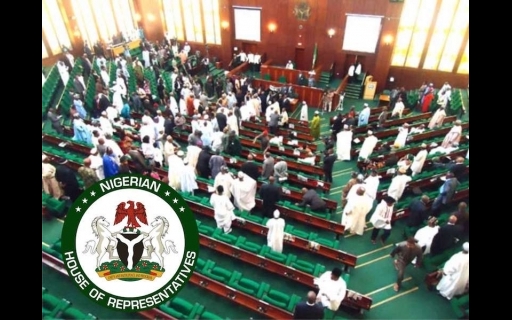
The concern by the lawmakers followed a motion of urgent national importance sponsored by Hon. Sesi Oluwaseun Whingan during plenary on Tuesday. The lawmaker called for immediate legislative intervention to prevent the situation from escalating into another prolonged academic shutdown.
Whingan noted that the strike stemmed from unresolved issues between ASUU and the Federal Government regarding the implementation of prior agreements, including revitalization funding for universities, earned academic allowances, salary structure, and institutional autonomy.
READ ALSO:
ASUU strike: No Work, No Pay threat unproductive, misleading, NLC tells FG
He expressed concern that although the current action is described as a “warning strike,” similar industrial actions in the past had often degenerated into full-blown crises, disrupting academic calendars, frustrating students, and stalling research and innovation.
“The Nigerian university system remains central to our national development, innovation, and human-capital growth,” Whingan said. “Any disruption in its operations weakens our economic competitiveness, scientific advancement, and youth productivity.”
Citing Section 18 of the 1999 Constitution (as amended), he emphasized that education is a constitutional responsibility and a driver of social and technological progress, adding that both government and university unions must ensure its continuity and quality.
The lawmaker lamented that repeated strikes in the tertiary sector have led to student dropouts, brain drain, and loss of public confidence, which threaten national stability and Nigeria’s long-term development goals.
Following his presentation, the House resolved to mandate its Committees on University Education and Labour, Employment and Productivity to immediately intervene between ASUU and the Federal Government to facilitate a mutually acceptable and lasting resolution.
It also urged both parties to exercise restraint, embrace dialogue, and place the interests of students and the nation above all other considerations.
Additionally, the House called on the Federal Government to establish a permanent joint consultative platform with recognized university unions to ensure continuous engagement and prevent future industrial actions.
The Committee on Legislative Compliance was directed to monitor and report the progress of the mediation efforts to the House within one week.
The Federal Government had earlier called on the lecturers to reconsider their decision to embark on an industrial strike, emphasising that constructive dialogue remains the most effective and sustainable path toward resolving all outstanding issues in the tertiary education sector. It also reminded the Union that the principle of “No Work, No Pay” remains an extant provision of Nigerian labour law and will invoke it should ASUU proceed with the strike.
In a riposte to the Federal Government’s threat to invoke the “No Work, No Pay” policy against striking university lecturers, the Nigeria Labour Congress (NLC), has condemned the declaration, describing it as misleading and unproductive.
NLC President Comrade Joe Ajaero, who made the assertion in reaction to the two-week warning strike declared by the Academic Staff Union of Universities (ASUU), said the lecturers’ action was a legitimate response to government’s persistent failure to honour agreements voluntarily reached with the union.
The Academic Staff Union of Universities (ASUU) had on Sunday, October 12, announced a two-week total and comprehensive warning strike across all public universities in Nigeria. National President of the Union, Prof. Chris Piwuna, made the announcement at a press briefing in Abuja at the University of Abuja