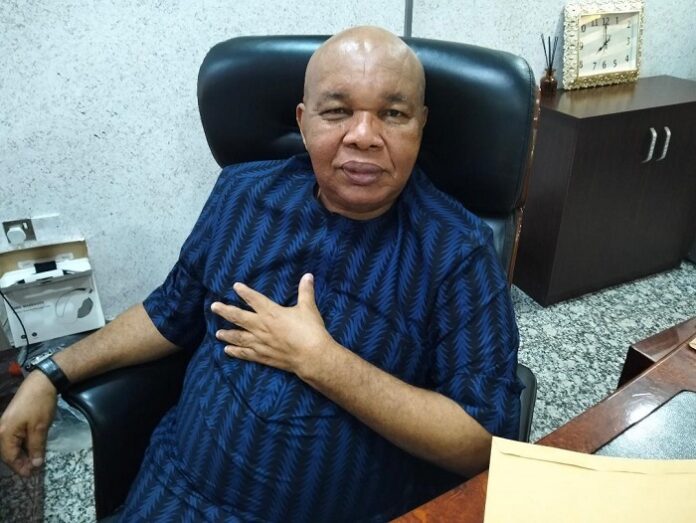
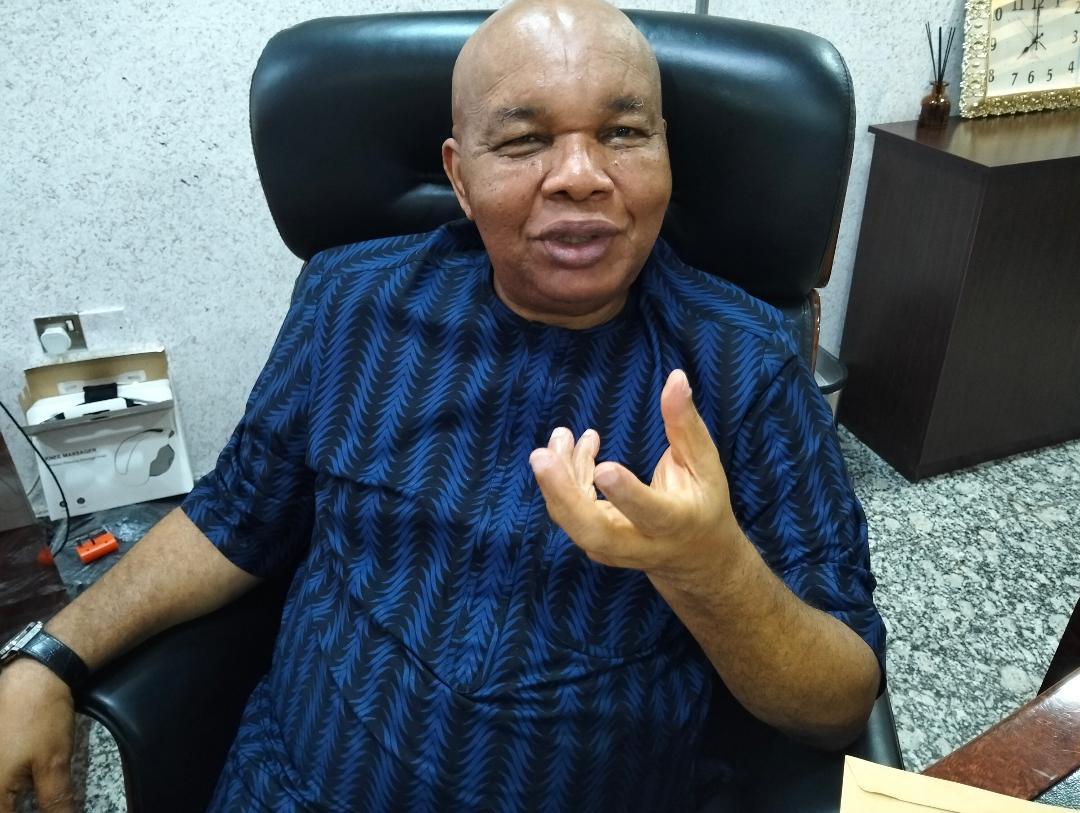
Sir Nnamdi Obi is one of those Dr Gauden Galea of the World Health Organization (WHO) refers to as a “seven star pharmacist” – care-giver, decision-maker, communicator, manager, life-long-learner, teacher and leader. Simply put, he is a quintessential health promoter. A pharmacy graduate of the Pontifical and Royal University of Santo Tomas, The Catholic University of the Philippines, Sir Obi is the Chairman/Chief Executive Officer of Embassy Pharmaceutical and Chemical Company Limited, a company he founded in 1986, with a mission “to become the most valuable company in the pharmaceutical industry.” In pursuit of that mission through dint of hard work manifested in making readily available to Nigerian population, a wide range of world class quality and efficacious pharmaceutical products at affordable prices, Embassy Pharmaceutical and Chemical Company Limited today has over 350 pharmaceutical products registered with NAFDAC, making it the pharmaceutical company with the largest range of products duly registered with the regulatory agency. In this interview with IKECHUKWU AMAECHI, he talks about the industry he is so passionate about, high cost of drugs and what the government needs to do to mitigate what has become an existential threat to many Nigerians.
How is the present harsh economic climate impacting on the pharmaceutical industry?
The state of the economy is adversely affecting our pharmaceutical industry because you know for a fact that a preponderance of drugs used in Nigeria are imported. If you ask me, though I don’t have the empirical statistics to buttress that fact, but I do know it is up to 70 per cent imported products and 30 per cent manufactured locally. That is why the present Director General of the National Agency for Food and Drug Administration and Control (NAFDAC), Professor Mojisola Adeyeye, is making very serious effort to reverse the trend. And it hasn’t been easy for her to implement that because of the deficit of infrastructure that we have here. That has made it difficult, if not impossible to reverse the trend considerably or in any significant way.
She is trying her best and kudos to her for such efforts. Of course, the devaluation of the Naira exacerbated greatly the cost of drugs in Nigeria just like other products too, not only pharmaceutical products. So, it has not been easy for most Nigerians to access very quality products because of the high cost of things in Nigeria.
How has this inability of most Nigerians to afford drugs for the management of chronic diseases like high blood pressure, diabetes, etc. impacted on the fake drugs industry? Are people resorting to buying fake drugs because of the unaffordability of the genuine ones, thereby giving the fake drugs menace a fillip?
Yes, in the sense that we have very porous borders. I was shocked to the marrow some years back – about three or four years ago – when the former Minister of Internal Affairs said on television that Nigeria has over 1,000 unmanned entry points into the country. That shocked me and of course gave me an insight into the fact that a lot of things are coming into Nigeria unauthorised. There is no part of the world where you don’t have spurious products. No country is immune to fakery. None. So, there should be, and in fact, there are fake drugs in Nigeria.
But what I do know also is that the menace is drastically curtailed to a very minimal level because of the activities of NAFDAC. I don’t think it is easy for any person to get fake products into Nigeria through authorised ports. Apapa Port, for instance, is the only place you can clear pharmaceutical products except the ones that come in by air. But NAFDAC, of course, with the shortage of manpower that they have – only about 2,000 staff presently – as the DG Professor Mojisola Adeyeye informed us the last time we had a meeting with her, I don’t think they can man all entry points effectively. So, there should be some fake drugs coming into Nigeria. And you do know for a fact that most anti-diabetic and anti-hypertensive drugs are very expensive. And the products that are so prone to faking are those ones that are very expensive.
As a professional and major stakeholder in the industry, how do you think the government can help?
The government recently rolled out some incentives to manufacturers for zero duty on imported raw materials and equipment for the manufacture of these drugs locally. But the imported products were not really exempted from that. The essence of the zero duty is to boost local production. That was why the government of the day rolled out such policy, which is so laudable, no doubt about it. But you know, it is one thing for the government to make a pronouncement and implementation takes a while. It took quite a while and I don’t even know if they have started implementing the policy. If they have started, it is only recently but I know the policy statement was made either last year or early this year. If it is implemented to the latter, that is a sure way of bringing down the prices of these products.
READ ALSO: ASUU rejects renaming UNIMAID after Buhari, to sue FG
Secondly, do we say our financial institutions are investment-friendly? Of course, not. Imagine someone going to borrow funds to do a business, let me restrict myself to pharmaceutical business, in Nigeria. Of course, the interest rate is going to be passed on to the consumers and we are dealing with countries that have one-digit interest rate. There is no way products manufactured in Nigeria are going to compete internationally or will not be expensive even locally. That person will have to have his own mini-power station. The ancillary industries that are involved in manufacturing any product are virtually non-existent in Nigeria. The Active Manufacturing Ingredients (APIs) that are used in manufacturing pharmaceutical products are not here.
I will give you an instance, if someone is going to set up a plant to manufacture tablets, say paracetamol, there is no factory in Nigeria that manufactures the API – that is the raw material that will be used in manufacturing it. It is not there. It has to be imported. So, how many days is it going to take you to import it? The clearing processes are so clumsy. For the past two weeks, the Customs systems have been shut down – they are doing some upgrade with a brand name – Odogwu. That is a new system they want to install. The ports are not functional. So, those who have imported things cannot take delivery. Why that is so, I don’t know. So, these things are the things that make it absolutely difficult to access products here easily. So, products are not readily available.
Each product has to have a foreign input. The water to be used in manufacturing these products must be treated with chemicals that are imported. So, if there are critical elements that go into production that are imported, of course, that will have effect on the cost of products that are rolled out of the factory.
Could this cost of doing business explain why some pharmaceutical giants like GlaxoSmithKline (GSK) ended its 51-year presence in Nigeria in August 2023, and Sanofi, the French pharmaceutical company also exited in November, shifting to a third-party model for product distribution? Even the ones that didn’t explicitly exit like Procter & Gamble (P&G) adjusted their Nigerian operations, transitioning to an import-only mode?
Of course, there is no gainsaying about it. That is the reason. That is why they left. But those of us who are Nigerians, where are we running to? Nowhere! This is our country. We will have to give our best but it is tough and even getting tougher by the day. But that was why the foreign companies left. A lot of people who come into the country purportedly with Foreign Direct Investments (FDIs) are actually portfolio investors because of the toxic business environment that we have.
In 2012, the government came up with this policy of setting up Coordinated Wholesale Centres. What actually informed that policy?
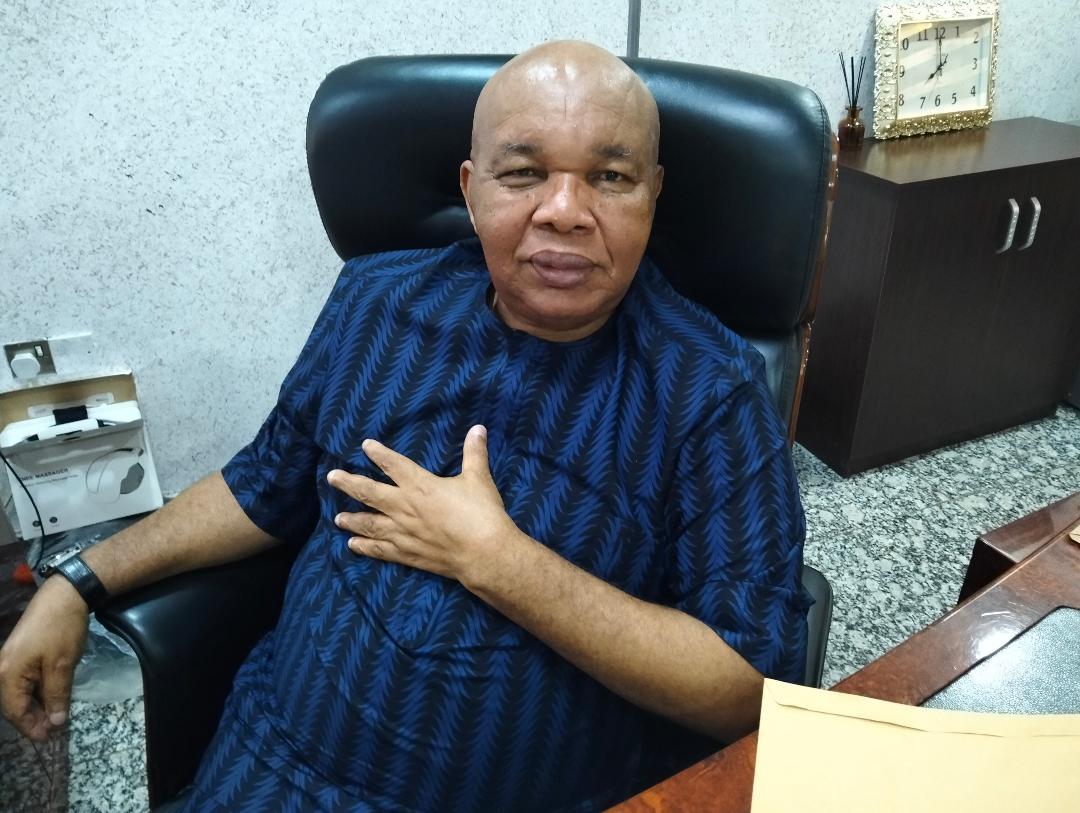
Sir Nnamdi Obi (Photo: Ikechukwu Amaechi)
The government, in its wisdom felt that pharmaceutical products are not products that could just be sold by the roadside. There are extant laws that govern the sale and distribution of pharmaceutical products worldwide. A tablet makes all the difference in someone’s life. One tablet could kill, just one tablet, the same way one tablet can save life. That is why the government felt that these centres where products are sold in not too conducive environments should be regulated. And at that point in time, there was this revision of National Drug Policy because in the initial Policy, the government didn’t take cognisance of the wholesale centres or open drug markets, which, of course, are centres where both manufacturers and importers avail of their products. There was no exception. Hospitals go to the open markets to pick their products. So, the government now decided to have an amendment to that very act. That was what gave birth to Coordinated Wholesale Centres.
How relevant is it to the pharmaceutical industry?
It is a game changer. When all the centres become fully operational, the quality of pharmaceutical products in circulation will be enhanced, no doubt because people are now going to operate in strict compliance with the requisite conditions that are expected to be in place in a pharmaceutical premises. There will be good storage condition and products will not be left outside at the mercy of the weather, which of course, affects the quality of that product. If you expose a drug to sunlight and it stays there for some hours, the quality of that very product will be compromised.
So, when you have a wholesale centre that is well-coordinated with uninterrupted power supply, refrigerators to store drugs, in air-conditioned environments, that will certainly make a fundamental difference. That was why government in its wisdom came up with that very policy and felt that it should be implemented as soon as possible.
How do you think the government could help in mitigating the existential crisis of high prices of drugs? If you remember in the days of the late General Sani Abacha, that was the idea behind the Petroleum Trust Fund (PTF) headed by late General Muhammadu Buhari. Could such a thing be replicated particularly with the removal of fuel subsidy and the attendant spike in the prices of goods and services?
Yes, of course. You see, the government has the financial muscle to buy drugs from any source of its choice – either from local manufacturers, which will then have to increase their capacity and subsidise the products. For me, I am happy that our president deemed it necessary to remove fuel subsidy. Fair enough! But what have we done with the money accruing from the subsidy that has been removed? If I were to be the president, I will put a very big chunk of the proceeds in the healthcare and education sectors.
Yes, building beautiful roads are very much okay but one has to be alive to drive on them. Put a sizeable percentage in the healthcare sector and buy drugs, subsidise it so that people can go to government-owned hospitals and hoping that Nigerians who work in those hospitals will not steal the drugs. We all knew what happened during the PTF era wherein drugs, exclusive products of PTF were found in the open market and private shops and even private hospitals. Which shouldn’t be. This could be done with utmost ease by the government.
Then, put a sizeable percentage in the education sector. A nation with a healthy citizenry is a prosperous nation. Informed population is the greatest asset any country could have. Criminality is increasing because of the prevalent abject poverty. Very few educated people are prone to crime. And when we have a very robust economy, the tendency of people getting jobs locally rather than fleeing the country (Japa) will reduce to the barest minimum.
I tell you, we have so much to thank God for in this country. If you ask me, God created Nigeria the day He was in the best of moods because we are so endowed both in natural and human resources but these things cannot translate into having a very prosperous nation unless we are able to make effective use of them. And it is only when that happens that we can rank ourselves as one of the serious nations in the world.
Someone forwarded something to me the other day on WhatsApp and it was about the top ten countries in Africa with top-notch judiciary without government interference. Nigeria was not in the list. That speaks volumes. An investor is going to take a critical look at that before stepping onto our shores to make an investment. In making sustainable investment that is not portfolio driven, a lot of things are put into consideration. One of them is the judiciary. The question any astute investor will ask is, if I have a problem with any Nigerian, am I going to get justice at the shortest possible time? If not, your guess is as good as mine what is going to be his informed decision.
So we need to fix a lot of things to make Nigeria the country of our dream and each and everyone of us has a role to play but the government has to show the direction things have to go for Nigerians to key in.