


Africa, Israel-Palestine, and justice
By Missang Oyongha
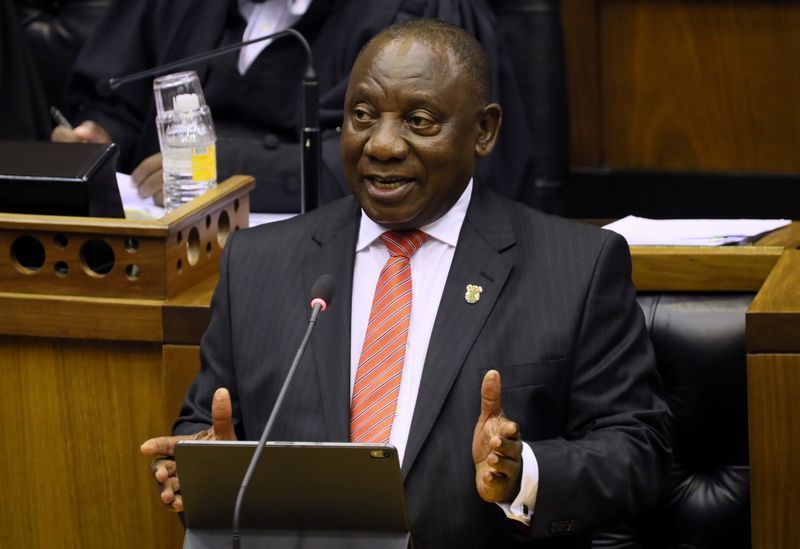
In February 2025 the African Union made an oral pleading at the International Court of justice (ICJ), asking to be joined in a suit brought by South Africa against the state of Israel. South Africa had asked the ICJ to adjudicate on Israel’s legal obligations as an occupying force in the Palestinian territories. The African Union asserted its moral obligation to make this case, as the representative body of African nations which were themselves formerly occupied and traumatised during a century of European settler colonialism of the kind Israel is charged with practising in the Palestinian territories today.
The grim prelude to these recent legal interventions is the war that Israel began to wage on Gaza after Hamas militants from the territory invaded Israeli towns and killed over one thousand two hundred people on October 7, 2023. Israel’s retaliation for the Hamas assault is now estimated to have claimed over fifty thousand Palestinian lives. South Africa instituted its case against Israel at the ICJ in December 2023, two months after the start of military operations in Gaza, and filed a Memorial at the court in October 2024. It wanted the ICJ to rule on Israel’s obligations under the Genocide Convention. In January 2024 the ICJ ruled that Israel was to take all steps necessary to prevent acts of genocide. An official Israeli statement denounced the ICJ ruling as a blood libel. In July 2024 the ICJ ruled that it had jurisdiction in the South Africa vs Israel suit, and crucially, that Israel was violating international law by its presence and actions in Gaza. One line from that ruling stands out: ‘This finding of the court reaffirms that the Israeli Government is guilty of practising the crime of Apartheid.’
Israel has always framed its actions in Gaza as self-defence, obscuring the historical and immediate context, as well as what the Palestinian writer and journalist Marwan Bishara described in 2001 as the ‘military and legal asymmetry’ between Israel and the Palestinians. Legal scholars have argued that under international law an occupying power cannot claim self defence, citing Article 33 of the Fourth Geneva Convention on the obligations of an occupying force. Israel seemed to be enacting the Dahiya Doctrine of using disproportionate force against a civilian population as a means of inflicting punishment and deterring an adversary like Hezbollah or Hamas. South Africa felt obliged to take a stand.
South Africa and Israel are entwined by historical ties. South Africa has a small and influential Jewish community, and the Israeli state was an ally of the apartheid regime, collaborating in the 1980s in the field of nuclear weapons. The affinity between the two states was such that the apartheid regime could note in its 1976 yearbook that South Africa and Israel were ‘both situated in a hostile world predominantly dominated by dark peoples.’ In apartheid South Africa the minority white population had rights to over ninety percent of the land, while the majority black population were confined to townships and bantustans, required to obtain passes granting them the right to move from one place to another or even to find work. Apartheid-era bantustans inspired the Israeli policy in the West Bank. Nelson Mandela and other ANC grandees ruefully noted this historical alliance, and post-apartheid foreign policy has been decidedly sympathetic to the Palestinian cause. Incidentally, after Israel launched Operation Cast Lead against Gaza in 2008-2009, it was the eminent South African jurist, Richard Goldstone, who led the UN-appointed Fact-Finding Mission.
Actually, the African connection to the Jewish cause dates back to the Sixth World Zionist Congress at Basel in 1903, when Theodor Herzl, after prior consultations with the British Foreign Secretary Joseph Chamberlain, presented the Uganda Scheme. This would have seen the temporary relocation of Russian Jews suffering anti-Semitist pogroms under the Tsar to the British colony of Uganda. The Uganda Scheme was roundly rejected, even as.a provisional homeland.
As a brief thought experiment, let us consider what would have happened had the Uganda Scheme been implemented: large swathes of Ugandan territory would have had to be cleared of their human inhabitants or virgin land appropriated to make way for the influx of benighted Jews from Russia and elsewhere. This would have created, whatever its humanitarian motivations, double jeopardy in colonial terms: Ugandan land which had first been claimed by the British in the name of their empire would now also have been ceded to Jewish refugees as a matter of course.
By a stroke of irony, the current President of the ICJ is the Ugandan judge Julia Sebutinde. When the seventeen-member ICJ panel voted in 2024 on six motions ‘urging Israel to take steps to prevent acts of genocide,’ Judge Sebutinde was the lone dissenter. Her published dissent argued that the conflict between Israel and the Palestinians was a historical and not a legal one (and thus not even a matter for the ICJ), further stating that South Africa had not proven genocidal intent on the part of Israel with regard to its actions in Gaza. There were immediate questions about Judge Sebutinde’s ability to adjudicate on the upholding of international law and universal norms of justice based on her admitted fealty to particularist notions of self-defence and belonging.
Why has the conflict between the Israelis and the Palestinians remained so intractable since 1948? The Gaza war cannot be Isolated from its historical and legal context, although a full rehearsal of this history, as well as that of the peace processes and negotiations between Israel and the Palestinians (attended by bad faith and lack of political will) lies outside the breadth of this essay. When a 1947 UN resolution partitioned British Mandate Palestine into two, in a quasi-Solomonian diktat which failed to assuage the expansionist ideologues of the newborn Israeli state or the fears of the Palestinians, especially because it allocated fifty-two percent of the territory to the Jewish state and forty-eight percent to the Arab state, although the Jewish inhabitants constituted only one-third of the population. In 1937 the British government’s Peel Commission had recommended allotting twenty percent of Mandate Palestine to the Jewish Yishuv (community). It is a matter of historical record that at least some senior Israeli leaders, including David Ben-Gurion, had always harboured the idea of expelling the native population to make way for a reborn Jewish state. From the late 19th century the Jewish Colonization Agency was already purposefully purchasing large tracts of land in Ottoman-era Palestine in furtherance of the cause of Jewish statehood. The compelling historiography of Israeli scholars like Ilan Pappe, Avi Shlaim, Benny Morris and Tom Segev has been concerned with uncovering the realities of what Jews call the war of independence and Palestinians call the Nakba. Conflict was inherent and inevitable, but should that foreclose the possibility of resolution, of justice?
‘Compromise requires reciprocity,’ as the British political scientist B. J. Dudley wrote in another context. The current Israeli government led by Benjamin Netanyahu’s Likud Party is arguably the least conciliatory in the country’s history, even before the casus belli provided by the Hamas attack of October 2023. The Likud Charter which declares its opposition to the establishment of a Palestinian state, as well as the 1988 version Hamas Covenant which declared itself opposed to the existence of an Israeli state are both examples of mutual intransigence. The 2017 Hamas Charter modified what were seen as the more extreme positions of the 1988 document.
This aversion to compromise was shown most dramatically in the assassination of Israeli Prime minister Yitzhak Rabin in November 1995, because the Oslo Accords which he had signed in 1993 were seen as a betrayal of maximalist Jewish claims to the land. In 2000 US President Bill Clinton brokered the Camp David Peace Accord between Yasser Arafat and Ehud Barak, although the talks ended in recriminations The Palestinian-American scholar Rashid Khalidi has pointed out that despite their mutual animosity the British government and the IRA were able to reach an agreement that ended decades of bloodshed, just as the apartheid regime in South Africa set aside decades of intransigence and negotiated with the ANC to bring about national rebirth.
Christian, Jewish, Islamic and secular literature are rich in the theme of justice, John Rawls argued in his classic work of moral philosophy, A Theory of Justice, that the first condition of any social institution is justice. Rawls also makes the point that ‘institutions are just when no arbitrary distinctions are made between persons in the assigning of basic rights.’The 1917 Balfour Declaration paid lip service to the idea ‘that nothing shall be done which may prejudice the civic and religious rights of the existing non-Jewish communities in Palestine,’ although Lord Balfour’s sense of justice was absent in his 1919 memo to the British Cabinet that ‘in Palestine we do not propose to go through the form of consulting the wishes of the present inhabitants of the country.’
What conception of justice is intended when the US president, Donald Trump, promises that his country will ‘own Gaza’ and turn it into the Riviera of the Middle East, ostensibly cleansed of its native population? On February 26, 2025 President Trump posted an AI-generated video in which Gaza is shown transformed into a resort of beaches and skyscrapers.
The Israeli historian Ilan Pappe has spoken with cautious optimism about the role of the Global South in spearheading an international intervention in the Israel-Palestine conflict because of the perception that the Global North, and especially the US, has been a complicit arbiter. The late Edward Said wrote with some poignance about the sheer weight of world personages who lent their names to the cause of justice for the Jewish people in the prelude to the creation of the Israeli state, and lamented that there was no comparable chorus of support for the Palestinian cause. In making this oral plea at the ICJ, the African Union has thus inserted itself into the most enduring pursuit in the moral universe, the search for justice.
Missang Oyongha was on the staff of the Presidential Advisory Committee on National Dialogue. This opinion piece reflects his personal views.

