Afreximbank flags Nigeria for squandering $1.1b yearly on medical tourism, even when quality healthcare is available locally
By Jeph Ajobaju, Chief Copy Editor
*****************************
Doherty disclosed that Afreximbank responded to the trend by launching its Health and Medical Tourism Programme in 2012, recognising early the link between healthcare and economic development.
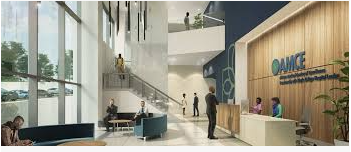
She cited the Africa Medical Center of Excellence [AMCE] in Abuja as a flagship intervention under the programme, saying, “Afreximbank was innovative. I call us the innovative financier, the innovative investors. We recognised this part since 2012, and we set about doing something about it.”
The AMCE is a 170-bed facility equipped with cutting edge medical technology, including an 18 MeV cyclotron, a three-Tesla MRI, and a 20-bed intensive care unit.
The bank has committed over $450 million to the project.
“Afreximbank had to go where no one has gone before; Afreximbank’s leaders adhered to the dreamers. The AMCE aims to provide healthcare services comparable to global standards, not just African standards. I’m talking about global standards. I’m talking about Africans coming up with solutions to challenges” – Doherty, Afreximbank Export Development Managing Director.
*****************************
African Export-Import Bank (Afreximbank) has again called out Nigeria for squandering $1.1 billion yearly on foreign medical tourism, describing it as a significant drain on its foreign exchange and a major impediment to the development of its healthcare sector.
Oluranti Doherty, Afreximbank Export Development Managing Director, made the point at the 32nd Afreximbank Annual Meetings held in Abuja, reiterating that reliance on foreign medical care stalls investment in local health infrastructure and also affects the broader economy.
Former President Muhammadu Buhari in particular made a habit of jetting abroad for every ailment throughout his eight years in the Villa, with a retinue of aides, costing everything in scarce dollars, from aircraft maintenance, hotel bills, to estacodes for himself and his hangers on.
A few days before he left office in May 2023, Buhari commissioned a N19 billion state-of-the-art clinic in Aso Rock which he said was meant to prevent future Presidents from having to follow his bad example of medical checkups abroad.
The clinic is up and running, but that has not prevented Buhari’s successor Bola Tinubu from junketing every quarter to Paris for medical treatment – with the same, if not more, retinue than his predecessor had – although Tinubu refuses to declare publicly that his frequent travels to France are for medical purposes.
Apart from that, Tinubu recently approved a welfare package for Service Chiefs which includes a $20,000 allowance each for medical treatment overseas.
“We had our member countries losing a lot of foreign exchange to medical tourism,” Doherty said.
“We just talked about Nigeria, where our medical tourism annually is about $1.1 billion. The entire continent is about $7 billion just because we can’t help ourselves when we come up with chronic diseases. That’s money that’s going to other economies, building their institutions.”
According to her, the capital flight from Nigeria and other African countries towards medical expenses abroad represents missed opportunities to invest in critical sectors at home.
She also cited the continuous loss of skilled healthcare workers to foreign countries, further compounding the challenges facing the local medical sector.
“Another thing we noted was a great way we were losing a lot of our good talents. The best of talents in the health sector were going out of the continent, working in places such as India, Asia, the Middle East, America, and that often was an issue.”
Doherty disclosed that Afreximbank responded to the trend by launching its Health and Medical Tourism Programme in 2012, recognising early the link between healthcare and economic development.
She cited the Africa Medical Center of Excellence [AMCE] in Abuja as a flagship intervention under the programme, saying, “Afreximbank was innovative. I call us the innovative financier, the innovative investors. We recognised this part since 2012, and we set about doing something about it.”
The AMCE is a 170-bed facility equipped with cutting edge medical technology, including an 18 MeV cyclotron, a three-Tesla MRI, and a 20-bed intensive care unit.
The bank has committed over $450 million to the project.
“Afreximbank had to go where no one has gone before; Afreximbank’s leaders adhered to the dreamers. The AMCE aims to provide healthcare services comparable to global standards, not just African standards. I’m talking about global standards. I’m talking about Africans coming up with solutions to challenges.”
Doherty stressed the need for Nigeria and other African countries to rebuild trust in domestic healthcare systems and sought policies that ensure quality care is accessible locally to reverse the tide of medical tourism.
Read also: