A tale of two movements: City Boys and Village Boys
By Promise Adiele
This essay is not intended to elaborate on Nigeria’s socio-political and economic regression or to emphasize the potential of a new socio-political beginning. It does not attempt to achieve a consensus about the more suitable quintessential habitation between city and village. Rather, it presents a realistic interpretation of city and village to underscore their precise fittingness or otherwise towards the 2027 elections. This exercise has become necessary given the sudden incursion of city and village into Nigeria’s socio-political lexicon. Expectedly, Nigerians are divided between the two spatial continuities. But of course, both city and village are important in diverse ways and serve distinctive objectives. As current socio-political metaphors in Nigeria, they convey different orientations towards the 2027 general elections.
City and village both present a choice which must be made, and on time, too. In this journey, in choosing between the two, William Shakespeare’s As You Like It will be our guide. The events in As You Like It take place between two different environments, the Court and the Forest of Arden. While the Court represents city, the Forest of Arden represents village. Shakespeare creates a distinction between the Court, which he describes as immoral and full of pervasion and the Forest of Arden, which he describes as invigorating and rehabilitative. Thus, city and village take their positions early enough in this essay.
The play starts from the Court, which represents city in all of its sophistication and glamour. However, one after another, all the characters in the Court experience hardship, betrayal, jealousy, oppression and a level of despotic cruelty, which forces them to relocate to the Forest of Arden. They migrate to the Forest of Arden in search of peace, revival, self-discovery and an intimacy with nature’s therapeutic predilections. The hostile and brutal nature of the Court contrasts with the idyllic, exciting, and infinite resources of the Forest of Arden. Those eluded by happiness in the Court find it in the Forest of Arden. Those despised in the Court find respect and honour in the Forest of Arden. Those whose psychology of power is characterized by autocracy in the Court find realization, truth and empathy in the Forest of Arden. In this way, city and village acquire different identities as we move on.
Four different couples, Rosalind and Orlando, Celia and Oliver, Phoebe and Silvius, Audrey and Touchstone, all find love in the Forest of Arden and are joined in Holy Matrimony. The sadistic Duke Frederick, on his way to attack Duke Senior in the Forest of Arden, is confronted by a holy personage who convinces him to abandon his wickedness and embrace a more conciliatory life. Therefore, village, as the Forest of Arden, becomes a site of serene interplay, rehabilitation, and sublimity, while the Court, as City, remains a site of fleeting emotions, irritabilities, and temporal, pretentious convictions.
Since Shakespeare’s death over 400 years ago, his works have continued to define humanity’s warring and variegated impulses in politics, love, and the intricacy of human relationships. Studied across the world at every university, they provide a yardstick for measuring human standards of existence while also offering a timely insight into the seeds of time. As bottomless wells of knowledge, Shakespeare’s works are sacrosanct in the interpretations of reality. Through them, he is more prophetic than any modern prophet and more Delphic than any oracle. Little wonder the analysis of Nigeria’s current socio-political situation fits properly into the Shakespearean narrative using As You Like It.
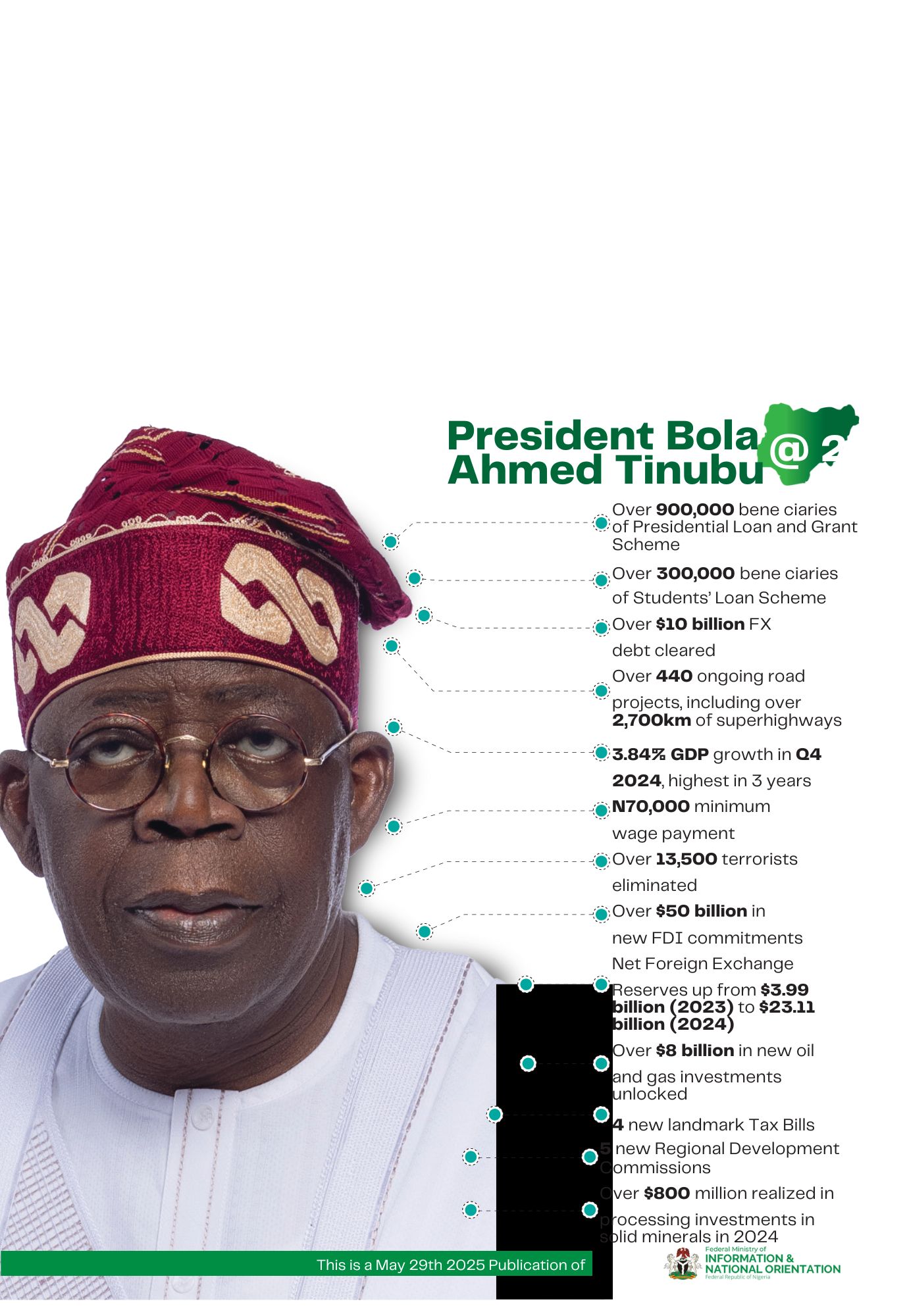
Today, every Nigerian is either sympathetic to the emergence of the City Boys Movement or its combative counterpart, the Village Boys Movement. No one is sitting on the fence. For proper context, the City Boys Movement was founded and energized by Seyi Tinubu, President Bola Tinubu’s son. The primary purpose of forming the City Boys Movement is to galvanize support for the re-election of Bola Tinubu in 2027. It is a legitimate aspiration for any government to seek re-election for another term after successfully impacting the lives of the citizens. However, it becomes a journey into guaranteed perdition when a government trammels the lives of the citizens through ill-conceived policies that plunge the people into hardship and misery, then turn around to seek re-election.
If a government has done well, the good works will advertise that government. But when a government has only succeeded in inflicting anguish of scandalous dimension on the citizens, it becomes an affront on the part of the government to seek re-election. By naming the movement the City Boys Movement, Seyi Tinubu situates the principles of the movement around city life, fraught with pretences, betrayals, and an impotent lack of originality, devoid of any traceable roots. Those who populate the City Boys Movement are temporary, yesterday’s self-styled wealth mongers whose source of wealth is at best questionable. Some of them have subtly insinuated that they joined the movement not because they genuinely believe in the re-election of Mr. President but because they need to protect their businesses and inscrutable sources of wealth.
The ostentatious lifestyle of the members of the City Boys Movement is an insult to the collective desolation and wretchedness of millions of Nigerians. The movement is banking on exploiting the poverty of millions of Nigerians to hoodwink them for votes in 2027. Such a primitive conception of politics flounders before the electorate who have seen through the guile of city life. Therefore, the populace would make a better, informed decision even after ingratiating themselves with the City Boys Movement. City, like the Court in Shakespeare’s play referenced above, offers short-term, ephemeral, fleeting moments which dissipate like a mirage upon the dawn of reality.
Cities are to be plundered and their resources returned to the village. In a way, we can profitably argue that City, for Nigerians, offers political eroticism, which collapses on the hills of fidelity. A City Boy could be sublimated to mean a person who lacks an identifiable background without any roots. When some people return to the village to celebrate holidays, others, without roots or whose roots have questionable genealogy, stay back in the city. On a more ideological level, the City Boys Movement represents the nouveau, capitalist, rich class with all its exploitative, condescending attitude towards the poor. Let the City Boys maintain their identity for now, as we have designated them above.
On the other hand, we have the Village Boys Movement, a populist group with unrestricted membership access. As Shakespeare educates us above, the village is a natural site of justice, fair play, and equitable competition. It abhors pretence and outlandish discourtesy, which always seeks to renegotiate humanity’s natural inclinations for doing what is proper. The Village Boys Movement is a subset of the Obidient Movement, which comprises millions of youths and the young at heart who believe that Mr. Peter Obi is the direct answer to Nigeria’s current economic misadventure. Although Peter Obi has not emerged as the official presidential flagbearer of any registered political party, his followers, in a display of maniac loyalty that defies explanation, sing his praises as the next president of Nigeria. While many Nigerians are circumspect about his chances in 2027, Peter Obi has assured his followers that he will definitely be on the ballot as a presidential candidate in the next election.
The Village Boys Movement prides itself on being a reflection of the originality and sublimity of the village as a site of recovery, peace, and equilibrium. As Shakespeare educates us further, village possesses that uncanny ingredient to heal and edify. However, it appears that the Village Boys Movement is more interested in countering the deceptive, often desultory narratives of the City Boys Movement rather than espousing its own philosophy and ideology. Like a wildfire, the Village Boys Movement has spread all over the world with posters and fliers of various global, self-appointed coordinators dotting the internet. Market women, young professionals, university students, petty business people, everyone has become a coordinator of a particular sphere of influence within the Village Boys Movement.
While the City Boys Movement, in all its vulgar posturing, is thinly populated by the affluent, wealthy few, those who have benefited, one way or another, from the plum economic vibrations of the country, the Village Boys Movement is populated by ordinary, self-funding, struggling Nigerians who believe that the country must be rescued from the stranglehold of power profiteers and political opportunists. The contest is real. The stage is set between the City Boys Movement and Village Boys Movement.
Both movements rely on different power strategies for victory in 2027. While the City Boys Movement deviously relies on state instruments of coercion and ultimate exploitation of the poor for victory in 2027, the Village Boys Movement relies on a recalibrated resolve to ultilize the instrumentality of mass appeal anchored on their newfound mantra “rig and die” to win the election. Who triumphs between the two movements, time shall tell.