Ondo restores environmental task force, increases waste operators to 51
By Julius Alabi, Akure
The Ondo State Government has intensified efforts to address environmental pollution and improve sanitation with the restoration of the State Environmental Task Force after an 18-month hiatus and an increase in the number of private waste management operators from 19 to 51.
The reforms, unveiled by Governor Lucky Orimisan Aiyedatiwa on Wednesday in Akure, also include the deployment of 120 waste skips and two modern side-loader compactor trucks to strengthen waste collection and disposal across the state.
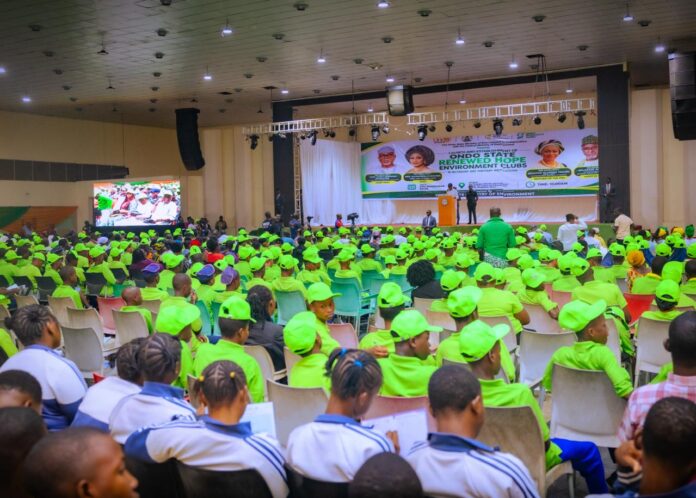
The governor announced the measures during the inauguration of 65 Renewed Hope Environment Clubs in selected secondary schools and tertiary institutions at the Dr Olusegun Mimiko International Centre for Culture and Events, popularly known as The Dome.
The initiatives, according to him, form part of his administration’s renewed commitment to environmental protection, improved public sanitation and the promotion of sustainable development across Ondo State.
Aiyedatiwa said the increase in private waste operators from 19 to 51 was intended to expand the capacity of waste collection services, improve efficiency and ensure that more communities benefit from an organised waste management system.
He added that the deployment of 120 waste skips and two modern compactor trucks would strengthen the state’s waste evacuation capacity and address the challenges associated with indiscriminate refuse disposal.
The governor also announced the commencement of the formulation of the Ondo State Climate Change and Circular Economy Policy, alongside a comprehensive review of existing environmental laws to bring them in line with emerging environmental realities.
He said the administration had equally revived the monthly environmental sanitation exercise as part of measures to restore public consciousness about cleanliness and collective responsibility for a healthy environment.
Aiyedatiwa described the restoration of the Environmental Task Force as a significant step towards strengthening enforcement of environmental regulations, noting that its return after 18 months would help address indiscriminate dumping of refuse and other practices threatening public health.
He stressed that environmental sustainability remained central to his administration’s OUR EASE Developmental Agenda, warning that economic development would amount to little if natural resources were continually degraded.
According to him, forests, rivers, wetlands, farmlands, coastlines and urban settlements are critical natural assets that sustain livelihoods, provide food and water, preserve biodiversity and support economic activities.
The governor warned that indiscriminate waste disposal, pollution and environmental degradation posed serious threats to public health, agriculture, livelihoods and the wellbeing of future generations.
He maintained that the state could not achieve meaningful development while allowing refuse disposal to undermine public health, or attract sustainable investments without putting responsible environmental management in place.
Aiyedatiwa further identified waste recovery, sustainable agriculture, renewable energy and environmental services as emerging economic opportunities capable of generating employment, encouraging entrepreneurship and stimulating innovation.
He disclosed that his administration had strengthened collaboration with the National Environmental Standards and Regulations Enforcement Agency, the United Nations Industrial Development Organisation and the Food and Beverages Recycling Alliance to improve environmental monitoring and technical capacity.
The governor cited the government’s response to the Akure odour nuisance incident as an example of the importance of timely, evidence-based and coordinated intervention in addressing environmental challenges.
On the establishment of the 65 Renewed Hope Environment Clubs, Aiyedatiwa said the initiative was being implemented under the Renewed Hope Initiative of the First Lady, Senator Oluremi Tinubu, to inculcate environmental consciousness among young people.
He explained that the clubs would expose students to practical environmental activities, including tree planting, waste sorting, recycling, sanitation, water conservation and peer education, with programmes extending beyond school premises into surrounding communities.
The governor urged students to become environmental ambassadors and called on teachers, parents, traditional rulers and community leaders to support the initiative by promoting responsible environmental practices.
In her address, the wife of the governor, Mrs Esther Aiyedatiwa, described the establishment of the clubs as an investment in the future of young people and the development of sustainable communities.
She identified flooding, coastal erosion, deforestation, plastic pollution, indiscriminate waste disposal and water contamination as major environmental challenges threatening livelihoods, public health and biodiversity, particularly as climate change continues to intensify their effects.
Mrs Aiyedatiwa cautioned that the clubs must not become mere school associations but should serve as active platforms for environmental learning, innovation and community engagement.
She said students must take ownership of the initiative by translating the knowledge acquired into practical actions that would improve sanitation and protect the state’s natural resources.
The Minister of Environment, Balarabe Abbas Lawal, represented by the Assistant Director, Pollution Control and Environmental Health Department, Federal Ministry of Environment, Mr Dangiwa Ewa Oruwe, endorsed the initiative, describing it as consistent with the Federal Government’s Renewed Hope Agenda.
He urged the state ministries of Environment and Education, school administrators and other stakeholders to ensure that the clubs remained functional and sustainable, adding that environmental education must translate into practical action.
Earlier, the Commissioner for Environment, Dr Tob Loko, said the initiative, implemented in collaboration with the Office of the First Lady, was designed to take environmental education beyond textbooks and examinations to practical engagement within schools and communities.
Loko said the ministry would work with the Office of the First Lady, local governments, educational institutions, parents and other stakeholders to ensure the success of the programme.
Also speaking, the Chairman of the Ondo State Waste Management Board, Mrs Yinka Alabi, urged residents to regard environmental sanitation as a personal responsibility rather than leave the task entirely to government.
She called for a return to the culture of maintaining clean surroundings, stressing that individuals and communities must take responsibility for proper waste disposal without waiting for government officials to enforce cleanliness.
Similarly, the Chairman of the Ondo State Oil Producing Areas Development Commission, Prince Biyi Poroye, pledged the commission’s support for the governor’s environmental agenda and called for renewed commitment to tree planting.
Environmental activist, Miss Motunrayo Oyedele, also advocated greater adoption of environmentally friendly practices, including afforestation, reforestation, energy conservation and regular sanitation under the Green City Initiative.
Environmental and safety kits were distributed to participating schools to equip students with materials for promoting cleanliness, safety awareness and responsible waste management within their institutions and surrounding communities.