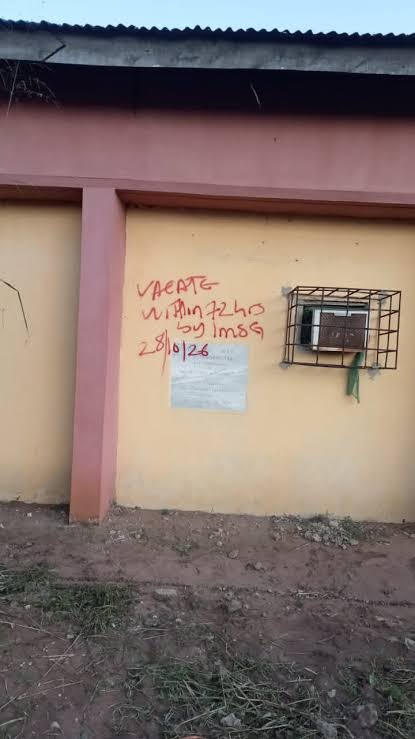
IBC demolition threat: RULAAC seeks investigation of Uzodinma’s aide, calls for suspension of quit notice
By Ishaya Ibrahim
The Rule of Law and Accountability Advocacy Centre (RULAAC) has called for an independent investigation into the alleged role of Imo State Government’s Special Adviser on Monitoring and Compliance, Chinasa Nwaneri, in the reported move to evict the Imo Broadcasting Corporation (IBC) from its premises.
The organisation also urged Governor Hope Uzodimma to suspend a reported 72-hour quit notice issued to the state-owned broadcasting station and halt any planned demolition pending clarification of the circumstances surrounding the action.
In a press statement dated October 29, 2026, and signed by its Executive Director, Okechukwu Nwanguma, RULAAC said reports of the proposed eviction, published by TheNiche on October 28, raised serious questions about the authority behind the move and its intended purpose.
According to the report, officials associated with the state’s Monitoring and Compliance Bureau reportedly gave IBC 72 hours to vacate its premises and marked the facility for demolition.
RULAAC expressed concern that the action was allegedly taken without an explanation or a disclosed relocation arrangement, adding that neither the Director-General of the corporation nor the Commissioner for Information was reportedly aware of the development.
The organisation called on the state government to clarify Nwaneri’s involvement, the authority under which the officials acted and the intended use of the property.
It noted that although Nwaneri had publicly been identified as Special Adviser on Monitoring and Compliance and had announced government land-recovery measures, his designation alone did not establish the specific authority or approvals for displacing a public broadcasting institution.
RULAAC further argued that the reported development must be examined against previous allegations involving Nwaneri and disputed land acquisitions in the state.
It cited a March 2024 report on Suit No. HOW/787/2023, in which the Oparaugo Ajoku family challenged the alleged takeover of Nkporo Farmland.
Nwaneri was reportedly named alongside Governor Uzodimma and other state officials in the case, with the family alleging that interference with its land occurred at his instigation.
The organisation also referenced allegations made by representatives of Umuoyima community in 2025, who accused Nwaneri of involvement in intimidation over disputed land allegedly claimed by Deputy Speaker Amara Iwuanyanwu.
However, RULAAC stressed that the allegations required fair and independent investigation, with those accused given an opportunity to respond.
It called for a broader inquiry into allegations that disputed land acquisitions in Imo State may have benefited serving or former public officials, insisting that the beneficiaries, authorisations and transactions must be established through evidence.
The group specifically asked the state government to disclose who authorised the reported quit notice and proposed demolition, the role played by Nwaneri, and whether any private beneficiary or commercial development was contemplated for the property.
It also demanded clarification on whether an alternative facility had been secured and equipped for IBC and how the government intended to protect the corporation’s staff, equipment, archives and uninterrupted broadcasting services.
Describing IBC as a public institution serving the information needs of Imo residents, RULAAC said any decision affecting its premises must be backed by a clear public purpose and a credible plan to ensure continuity of operations.
The organisation urged the Imo State House of Assembly to exercise its oversight powers by convening a public hearing into the proposed displacement of the broadcasting corporation and broader concerns surrounding land administration in the state.
It also called for the preservation of all documents relating to the property, including allocation papers, official correspondence, development proposals and agreements with third parties.
RULAAC maintained that legitimate efforts to recover public property deserved support but warned that such exercises must be transparent, accountable and demonstrably serve the public interest rather than politically connected individuals.