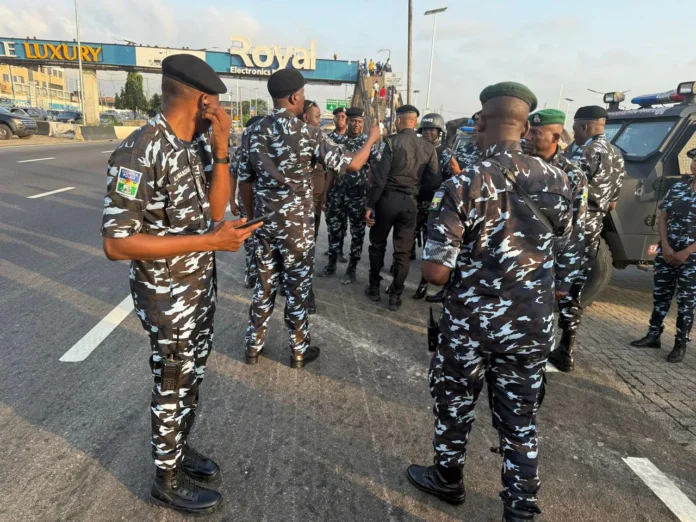
The State Police Bill was introduced by President Bola Tinubu to address critical security and structural challenges.
By Kehinde Okeowo
A total of 32 out of the 36 states in Nigeria have now approved the bill seeking to amend the 1999 Constitution to allow the creation of state police, leaving just four states yet to assent to the bill.
This was revealed on Wednesday after more State Houses of Assembly in the federation transmitted their approvals to the National Assembly.
The development means the bill has met the constitutional requirement of two-thirds of state assemblies—which is 24 states—to become law.
Those that have endorsed the proposal are Abia, Adamawa, Akwa Ibom, Anambra, Bayelsa, Benue, Cross River, Delta, Ebonyi, Edo, Ekiti, Enugu, Gombe, Imo, Jigawa, Kaduna, Kano, Kebbi, Kogi, Kwara, Lagos, Nasarawa, Ogun, Ondo, Osun, Oyo, Plateau, Rivers, Sokoto, Taraba, Yobe, and Zamfara states.
The four states awaited include Katsina, Bauchi, Borno, and Niger states.
ALSO READ: Commotion as Imo govt moves to demolish its own broadcast station within 72 hours
With the approval of 32 states, the bill will now move to the next stage of the constitution amendment process before final assent by the President.
President Bola Ahmed Tinubu transmitted the state police bill to the Senate on 24 June 2026 to help address critical security and structural challenges.
In the same month, the Nigerian Senate passed a constitutional amendment bill to shift policing from the Exclusive Legislative List to the Concurrent Legislative List, allowing states to create and manage their own police services.
The framework retains a federal police service to handle national matters like terrorism, border security, cybercrime, and organised crime, alongside state-level police forces.
However, while proponents of the State Police bill have long argued that it will help tackle insecurity, banditry, and kidnapping across the country, opponents argue that state governors might deploy it against their political rivals.