Tinubu’s road to nowhere
By Paul Ibe
On May 29, 2023, President Bola Ahmed Tinubu announced, with the confidence of a man who had all the answers, that “fuel subsidy is gone.” Nigerians were promised that the savings would be invested in infrastructure and public services. What followed was a brutal escalation in living costs, while the promised relief remained painfully elusive.
Into this landscape of sacrifice came the Lagos-Calabar Coastal Highway: a 750-kilometre project promoted as a transformative investment in transport, trade and tourism.
Its ambition is undeniable. But ambition is not a substitute for economic judgment.
The question is not whether Nigeria needs roads. It is whether this particular road, through this particular procurement process, deserves priority over the highways Nigerians already depend upon.
The project’s projected cost has been variously discussed in figures running into trillions of naira, including estimates of around ₦15 trillion. Some critics have cited figures as high as $16 billion. Because the full, independently verifiable cost and financing framework have not been placed transparently before the public, the argument over its true price remains unresolved.
That uncertainty alone should alarm a country whose leaders constantly invoke scarce resources to justify hardship.
Consider the East-West Road, the long-neglected economic artery connecting vital parts of the Niger Delta. It carries workers, traders, food, manufactured goods and activity tied to the nation’s oil and gas economy. Its failures are not theoretical. They translate into wasted hours, damaged vehicles, higher transport fares, disrupted commerce and lost incomes.
The same country that cannot adequately maintain this indispensable corridor is committing enormous resources to an additional highway serving overlapping economic interests.
Why was comprehensive rehabilitation and expansion of the East-West Road not the first priority? Where is the published comparative analysis proving that a new coastal route offers greater economic returns than upgrading the existing corridor and repairing other federal highways that have become death traps?
Every naira committed to a new project is a naira unavailable for another public need. That is the meaning of opportunity cost.
Across Nigeria, broken federal roads are isolating farming communities, slowing freight and turning ordinary journeys into dangerous expeditions. A credible infrastructure programme would rank projects by traffic demand, economic impact, safety, affordability and readiness for execution.
It would tell citizens what must be built now, what can wait and why. Instead, the coastal highway is presented as self-evidently indispensable, as though its price and competing priorities are impertinent questions.
These are not questions from enemies of development. They are the questions development demands.
Recent statements from the Minister of Works, David Umahi, make the issue even more troubling. In an official account published on October 8, 2026, the Federal Ministry of Works said President Tinubu had directed that the coastal highway’s continuation be aligned with the existing East-West Road in parts of the Niger Delta. Difficult terrain, flooding risks and challenging subsoil conditions were cited in explanations surrounding alterations to the route.
Then, on October 12, Umahi insisted that the original 750-kilometre alignment remained intact and that reconstruction of approximately 400 kilometres of the East-West Road was an additional project, not a substitute.
Which account should taxpayers believe? Is the East-West Road an alternative alignment, an integrated part of the coastal highway or an entirely separate undertaking? If it is an additional project, what has changed about the original route? And if it is good enough to carry a major portion of the traffic, why was modernising it not the government’s starting point?
There may be sound engineering reasons for redesigning a highway in difficult coastal terrain. No serious critic should deny that. What is indefensible is the absence of a clear, accessible account showing how each adjustment changes the scope, cost and timetable.
If officials now say the East-West reconstruction is additional, citizens deserve separate budgets and delivery schedules for both undertakings.
Otherwise, a revised explanation today could become an unanticipated financial obligation tomorrow, with the public left to pay for decisions it was never permitted to examine.
A multi trillion-naira national project should not leave citizens guessing about where it will run or how many roads they are being asked to finance.
The environmental questions are equally serious. Construction began in 2024. Yet the Federal Ministry of Environment publicly displayed the draft environmental and social impact assessment for Section One only on August 27, 2024, and that for Section Two in October of the same year.
The government has maintained that the necessary environmental approvals existed before construction began. Both the dates and that assurance deserve reconciliation through the publication of the relevant documents.
Which permits covered the early works? When were the full environmental and geotechnical investigations completed? Which design decisions were made before the findings became available?
These are fundamental safeguards, not bureaucratic inconveniences.
Flooding around sections of the Lagos corridor has sharpened public anxiety. Residents and critics have questioned whether construction affected natural drainage. Umahi denies that the highway caused the flooding, pointing instead to blocked waterways, existing drainage problems and climate change.
An independent engineering and environmental audit, not competing political declarations, should establish the facts. Nigerians should not have to choose between ministerial assurances and residents’ fears when the evidence can be examined.
Then there is the procurement controversy. Hitech Construction, a company associated with the Chagoury business interests, received the initial contract without an open competitive tender.
The government has defended the single-source arrangement on technical and procurement grounds. But a project of this scale must meet a higher standard than officials merely asserting that due process was followed.
Publish the approvals, procurement justification, cost comparisons, evaluation documents and contract terms. Show Nigerians how value for money was determined.
The concerns deepen because the Chagoury family’s relationship with Tinubu is publicly known.
In 2024, Atiku Abubakar questioned the fact that Seyi Tinubu sits on the board of CDK Integrated Industries, in which Chagoury interests hold shares. The Presidency acknowledged his directorship, stressed that it began in 2018 and denied any conflict of interest.
Board membership in CDK does not, by itself, establish wrongdoing in the highway contract. But the combination of personal connections and a noncompetitive award makes full disclosure an imperative.
Public contracts must be demonstrably awarded on merit, not left under a cloud of unanswered questions.
And now there are reports of a possible additional $20 billion borrowing proposal linked to the highway. Atiku has demanded clarification; the alleged loan and its terms have not been independently established.
That makes official disclosure more urgent, not less. Is further borrowing contemplated? For what works? Under what conditions? With what repayment obligations?
How can Nigerians be told that government must withdraw relief because money is scarce, while the same government cannot give them a complete public account of the cost of its flagship road?
There is an almost cruel irony in the administration’s decision, announced in July 2026, to rename the highway after President Tinubu.
The political monument was unveiled while the financial and engineering questions surrounding the wider project remained unanswered.
Nigeria does not oppose big ideas. It opposes big bills without convincing answers.
The National Assembly should demand the original and revised route maps, feasibility studies, environmental approvals, procurement records, contract variations, payments made, total projected liabilities and financing proposals.
Independent professionals should be allowed to scrutinise them in an open hearing. Any new borrowing must be subjected to rigorous legislative and public examination.
A road is not a legacy merely because it carries a President’s name. It earns that status by solving a demonstrated problem, delivering value and improving lives.
The Lagos-Calabar Coastal Highway may eventually reach Calabar. But if its justification keeps shifting while the East-West Road and other vital arteries remain in distress, the administration will have built something far less impressive than a development corridor.
It will have built a monument to misplaced priorities: a highway with a destination on the map, but no convincingly established destination in Nigeria’s development plan.
That is Tinubu’s road to nowhere.
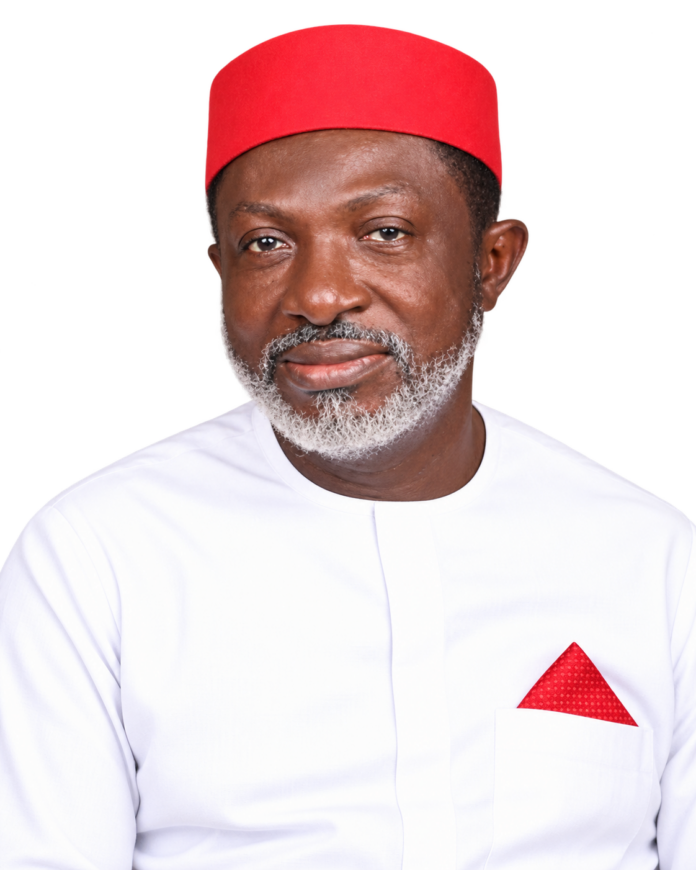
- Paul Ibe, Media Adviser to Atiku Abubakar, writes from Abuja.