AI disinformation threatens Nigeria’s democracy, Jigawa gov warns editors
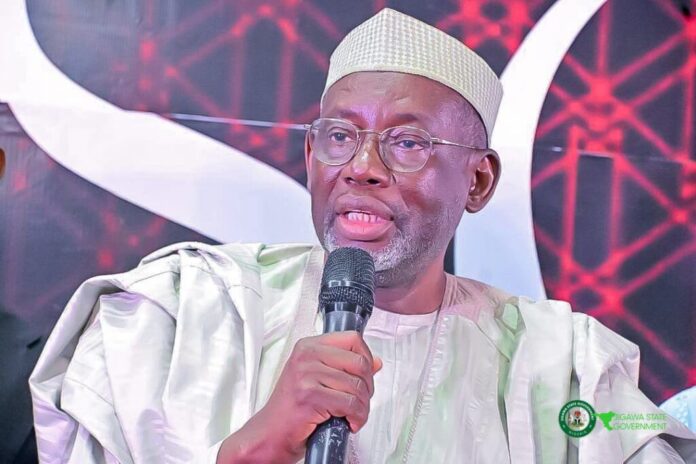
Jigawa State Governor Umar Namadi has called for the regulation of social media to curb the spread of false information, urging Nigerian editors to strengthen fact-checking and verification systems to protect the country’s democracy.
Namadi said deliberate falsehoods, particularly those generated through artificial intelligence (AI), posed a serious threat to democratic governance, public trust and credible elections.
The governor made the call in a goodwill message delivered at the 2026 All Nigeria Editors Conference (ANEC 2026), organised by the Nigerian Guild of Editors in Enugu State.
The conference, which runs from September 23 to 27, has the theme, “The Ballot, the Media and the Task of Keeping Democracy Alive,” while its subtheme is “When Lies Look Real…”.
According to Namadi, the growing sophistication of AI tools has made it increasingly difficult for citizens to distinguish between authentic information and fabricated content.
“In this era of digital transformation, AI-based disinformation is among the most serious threats to modern democracy because it can imitate reality, manipulate public opinion, inflame tensions, and undermine confidence in electoral outcomes,” he said.
He added that artificial intelligence, image-editing software and other emerging information and communication technology tools could produce convincing falsehoods capable of misleading the public.
“Artificial intelligence, image-editing software, and other emerging ICT tools can now generate and manipulate text, images, audio, and video so convincingly that falsehood can readily appear true,” the governor said.
Namadi urged media practitioners and citizens to develop the capacity to identify and expose disinformation, particularly before, during and after elections.
He said credible elections depended not only on the ballot box but also on voters having access to accurate information to make informed decisions.
“The media therefore bears a vital responsibility to provide accurate and objective reporting before, during, and after every electoral contest,” he said.
“To perform this role effectively, the media must strengthen fact-checking and verification, uphold professional ethics, and equip journalists to detect and counter disinformation without compromising editorial independence.”
The governor also urged media organisations to prioritise responsible journalism over the race to publish breaking news, saying accuracy and public understanding should take precedence over speed.
“For me, the challenge before editors should not be about ‘breaking news,’ – who breaks the news first – but about ensuring responsible publishing, protecting the truth, and helping citizens understand it with clarity and confidence,” he said.
He called on Nigerian media organisations to invest in verification systems, newsroom fact-checking capacity, media literacy and the ethical use of technology.
Namadi further urged collaboration across media platforms to ensure that harmful disinformation was identified and debunked before it gained widespread circulation.
He described editors as the final line of defence against inaccurate and misleading information, particularly in an era when false narratives could spread rapidly online.
“While managing newsrooms, the editor is also the final line of defence for accuracy, fairness, balance, ethics, and national responsibility, especially when false information is designed to look credible and travel faster than the truth,” he said.
The governor also called on the Nigerian Guild of Editors to uphold professional integrity and ensure accountability among its members.
He said the media’s influence could be used to promote national development and unity but warned against the use of journalism to spread hatred and falsehood.
“The power of the pen, and, today, the keyboard, is profound: it can inform, enlighten, reconcile, and advance development, but it can also spread malice and falsehood, deepen hatred, and sow discord among individuals, communities, institutions, and nations,” Namadi said.
On social media regulation, the governor said Nigeria already had legal provisions to address certain forms of online falsehood and harmful communication.
He cited Section 24 of the Cybercrimes Act, as amended in 2024, and Section 123 of the Electoral Act 2022, which he said prohibited specified false statements about candidates and their withdrawal during elections.
“Fortunately, Nigeria already has relevant laws. Section 24 of the Cybercrimes Act, as amended in 2024, criminalises knowingly false online messages intended to cause a breakdown of law and order or threaten life.
“Section 123 of the Electoral Act 2022 prohibits specified false statements about candidates and their withdrawal during elections,” he said.
Namadi called for greater public awareness and fair enforcement of the laws, stressing that measures to tackle disinformation must not undermine press freedom or legitimate expression.
“Our task, therefore, is to strengthen public awareness, ensure fair and consistent enforcement, and close any gaps through clear, proportionate, and rights-respecting measures,” he said.
“Such measures must deter deliberate falsehood, incitement, and character assassination without imperilling legitimate expression or press freedom.”
He also advocated collaboration between the government and media organisations to promote digital literacy and responsible citizenship.
According to him, sustained information, education and communication programmes would help citizens identify and reject disinformation while strengthening confidence in public institutions and the democratic process.
The governor highlighted initiatives by his administration in Jigawa State, including the Gwamnati da Jama’a (Citizens’ Engagement) Programme, which he said provided a platform for citizens to engage directly with government officials across the state’s 27 local government areas.
Under the programme, elected officials present their scorecards, answer questions and incorporate public feedback into budgetary and policy priorities.
Namadi said the initiative promoted accountability and public trust by expanding access to verified information and creating regular channels for dialogue.
He also disclosed plans for a Digital Social Responsibility Programme to complement the Mass Mobilisation for Societal Reorientation Executive Order No. 2 of 2026, which he said he had signed.
The proposed programme, according to the governor, would promote digital literacy, ethical communication, civic responsibility and constructive engagement.
Namadi congratulated the Nigerian Guild of Editors on the conference, commending the organisation for sustaining the annual gathering as a platform for professional reflection and the promotion of ethical journalism.
He recalled that the conference began in Ada, Osun State, in 2004, and had, over 22 years, promoted professional excellence, defended press freedom and strengthened editorial integrity.
The governor also acknowledged the contributions of past leaders of the Guild, including its founding president, Lateef Jakande, as well as Tony Momoh, Chris Okolie, Ray Ekpu, Garba Shehu, Oluremi Oyo and Bala Dan Tiye.
He commended the current president, Eze Anaba, for sustaining the organisation’s commitment to professionalism, integrity, press freedom and national service.
Namadi expressed hope that the conference would produce practical measures to strengthen journalism in the digital era and promote national unity.
“I hope and pray that this conference will advance pragmatic ways for the media to uphold professionalism in the digital era, champion truth, reject divisive narratives, and strengthen national unity,” he said.
He wished delegates fruitful deliberations and safe journeys home, expressing confidence that the gathering would deepen public trust and reinforce the country’s commitment to an informed and democratic society.