



RULAAC seeks FG’s intervention as Nigerian welder, son languish in Benin Republic prison after arrest while working on ship
The Rule of Law and Accountability Advocacy Centre (RULAAC) has called on the Federal Government to urgently intervene in the reported nearly four-month detention of a Nigerian pastor, Alabo Ika Pere, and his 18-year-old son, David Alabo, in the Republic of Benin.
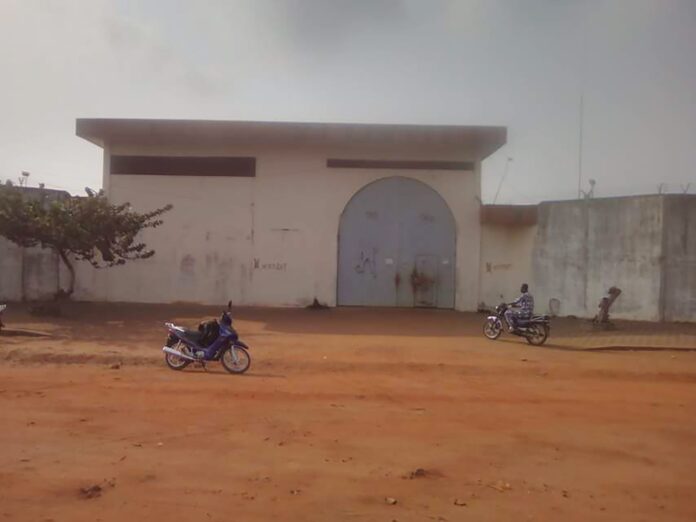
RULAAC, in a statement signed by Executive Director Okechukwu Nwanguma, said the two Nigerians were arrested on May 17, 2026, and are currently being held at the Maison d’Arrêt de Cotonou, also known as the Cotonou Civil Prison.
The rights advocacy organisation said it had written to the Minister of Foreign Affairs, the Nigerian Embassy in Cotonou and the Nigerians in Diaspora Commission (NiDCOM), seeking immediate diplomatic and consular intervention.
RULAAC said the men travelled to Cotonou after Pere, a certified underwater diver and underwater welder, was contracted to carry out underwater welding work on a vessel. His son reportedly accompanied him as an assistant welder.
RULAAC said the family reported that law-enforcement officers later boarded the vessel following the alleged discovery of contraband goods and arrested people found aboard.
The family maintains that neither Pere nor his son had any ownership interest or operational control over the vessel and that they had no knowledge of, or involvement in, the alleged contraband.
RULAAC said the prolonged detention was particularly concerning because the family reportedly had not been informed of any formal charges, while no trial was known to have commenced.
It added that a Cotonou-based lawyer, Barrister Jaurès Ahs, had reportedly been allowed to visit the detainees once, but that the family and church leadership had not been granted access to them.
RULAAC said the identification of the prison where the two men are being held should enable Nigerian consular officials to urgently visit them and independently establish their welfare, legal status and detention conditions.
RULAAC urged Nigerian diplomatic authorities to establish the specific allegations against each of the two Nigerians, determine whether they have been formally charged and ascertain whether they have appeared before a competent judicial authority.
It also called for clarification of any judicial orders authorising their continued detention since May 17.
The organisation said authorities should establish whether there is evidence individually linking either man to the alleged contraband, rather than inferring criminal responsibility solely from their reported presence aboard the vessel.
RULAAC said the case engages protections under Article 36 of the Vienna Convention on Consular Relations concerning communication and access between consular officials and nationals detained abroad.
It also cited Articles 6 and 7 of the African Charter on Human and Peoples’ Rights, which deal with liberty, protection against arbitrary detention and the right to have one’s cause heard.
The organisation called on the Nigerian Embassy in Cotonou to immediately visit Pere and David at the Maison d’Arrêt de Cotonou, assess their physical and psychological welfare and detention conditions, engage their lawyer and obtain authoritative information from Beninese authorities on the allegations and proceedings.
It also urged the authorities to provide the family with accurate information about the men’s legal situation and facilitate communication with them, subject to applicable prison regulations.
RULAAC expressed particular concern over David, who is 18 years old and, according to his family, travelled with his father in the capacity of an assistant welder.
The organisation said his age and reported subordinate role made it important to establish what evidence, if any, personally connects him to the alleged offence.
“Criminal responsibility must be determined individually and on evidence,” RULAAC said, arguing that mere presence at a location where suspected contraband is discovered should not replace proof of individual criminal responsibility.
RULAAC said it was not asking the Nigerian government to obstruct a legitimate investigation or pressure Benin to release anyone against whom credible evidence of criminal conduct exists. Instead, it said that where credible evidence exists, the affected person should be formally charged, granted effective access to counsel and given a prompt and fair trial.
“If there is no credible evidence connecting either of them individually to the alleged offence, they should be released without further delay,” the organisation said.


