NSML pushes towards eradicating Africa’s Maritime training barrier with sea-time, interventions
By Uzor Odigbo
Nigeria’s quest to produce globally competitive seafarers received a major boost as NLNG Shipping and Marine Services Limited (NSML) said 272 cadets have completed sea-time training through its structured development programme, while 54 others are progressing towards professional certification.
The intervention is aimed at addressing one of the biggest challenges facing Africa’s maritime workforce limited access to practical sea-time experience required for professional certification.
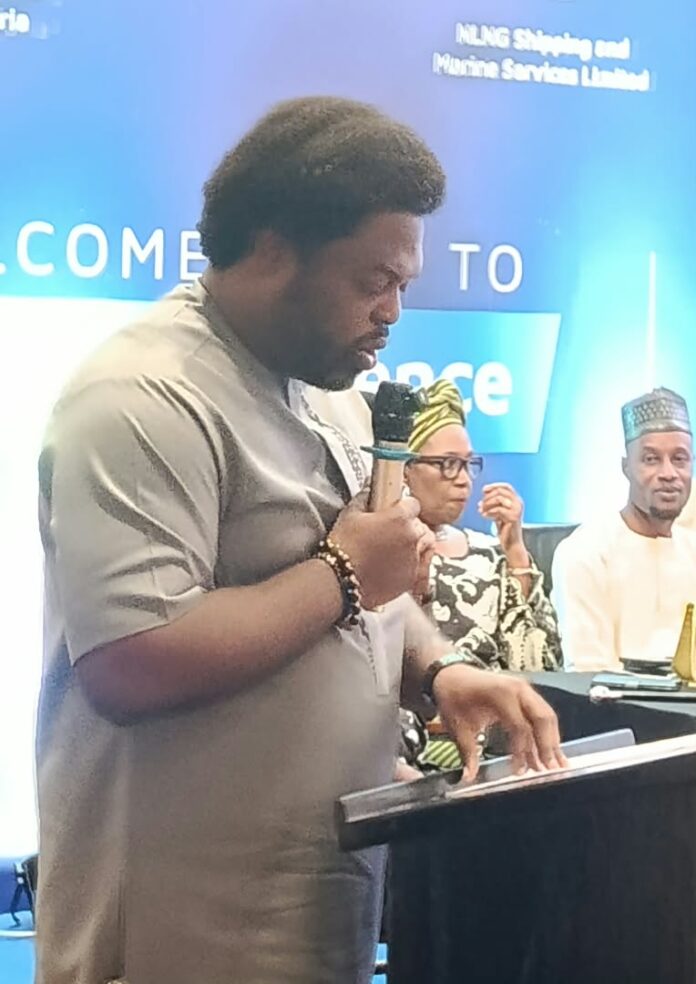
The figures were highlighted in a presentation on the NSML Maritime Centre of Excellence (MCOE) at the 2026 Maritime Training Summit organised by the Association of Maritime Journalists of Nigeria (AMJON) in Lagos.
The presentation was delivered at the AMJON summit, which focused on “The Power of Innovation in a Future-Ready Maritime Training Agenda
Africa, despite its strategic maritime position and extensive coastline, continues to face a shortage of internationally certified seafarers and maritime professionals.
Aspiring seafarers across the continent are often confronted with limited access to quality training, modern simulators, international accreditation and practical opportunities onboard vessels.
These challenges have contributed to a continued reliance on expatriate personnel for specialised technical and operational roles in the maritime industry.
Its Maritime Centre of Excellence on Bonny Island was designed to disrupt the traditional training model by combining classroom learning with simulator-based training, professional certification, research, consultancy, industry collaboration and structured pathways to sea-time experience.
The centre’s Seafarers Continuous Development Programme was specifically developed to bridge the gap between maritime education and deployment onboard vessels.
Through partnerships with the Nigerian Maritime Administration and Safety Agency (NIMASA) and the Maritime Academy of Nigeria, Oron, the programme supports cadets in their journey towards obtaining Certificates of Competency.
According to NSML, 272 cadets have completed sea-time training through the programme, while 54 others are currently in college or onboard vessels working towards professional certification.
The development comes as the maritime industry increasingly demands professionals capable of operating in a sector being transformed by digitalisation, automation, decarbonisation and advanced safety requirements.
NSML said the MCOE was created as a response to the limitations of conventional maritime training, which often focuses largely on classroom learning without providing sufficient exposure to real-life operations.
The centre combines maritime training with advanced bridge simulators, engine room simulators and Dynamic Positioning systems.
The facilities allow trainees to simulate operational scenarios, practise emergency procedures, develop navigational competence and strengthen decision-making skills in high-risk environments.
NSML said the use of simulation technology was helping to narrow the gap between theoretical knowledge and the realities of vessel operations.
Global Certification Without Travelling Abroad
The centre has also secured several international accreditations, allowing maritime professionals to access globally recognised training and qualifications locally.
Its accreditations include certifications and recognition from DNV, the United Kingdom Maritime and Coastguard Agency, the Nautical Institute, Marshall Islands, Bermuda and NIMASA.
NSML said the development was helping to reduce the need for Nigerian and African maritime professionals to travel abroad for specialised training and certification.
The company added that the centre’s model was designed to develop an integrated maritime talent pipeline rather than treat training as a fragmented process.
Over 700 Nigerian Seafarers
Beyond training, NSML said it has continued to pursue a Nigerianisation agenda aimed at developing indigenous maritime professionals capable of operating to international standards.
As of August 2026, the company said it employed more than 700 seafarers, making it one of the largest employers of qualified Nigerian seafarers.
The initiative, according to NSML, demonstrates how deliberate investment in local manpower can create economic and strategic value for Nigeria.
The centre is also expanding beyond training into maritime research, intelligence and consultancy, including shipbuilding supervision, commercial project evaluation, dry docking supervision, vessel lifecycle support and crew and vessel management advisory services.
NSML said the Maritime Centre of Excellence was increasingly emerging as a regional hub capable of providing globally benchmarked maritime training within Africa.
With further expansion planned, the company said the centre aims to increase capacity, introduce additional courses and broaden its services to enable more international maritime certifications to be obtained locally