



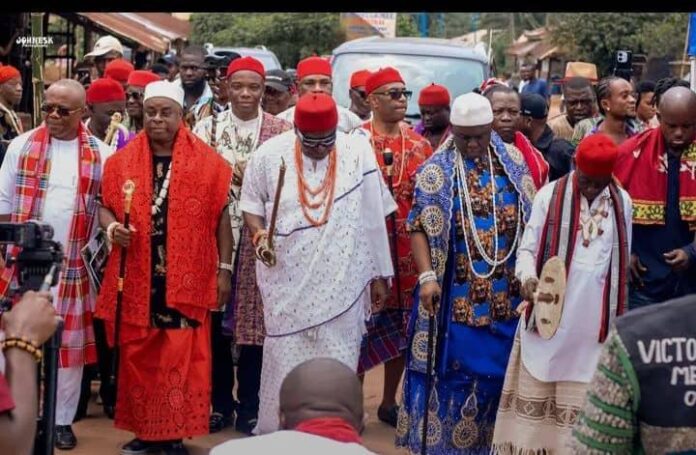
Eyirieyi Obohia: The socio-economic potentials of a transformative culture
By Ikechukwu Amaechi
I am, indeed, glad to be here today talking about our cultural lodestar, Eyirieyi Obohia. For some of us who spent our formative years in this community, the annual cultural festival was and still remains a way of life. We looked forward to that iconic day and in those days, Eyirieyi was such a big deal that it trumped every other festivity, including even Christmas, not to talk of Iri ji Mbaise, which usually comes a few days after.
It also became our identity. When you introduce yourself as an Obohia son or daughter, the next question will always be, “Owu ndi ahu na eme Eyirieyi.”
So, it is a thing of joy that we are here today in celebration of this great cultural heritage bequeathed to us by our forefathers.
But my task is not to regale us with the origins of Eyirieyi. Our brother, an illustrious son of the land, Rev. Fr. Val Chima Anyanwu, did a yeoman’s job with his 2023 lecture titled, Eyirieyi Obohia Festival: Rekindling and consolidation of the values and spirit of our cultural heritage in the present day society.
Suffice it to say that Eyirieyi Obohia, as Fr. Anyanwu clearly articulated in his brilliant lecture, “Is a cultural festival celebrated by the people of Obohia,” and the unique cultural celebration normally takes place on the second Nkwo market day in August. As the name suggests, it is a festival agreed and fixed by the ancestors of Obohia (ihe eyiri eyi) which unites the community as people of a common origin.
It is an age-long tradition as there is no one alive today who can claim to have been there when it started. But it is one tradition that has endured and which has over the years proven an uncommon resilience in the face of the corrosive impact of Judeo-Christian inspired civilisation on African cultures and traditions. Instead of being swept away, its capacity to lend itself to transformation has been amazing.
In dealing with the phenomenon of Eyirieyi Obohia and its transcendental propensity, I will compartmentalise its evolution into four “ages.”
The age of purity
This was the period from when the culture was birthed, which as I noted earlier, no man alive today can attest to until the 1970s. It was the puritanistic era when most of the practices associated with the culture were still practiced. Though there are no eyewitnesses and even documented records because our forefathers didn’t know how to read and write, it is significant that what was passed on from generation to generation remained unadulterated to the extent that it was easy to imagine its very puritanical beginnings.
Fr. Anyanwu in his lecture said this period started from the time of our forebears to the precolonial, colonial and post-colonial periods up to the period Christianity came to Obohia around 1916.
“Just like in many African traditional societies, the advent of Christianity brought a paradigm shift in belief system and culture of the people of Obohia. Contact with Christianity and European civilisation pushed people to abandon their traditional faith and culture. There was increase in the number of converts to Christianity, which resulted in Eyirieyi festival being held in contempt because people started seeing it as having a pagan root since it was linked to Ezeala Ogugo, the chief deity of Obohia. Based on this, many Christian converts in Obohia were no longer proud to celebrate their cultural heritage,” he noted.
READ ALSO: Eyirieyi Obohia: The transcendental culture of my people
I agree but it is also important to note that Christianity did not impact negatively on the culture as such until the later part of the 1970s when the more pietistic genres of Christianity – Pentecostalism and the Charismatic Revival group in Catholicism – that saw nothing good in our customs and traditions, even the ones that promote the very pristine Christian values of love, peace and unity as Eyirieyi does, started demonising it as idol worship.
Notwithstanding, this for me was the golden age of Eyirieyi when all roads from far and near led to Obohia on the second Nkwo market day of every August.
The revival age
At the end of the civil way in January 1970, the centre in Igboland could no longer hold. The entire homeland completely devastated as a result of the 30-month brutal war of attrition, most communities embarked on rediscovery voyages in trying to recreate their heritages. Eyirieyi became the people’s anchor in this journey.
And two things helped. First was the formation of the elitist Obohia Development Front (ODF) by the community’s mostly middle-class indigenes. ODF which played a dominant role in the social regeneration of the community nudged one of their own, Sir Amam Alban Acholonu, to embark on the first published research on Eyirieyi Obohia, a task he accomplished in 1974. With that, Eyirieyi festival became not just a matter of oral tradition but there is now a literature. Since then, some other people, including Fr. Val Anyanwu have written books on the phenomenal cultural festival.
The second major development of this era was the audacious entry of Monsignor Donald Okoro, Obohia’s first indigenous Catholic Priest, into the cultural arena. Fr. Okoro who had just returned from the United States of America where he sojourned for higher degrees, blunted the rather sharp edges of criticism of Eyiriryi by the bourgeoning albeit misguided flank of Christendom by baptizing, in the Christian tradition, the preeminent culture.
Obohia is a predominantly Catholic community with over 80 percent of its Christian population professing Catholicism. And the people have tremendous respect for their Priests who they see as being beyond reproach. Any time I dare criticise a Priest, for instance, my mother will sternly admonish and refer me to Psalm 105:15, which says, “Do not touch my anointed ones; do my prophets no harm.”
An enculturated Priest, who had acquired the norms of his people’s culture, Fr. Okoro, playing an activist role, led the charge for the Christianisation of Eyirieyi, a non-Christian cultural festival. Thus, every Eyirieyi ceremony would start with a High Mass celebrated at St. Peter’s Catholic Church, Amaiyi. Not only that, he would also lead his village in the popular Ekpe Dance at Nkwo Obohia.
And since, to borrow a cliché, no one can be more Catholic than the Pope and by extrapolation, no Christian can be more Catholic than his Priest, most indigenes whose faith in their culture was waning because of their so-called Christian values came to understand that there was no contradiction, after all.
That was the renaissance age, a reawakening period when people came to the realisation that God, indeed, dwells in every culture.
The crisis age
Not many people realise that rather than the threat posed by Christians who believed that their Christian faith frowned upon indigenous cultural festivals, the most virulent existential threat that ever faced Eyirieyi was the splintering of hitherto homogenous communities into glorified autonomous hamlets. This started at the dawn of the Fourth Republic in 1999, particularly in Imo and Abia States with Governors Achike Udenwa and Orji Uzor Kalu leading the charge.
This atomisation of communities which served the selfish political purposes of their promoters put a knife into what used to hold them together and things fell apart. What ensued uncannily mirrored the first stanza of The Second Coming poem written by Irish poet W. B. Yeats in 1919:
“Turning and turning in the widening gyre
The falcon cannot hear the falconer;
Things fall apart; the centre cannot hold;
Mere anarchy is loosed upon the world,
The blood-dimmed tide is loosed, and everywhere
The ceremony of innocence is drowned;
The best lack all conviction, while the worst
Are full of passionate intensity.
Suddenly, almost every village – Ihiite, Elekenowasi, Amaiyi, Umuedo and Umuihuocha – who were children of Obomegbulem (Obohia) wanted to be autonomous. Two – Elekeneowasi and Umuihuocha – got their wish and became autonomous communities, while Ihitte/Umungara (Obohia 1), Amaiyi and Umuedo banded together in Amano autonomous community. Hardly had the dust settled than Umuedo sought and was granted its own autonomy. Today Obohia 1 is also questing for its own autonomy. Till date, the crisis engendered by this unnecessary splintering simmers.
The biggest casualty of the ego war that ensued amongst the new traditional rulers was Eyirieyi Obohia. Rather than coming together to plan the annual festival as it was the case in the past, some of the traditional rulers led their autonomous communities to boycott the event. Some even threatened to hold separate ceremonies in their own enclaves and those responsible for the Ekpe Dance at one point refused to participate.
The crisis got to a head in 2016 when the police were drafted in by a warring faction to dismantle the canopies already mounted at Nkwo Obohia for the festival and everyone scampered for safety. For the first time, a festival that is a celebration of peace, love, conviviality and brotherhood became a metaphor for chaos, animosity and bitterness. Disillusioned with the nihilistic antics of community leaders and what had become of their cherished culture, many indigenes kept their distance.
The renewal age
Fortunately, when all hope seem to have been lost, some young, vibrant, progressive culture aficionados stepped up to the plate, taking ownership, as it should be, of their cultural heritage. Constituting themselves into Eyirieyi Obohia Council in 2020, and leveraging technology, their goal was to rescue the community’s most valued tradition from the doldrums and possible extinction in the hands of community leaders that decided to play puerile politics with our common heritage.
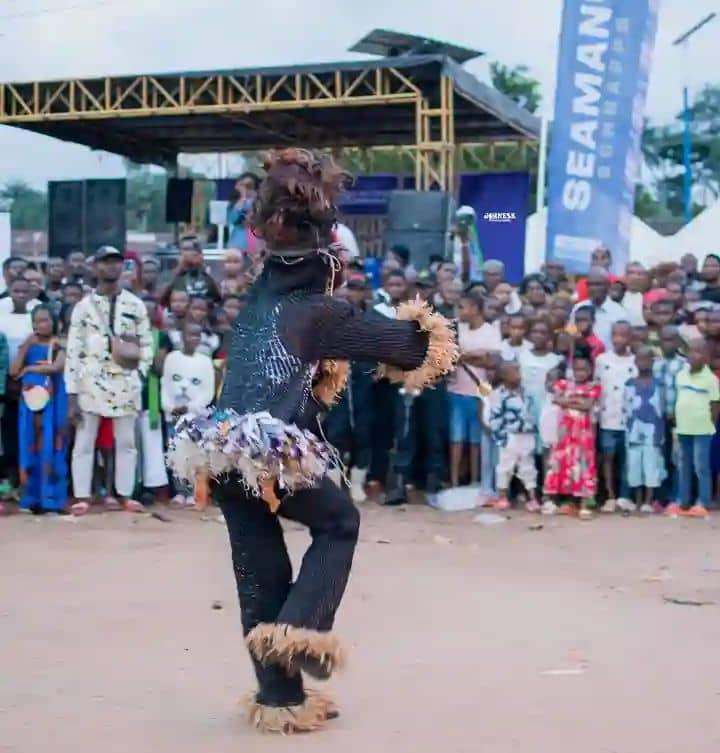
And what a swanky job they have done with their self-assigned rescue mission. Not only have they leveraged on technology in a digital age to export, as it were, Eyirieyi Festival to the international community, they have also modernised the festival by introducing new concepts such as the Eyirieyi public lecture, pageants and other competitions. From a one-day affair, Eyirieyi has become a weeklong celebration of culture and the youths are ululating.
It is difficult to imagine what would have happened if these young, starry-eyed and idealistic patriots did not intervene. But it is not yet Uhuru. A lot of job remains to be done, the most important, perhaps, being how to ensure that this great culture impacts positively on the community and lifts the people up economically. How can a cultural festival like Eyirieyi be used in enhancing the socio-economic standing of the people and rejuvenate the local economy? That is the crux of this exercise.
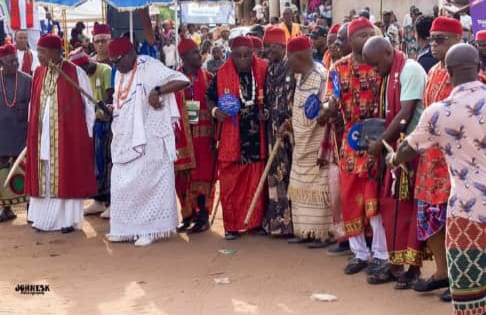
The socio-economic potentials of a transformative culture
In their book, “Peace Culture: A Monumental Evidence for Global Co-existence,” Prof Ola Makinwa et al said “culture refers to the behavioural contents of society.” English anthropologist Sir Edward B. Tylor used it to refer to the “complex whole of ideas and things produced by men in their historical experience.” In the 1930s, another anthropologist, Ruth Benedict discussed culture as a pattern of thinking and doing that runs through the activities of a people.
Prof Makinwa also added that “in later years, culture became a term used to describe the distinctive human mode of adapting to the environment-moulding nature to conform to man’s desires and goals.”
Whereas there is no single best definition of culture, in general, it is a system of learned and shared beliefs, language, norms, values, and symbols that groups use to identify themselves and provide a framework within which to live and work. Simply put, culture is a way of life of a people and cultural festivals are an essential part of human activities in any given society.
Because a cultural festival such as Eyirieyi showcases a people’s heritage, it becomes a veritable tool to woo visitors and attract investment which ultimately boosts local economy and impacts on the people.
Sociologists generally agree that festivals are a fun way to bring people together, attract tourists and celebrate something special. They also provide an opportunity to promote local businesses and showcase what makes a community unique.
A cultural festival like Eyirieyi, properly harnessed can help the local economy by promoting tourism and attracting visitors to Obohia, which can generate revenue for local businesses and stimulate economic growth.
In a paper titled, Festivals and Special Events – Making the Investment, Stephen W. Litvin, Professor of Hospitality and Tourism Management, School of Business College of Charleston, South Carolina, said the most successful festivals and special events are those that provide measurable positive economic benefit to their host community. He further posited that to do so, however, “The festival must elevate its offerings such that it is able to attract visitors from beyond the local community; marrying the world of festival and special event management with that of tourism management.”
Needless to say that a cultural festival which appeals only to local guests does little to enhance the host community economically. In other words, if visitors are predominantly local, the result is simply a shuffling of funds, with monies that would have been spent on other recreational opportunities instead diverted to the festival.
A festival curator Denis John, writing in June 2023 on how cultural festivals create boom in the economy, said: “Festivals create a substantial economic boom, generating increased consumer spending, promoting tourism, and supporting various industries. Festivals bring happiness to a lot of faces. From years we can notice that the economy starts to prosper during the festive season. A lot of people are solely dependent on festivals to earn their bread.”
He couldn’t have put it more succinctly. Cultural festivals contribute to economic growth and prosperity by boosting consumer spending, spurring growth of small businesses and local vendors and serving as a catalyst for job creation. When jobs are created, employment opportunities are enhanced particularly in the tourism and hospitality industry.
It is also true that festivals rooted in cultural traditions like Eyirieyi Obohia not only offer the host communities an opportunity to preserve and showcase local customs, rituals, and art forms, they also attract tourists who seek authentic experiences and a deeper understanding of the local culture. This form of heritage tourism generates revenue while simultaneously preserving such cultural traditions.
Denis John further posited that “the economic boom triggered by festivals stimulates various sectors, from retail and hospitality to tourism and infrastructure development. By harnessing the potential of festivals, communities, and governments can leverage cultural celebrations to foster economic growth, support local businesses, and preserve cultural heritage. Festivals are not just joyful occasions; they are powerful engines of economic prosperity and catalysts for sustainable development.”
I have no doubt whatsoever that Eyirieyi Obohia as a foremost cultural festival in Mbaise, if not Imo State, has the potential to deliver on all these scores if well packaged. While growing up, Eyirieyi used to be one cultural festival that people dare not miss. All our relations from far and near used to keep a date with the second Nkwo market day of every August and their destination was Obohia. What is more, even those that do not have relatives in Obohia also come, if for nothing else, to witness the Ekpe Dance and eat the special delicacy of Ugummanu soup.
It is not the same today. But the scenarios of those days can be recreated, and, indeed, must be recreated because cultural festivals have a significant impact on the tourism and hospitality industry. Unique cultural festivals attract visitors from far and wide, contributing to increased tourist inflow with the tourists spending on accommodation, dining, transportation, and local experiences, thereby stimulating the local economy. The revenue generated from festival-related tourism in-turn helps diversify local economies and sustains the tourism industry.
Eyirieyi Obohia as a cultural festival is an untapped goldmine that could be explored in a way that would enhance internally generated revenues of our beleaguered community. Culture is the vehicle that drives tourism and must be effectively harnessed for economic development. And it can only get bigger.
In 2022, the World Travel & Tourism Council (WTTC) Economic Impact Report said “the travel and tourism sector in Nigeria was expected to create 2.6 million new jobs over the next decade, doubling the number of those employed within the sector by 2032.”
The forecast showed that an average of 260,000 new jobs would be created every year for the next 10 years, to reach more than 5.1 million. It also stated further that Nigeria’s travel and tourism contribution to GDP was expected to grow at an average rate of 5.4 percent between 2022 and 2032, significantly outpacing the 3 percent growth rate of the overall economy.
But to tap into this huge industry, everything boils down to packaging. As Otunba Biodun Ajiboye, the Executive Secretary/CEO of the National Institute for Cultural Orientation (NICO) noted recently, “If you package your festivals very well, then you will realize that people will buy it. Once you have a good product, it must sell itself and how does it sell itself? It is through packaging.”
If we want people to visit Obohia and participate in the Eyirieyi cultural festival, we must then make it interesting. There must be an attraction, which will have to do with packaging. When we package Eyirieyi festival very well, investors particularly from the private sector will come in.
That is exactly what the Obi of Onitsha, His Majesty Igwe Nnaemeka Alfred Achebe (Agbogidi), a consummate public relations guru, and his kinsmen have done with the Ofala Festival.
Since 2011, the digital telecommunications solutions provider, Globacom, has been a major sponsor of the Ofala Festival, which is a customary obligation performed by Agbogidi annually. In 2022, Glo renewed the partnership for another three years.
At a press conference held by the Ofala Steering Committee at Ime Obi, Obi’s Palace, Onitsha, on Thursday, October 13, 2022, Globacom said its sponsorship of Ofala underscores its recognition of the huge potentials of Nigeria’s tourism sector and the positive impact it can have on the economy and its key output sectors.
“Being a truly Nigerian enterprise, Globacom will continue to play a leading role in promoting this sector through support for, and preservation of our rich cultural heritage such as Ofala and other festivals that we sponsor,” Globacom said.
Speaking at the 2023 edition of the event at his Ime Obi in Onitsha, Igwe Achebe commended Globacom for adding value to the people of Onitsha since it took over sponsorship of the festival.
Who says that Eyirieyi Obohia is not a potential beneficiary of Glo sponsorship? But besides Glo, there are other companies sponsoring other key festivals across the country, thereby empowering communities to preserve and promote their cultural heritage. For instance, Goldberg Premium Lager Beer has been at the forefront of sponsoring the United Nations Educational, Scientific, and Cultural Organization (UNESCO) recognized Osun Osogbo Festival.
Conclusion
It is my sincere belief that we can leverage on Eyirieyi festival to give Obohia economy a shot in the arm but it requires a lot of hard work. The infrastructure that sustain the hospitality industry and promote tourism such as good roads, hotels, standard markets and shopping malls, tourist destinations are non-existent in Obohia. There is virtually no government presence in Obohia and this is because in a prebendal state such as ours where government workers feel they have a right to a share of government revenues, and they use them to benefit supporters, cronies and their own communities, those who have no representation suffer.
Is it not a shame that that 46 years since after Ahiazu Mbaise LGA came into existence, only one Obohia son, Hon. Gerry Ogoko, has been elected chairman? Chief Victor Iheanacho was only appointed a sole administrator with no powers and no funds to do anything. It is even worse at the state level. Since Imo State was created on February 3, 1976 out of the old East Central State by the then regime of General Murtala Mohammed, Obohia has not produced even a commissioner. The much we achieved was the appointment of Chief P.G.U. Madu as the Chief Technical Adviser by the short-lived administration of Chief Emeka Ihedioha. After Chief Magnus Elezuo Anyanwu’s stint in the Imo State House of Assembly in the Second Republic, no other person has been elected from Obohia into the state legislature nor National Assembly.
These are places where the authoritative allocation of our collective values are made and the consequence of our conspicuous absence is that our community has become desolate.
Yet, our elite are preoccupied with who becomes Eze. When they fail in their ambition in the already existing autonomous communities, they seek their own autonomous communities where they will hold sway, occupying offices that are of no consequence and add no value to the community in real terms.
Rather than dissipating our energy and resources chasing shadows, our people should start looking at competing for elective offices and going into government. If we are in government, the Oru-Obohia-Ugiri-Ike Road wouldn’t be the eyesore it is today. With government resources, some tourist destinations in the community such as the Iyi Uzoaku Court buildings could be recreated. With that road fixed, even if the government does not come in, then resources could be mobilised from the private sector to build resort centres around that axis.
Obohia sons and daughters who have the resources should also start investing at home. What about rebuilding Nkwo Obohia and making it a standard market with all the necessary facilities? When the requisite infrastructure are in place, then those who come for Eyirieyi may decide to spend a few days particularly now that the festival is no longer a one-day affair.
But for this to happen, beside the issue of infrastructure is also security. Granted, Section 14(2) (b) of the Constitution of the Federal Republic of Nigeria 1999 as amended declares that the security and welfare of the people shall be the primary purpose of government. We can all testify that the government has not lived up to this responsibility. Many communities have taken their destiny in their own hands by setting up local security networks that work for all. We must follow suit.
Eyirieyi has the potential of transforming the economic fortunes of our people by impacting positively on the local economy as it is the case in other communities. But it requires some proactive action on our part and all hands must be on deck if we are to get to the Promised Land.
Thank you for the privilege of this opportunity and for listening. God bless Obohia Community, our cherished homeland.
- Keynote speech by Ikechukwu Amaechi, FGNE at the 2024 Eyirieyi Obohia Lecture


