RULAAC, NBA, other groups launch Southeast Human Rights Bureau to tackle rights abuses
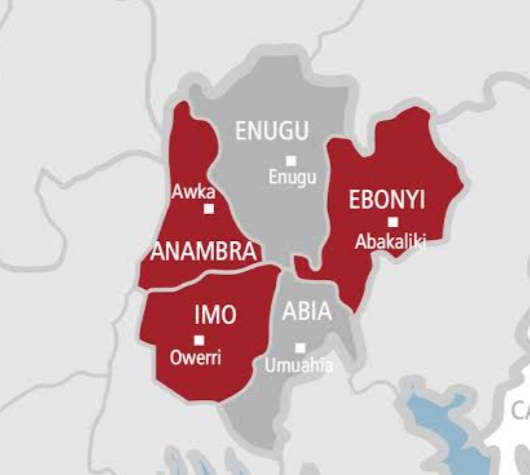
The Rule of Law and Accountability Advocacy Centre (RULAAC), in collaboration with the Nigerian Bar Association (NBA), Southeast-based civil society organisations, human rights institutions, and development partners, has launched the Southeast Human Rights Bureau (SEHRB) with support from the Ford Foundation.
The Bureau was formally launched on July 23, 2026, in Enugu, as a direct implementation of a resolution adopted at the Southeast Stakeholders Summit on Peace and Security and Public Hearing on Human Rights Violations, held in Enugu on February 21–22, 2025. Participants at that summit had unanimously resolved that a permanent regional institution was needed to coordinate human rights monitoring, documentation, advocacy, accountability, victim support, and rapid response to emerging concerns across the Southeast.
The launch ceremony was chaired by Very Rev. Monsignor Professor Obiora Ike, founder of the Catholic Institute for Development, Justice and Peace (CIDJAP), Enugu, while the keynote address was delivered by Professor Joy Ngozi Ezeilo, OON, SAN, founder of the Women Aid Collective (WACOL).
Mrs. Uju Agomoh, Executive Director of the Prisoners’ Rehabilitation and Welfare Action (PRAWA), was represented by Ms. Chioma Anuna, who presented a paper on strengthening institutional collaboration for human rights protection.
The event featured a welcome address by Okechukwu Nwanguma, Executive Director of RULAAC, followed by goodwill messages from representatives of the Ford Foundation, the National Human Rights Commission (NHRC), the Nigerian Correctional Service (NCoS), Amnesty International Nigeria, and other partner organisations.
The launch drew representatives of civil society organisations, the NBA, academia, the media, security and justice institutions, traditional and community leaders, and development partners, who reaffirmed their shared commitment to strengthening constitutional democracy, promoting the rule of law, and advancing accountability for human rights violations across the region.
Participants at the launch observed that the Southeast continues to experience serious human rights and security challenges, including insecurity, shrinking civic space, arbitrary arrests, prolonged unlawful detention, torture, enforced disappearances, extrajudicial killings, attacks on journalists and human rights defenders, and widespread impunity.
They also noted that women, children, persons with disabilities, internally displaced persons, and other vulnerable groups continue to bear a disproportionate burden of violence and discrimination, with inadequate access to justice and remedies.
Participants further observed that civil society responses to rights violations have often been fragmented and under-resourced, underscoring the need for a permanent coordinating mechanism. They flagged weak implementation of the Police Duty Solicitor Scheme (PDSS) across much of the Southeast, citing inadequate funding, limited institutional support, and poor coordination among justice sector actors as undermining legal representation for persons in police custody.
Following deliberations, participants resolved to officially inaugurate the SEHRB as the principal regional platform for coordinating monitoring, documentation, prevention, and response to human rights violations in the Southeast, backed by a functional Advisory Board, Secretariat, and governance framework.
Key resolutions include developing a secure, verified regional database of human rights violations, deploying an open-source reporting platform, and establishing an early warning and rapid response mechanism. The Bureau also plans to coordinate referrals for victims requiring legal aid, psychosocial support, child protection services, gender-based violence interventions, and rehabilitation, while promoting strategic litigation to advance accountability.
Participants further resolved to advocate for the full implementation, institutionalisation, and adequate funding of the PDSS across police divisions in the Southeast, and to call on the federal government, the five Southeast state governments, security agencies, and development partners to cooperate with the Bureau’s work.
Participants expressed confidence that the SEHRB represents a significant milestone in advancing human rights protection, democratic governance, and accountability in the region, describing it as a credible, independent, and sustainable institution for supporting victims and strengthening collaboration among stakeholders.
The Bureau said it remains committed to collaborating with like-minded organisations within and beyond the Southeast that share its vision of promoting human rights, gender equality, the rule of law, and accountable governance.