




Abiodun established Coconoto Limited, an Agritech and circular economy company focused on transforming the coconut value chain through innovative processing technologies and waste-to-value solutions. It started as a project in his FUTA final year in 2020. In 2022, it began operating as a Research and Development (R&D) focused business. By 2025, Coconoto Limited had become a full-scale company, employing more people.
By Eberechi Obinagwam
In villages across Nigeria, coconuts are everywhere, but for years, farmers struggled with the painful job of cracking them open by hand. And after the nut was sold, the husks were just thrown away to rot. To close this gap, Jacob Oluwayanmife Abiodun, a Mechanical Engineering graduate of the Federal University of Technology Akure (FUTA), developed locally adapted agricultural technologies that help farmers de-husk coconuts, process the shells, and convert the waste husks into cocopeat and fiber.
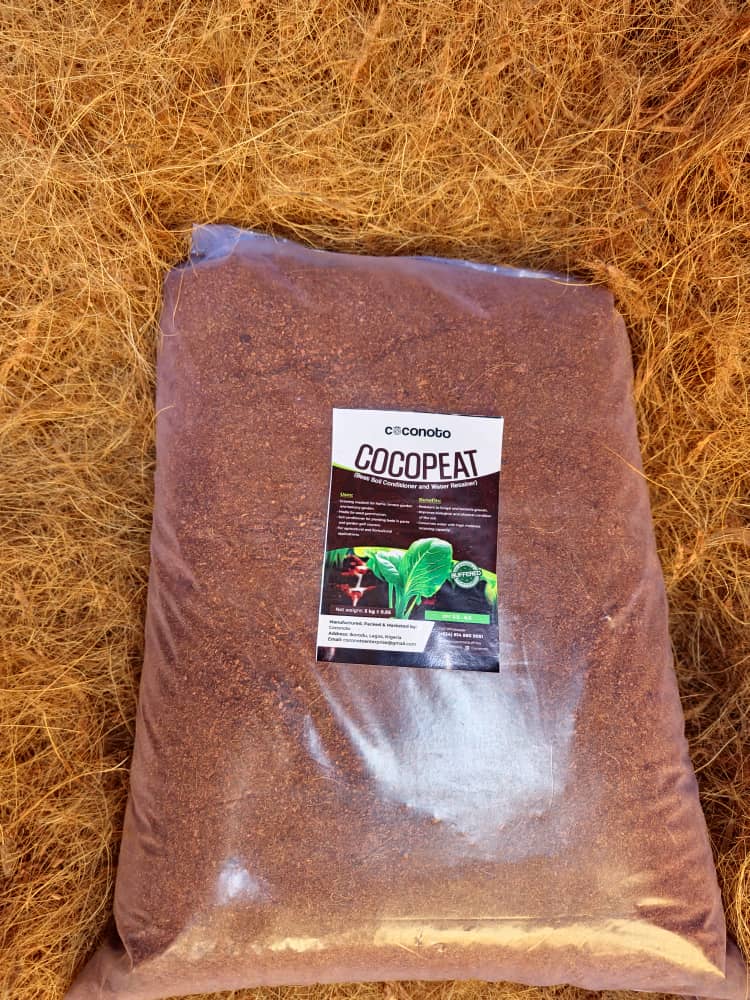
In an interview with TheNiche, he said three things inspired him: an underutilized value chain, technological challenges, and limited access to larger markets. “Personally, I am driven by impact. I see jobs that can be created from this untapped and underutilized value chain,” he said.
Abiodun established Coconoto Limited, an Agritech and circular economy company focused on transforming the coconut value chain through innovative processing technologies and waste-to-value solutions. It started as a project in his FUTA final year in 2020. In 2022, it began operating as a Research and Development (R&D) focused business. By 2025, Coconoto Limited had become a full-scale company, employing more people.
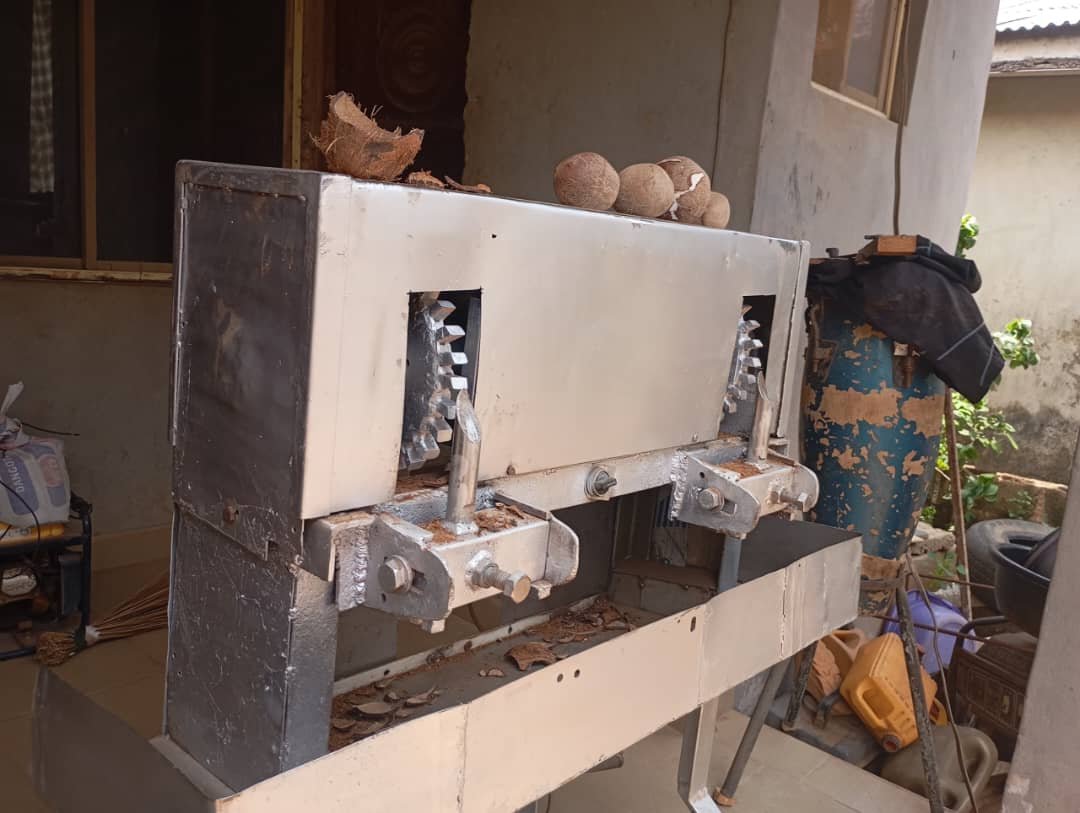
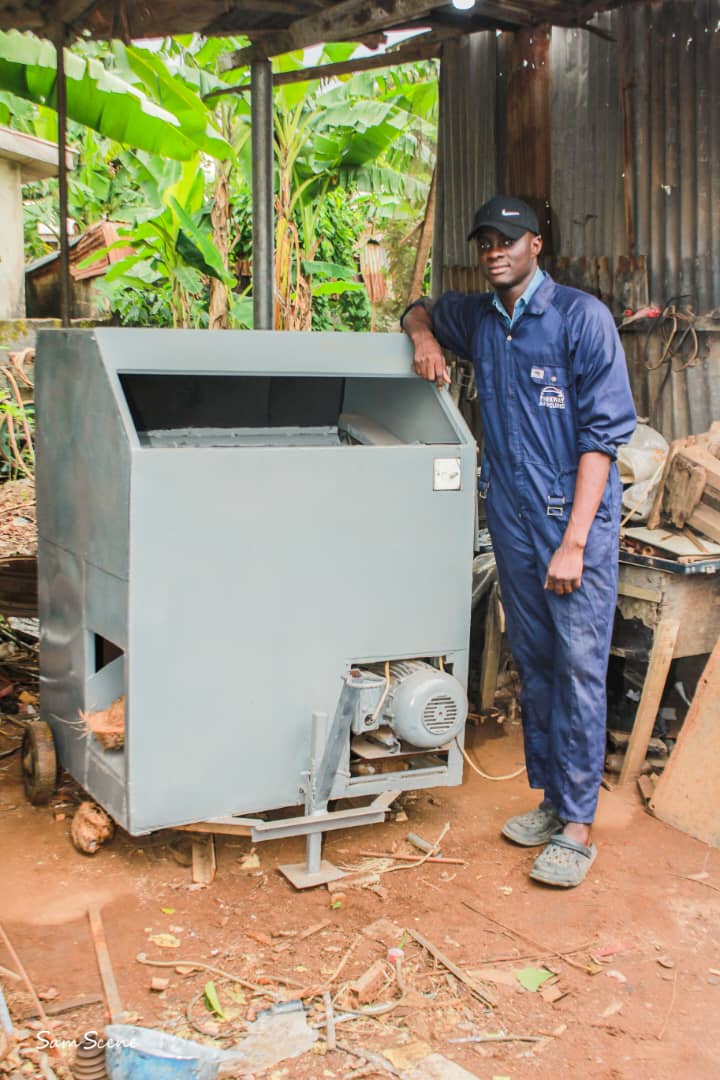
Abiodun has in the last four years, since inception, provided a proprietary de-husking machine that is electromechanical and has currently improved to become fully automatic to help these farmers de-husk coconuts, expecting to do 400 to about 900 coconuts per hour, removing the husk, and also helping processors to do about 240 to 400 coconuts per hour, removing the shells.
READ ALSO:
TheNiche Young Entrepreneur: Amara positions African women with contemporary jewelry
He has created more revenue for coconut farmers and also promotes sustainable agriculture, where he converts the waste of these husks into cocopeat and fiber. This, he said, is achieved by buying coconut husks from farmers, and producing cocopeat, making it affordable and accessible to farmers practicing sustainable agriculture.
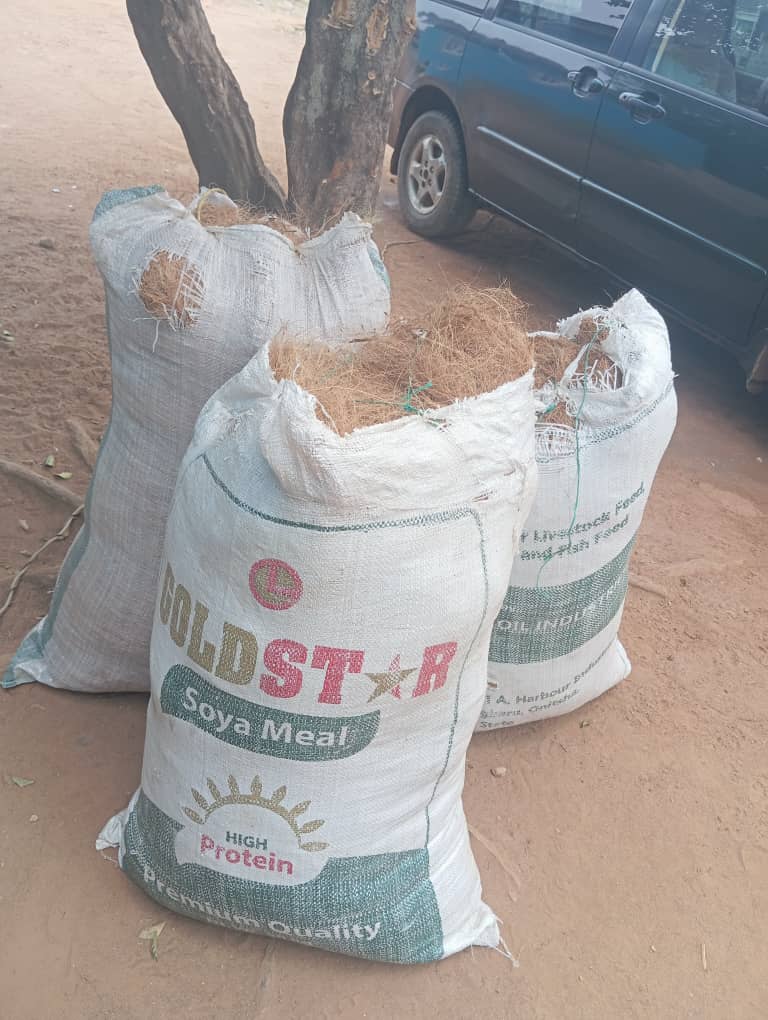
“So, when I say sustainable agriculture, I mean farmers that do greenhouses, hydroponics, and every form of urban agriculture. Then on the other side is the fiber for biodigester, promoting sustainable sewage solution, where we don’t have to be using the large sewage system. Now you can just do a normal sustainable one that can last you even more than the large sewage system,” he said.
Developing the machine
Abiodun said after developing the machine as a final year project, he did a market-research that took him seven months, traveling from his house in Ikorodu to Badagry where he visited about 12 different communities, interacting with them to know what the problem in the Coconut value chain was, because he knew that Nigeria consumes over 250,000 metric tons, but not properly meeting our demands.
“The market was there, but we’re not meeting the demand locally. So, I was so much interested in what the problem was, and also knowing that cash crops like coco, cash crop like cashew, and many other cash crops like that with palm oil were doing so well.
“People were doing much more business in that space, but coconuts weren’t really tapped. People were not doing much business, aside from the few that we knew that did coconuts oil, coconuts milk. So, I was so baffled about what the challenge was, and that led me to visiting those communities,” he explained.
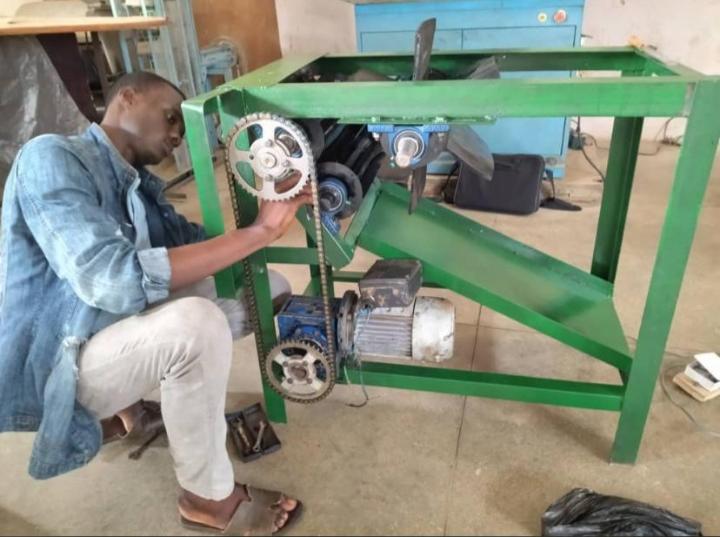
Abiodun said he also visited Araromi in Ondo state to know what was going on in the value chain for the community. From there, he discovered technology issues, accessibility issue, waste issues adding that inefficient processing mechanisms was a major challenge for them. After identifying those problems, he went back to his drawing table, developed a more efficient de-husking machine, tested it with these farmers, and he saw that it was working more for farmers.
He said: “But it wasn’t enough, because importing coconuts was what we do here in Nigeria, and products are made here in Nigeria that don’t even go out of Nigeria. So, I went back home, started innovating with the distilling machine solution. From there, I now saw that, okay, these farmers wanted other mediums of making money. I mean, the sales of the coconut oil were not efficient for them. So, I started buying husks from them, and from there, converted them to my own cycle in Ikorodu. And the small machine that I built I used it to convert this husk into the cocopeat and fiber,” he said.
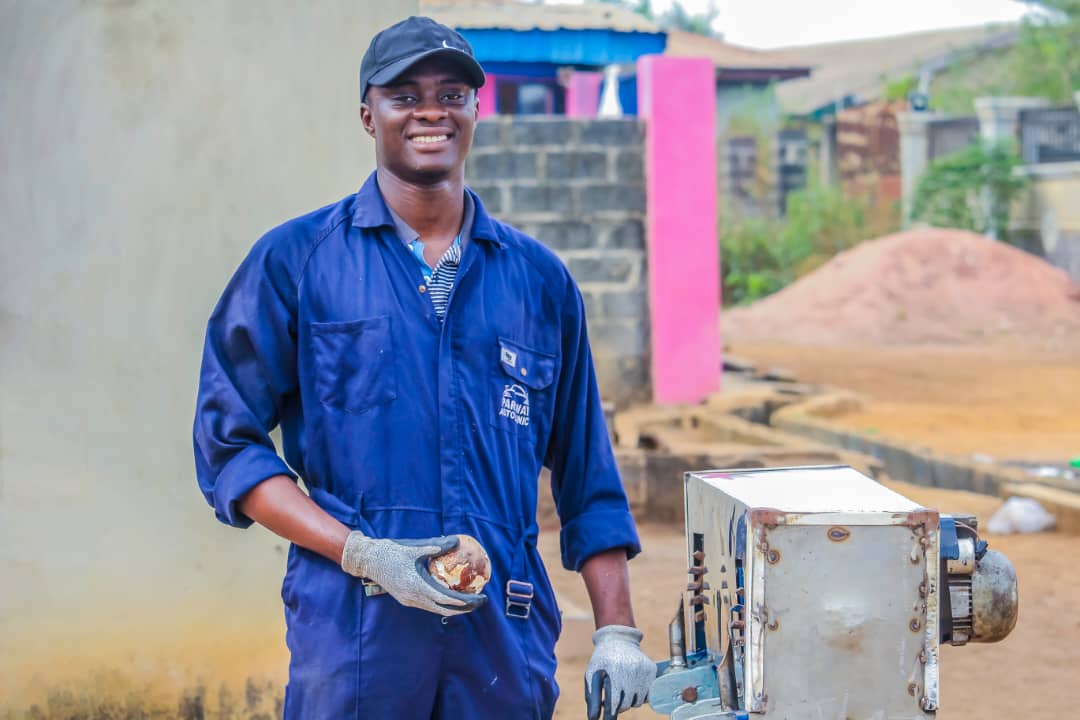
“I saw that farmers were so eager to even start supplying me husk, and boom! That was how we’ve converted over 10 tons, to over 15 tons now, in the last one year of our operation. And we’ve been doing so fine, and we have empowered more farmers,” he added
Sourcing capital
Abiodun said his financial support came through his network and LinkedIn. By posting about his work and what he wanted to do, he started getting access to opportunities to pitch his ideas. It started at Lagos Business School, where he enrolled for the Master of Agriculture and emerged second runner-up in a national competition.
He was later privileged to join Orange Corners Nigeria, an initiative financed by the Netherlands government. That was where he also received additional funding to develop the machines further. According to him, his journey so far has been sustained by networking and grant opportunities. “To the glory of God, we are much more sustainable now,” he said.
Penetrating the market
The founder of Coconoto Limited said penetrating the market was a bit tough. “Unique solutions don’t just get into the market easily,” he said. “Convincing farmers that we have these solutions to help them was quite challenging,” he added. But more challenging, he said, is the coco cycle where the cocopeat is being made because they are competing against imported cocopeat.
He explained that more of the cocopeat used here in Nigeria are imported and they are blocked. “So having to tell farmers that we can supply you the cocopeat that is not blocked is a challenge.” He said over time, they have been able to improve on their production and see that what the farmers are looking for is what they are giving to them. “We are giving them the quality they need. So, our product has begun to get adopted by these farmers, knowing that what they get as quality can be supplied to them locally, even though it’s not blocked,” he said.
He added that they are still trying to do more marketing by interacting and getting feedback with the farmers that use their products so that they can convince more farmers to use their products.
Surviving arm crushing accident
Abiodun said he has lots of experience but the one he can’t forget in a hurry was when his arm was crushed while the machine was under operation, but didn’t get amputated.
“It didn’t seem like something I ever planned or ever dreamed I was ever going to experience on this journey. But it was just something that happened and it felt like I was not going to keep building the business anymore,” he recalled. “It was like the business was crumbled, but I thank God for the strength, thank God for the grace, and I thank God for his mercy. It didn’t get amputated, but yeah, it still kept me going and made me understand that God is actually in my journey,” he added, in a quiet tone.
Breakthrough
The founder of Coconoto Limited said breakthrough came when his product was accepted by a major farmer. He said; “Over time, we have been selling below 100 and this demand came and it was like, I needed you to supply me 960 bags. When we did that delivery, it felt like we couldn’t do it because we didn’t want to send the customer away.”
“Our capacity could not meet up, but we gave the customer everything that would require us to do it and the customer was willing to abide by it. Within three weeks, we were done with the customer demand and were able to deliver,” he explained.
Abiodun said initially, they were skeptical whether the product would do well, only to get a call from the customer saying the product is doing amazing. “It was a big breakthrough for me. It was like a validation to say that even with our large quantity and our unprepared feet, we were still able to deliver the quality that these customers are wanting. It was a big success for me,” he said.
Business challenges
Logistics poses a challenge for Abiodun in running a business that is located far from its raw materials. “It takes us a lot. We pay for the raw material. Bringing it down, is another issue. We pay a whole lot to bring it down from Badagry to our facility. It’s something that we are working towards to properly manage,” he said.
Storage also posed another challenge for Abiodun because their facility is still too small for what they are producing. “We have to go the extra mile to go and get more storage for our products,” he said.
Japa
Abiodun said he is here to solve Nigeria’s problems, and could only travel for vacations. According to him, Nigeria is blessed with opportunity and playing in the agricultural sector, where over 250 million people in the country must eat, it’s a huge market for him.
“So, if there is that huge market, and as of today, we have not even solved up to 50% of that problem, then that’s a huge opportunity.
“For somebody like me, who has seen that bottleneck, then playing in that shows that even if I go to another country, I might not be able to cover the market gap as much as I will if I stay in Nigeria,” he explained.
About Abiodun
Abiodun is an engineer, entrepreneur, and sustainability advocate born in Lagos Nigeria but an indigene of Ekiti State. He holds a degree in Mechanical Engineering from the Federal University of Technology Akure (FUTA). He is the founder of Coconoto Limited.
Through his work, Abiodun has developed locally adapted agricultural technologies, created sustainable products from coconut waste, supported farmers, and contributed to green job creation. His commitment to innovation, climate action, and inclusive development has earned recognition from several entrepreneurship and sustainability platforms.


