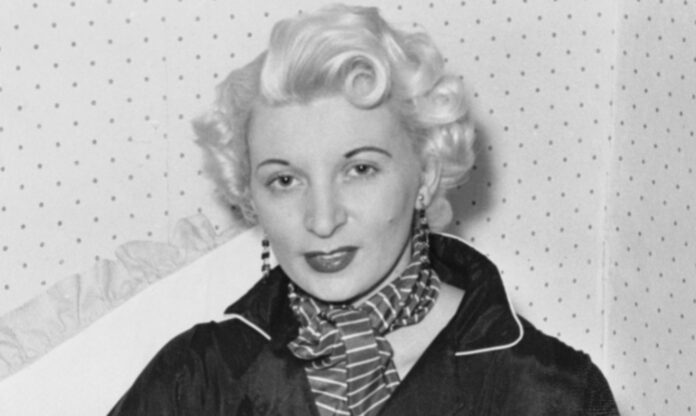
UK government said the decision reflects the extraordinary circumstances of the case, including evidence of domestic abuse and coercive and controlling behaviour.
By Kehinde Okeowo
The United Kingdom government has finally pardoned nightclub hostess Ruth Ellis, more than 70 years after she was hanged for murder.
The conditional posthumous amnesty was granted by King Charles III, following a recommendation by Deputy Prime Minister and Justice Secretary David Lammy.
”While the pardon does not claim she was innocent of killing David Blakely, it replaces the death penalty with a sentence of life imprisonment to recognise a profound injustice in this exceptional case,” Lammy said.
Ellis was convicted of murder after shooting and killing David Blakely on 10 April 1955. Following a swift trial, she was executed on 13 July 1955.
The mother of two young children shot Blakely, with whom she had been having a tumultuous romantic affair, outside The Magdala public house in Hampstead, London.
ALSO READ: Cardi B sparks dating rumours after appearing with Super Eagles goalie Maduka Okoye in Paris
Ellis had reportedly undergone an abortion—which was illegal in the UK at the time—and was frequently physically abused by Blakely, which had previously caused her to suffer a miscarriage. Decades later, her grandchildren filed the formal application for the amnesty.
“The shadow of Ruth’s execution has fallen across two generations,” said Laura Enston, her granddaughter. “We have carried shame that was never ours to bear.”
In granting the pardon, the UK government stated that the decision reflects the extraordinary circumstances of the case, including extensive evidence of domestic abuse and coercive and controlling behaviour.
The pardon also recognises that the outcome would have been entirely different under modern law and psychological understanding. No reprieve was granted, and no appeal was successfully lodged at the time of the original verdict.
Lammy noted that while what happened seventy years ago cannot be undone, the government formally acknowledges that it was “an exceptional case.”
Reacting to the decision, Enston said: “Justice has finally been done. This pardon does not undo what happened 71 years ago. It does not restore the lives that were broken — the children left behind, the years lost. But it says, formally and finally, that Ruth should not have been executed; that the justice system failed her. That acknowledgment matters profoundly to our family.”