



Before we hand Nigerian students the AI calculator, we need to teach them the math
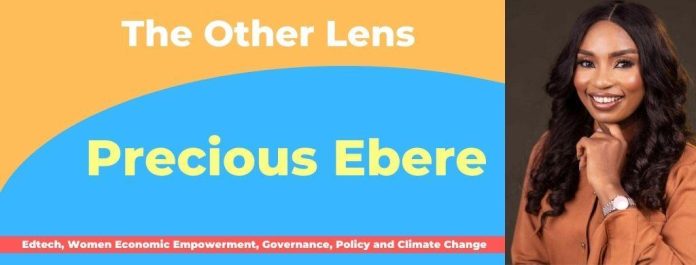
By Precious Ebere-Chinonso Obi
There’s a question I keep returning to whenever I sit in rooms where Nigerian education policy is being discussed: we talk endlessly about access to AI in our schools, and almost never about readiness for it. Those are not the same conversation, and conflating them is going to cost us a generation of independent thinkers.
I borrow a frame here from an essay by Michelle Odemwingie, CEO of the Achievement Network, who describes the distinction as “Calculator vs. Crane.” A calculator does something you already know how to do, only faster you still understand the underlying math, the tool just handles execution. A crane does something you physically could never do alone; it extends genuine human capability rather than replacing the need to build it. Her argument, in essence, is that most people are using AI in calculator mode while convincing themselves it’s a crane and that what looks like augmentation is often quiet substitution.
It’s a useful way to think about adult professionals but applied to Nigerian classrooms, the stakes of getting this wrong are sharper, and the picture is more complicated than it is in the wealthier school systems where this debate usually plays out.
Two school systems, two different risks
Walk into a well-resourced private secondary school in Nigeria, and you’ll likely find AI tools already woven into how students research, draft, and revise. Walk into a public school two hours away, and the conversation about AI policy is often theoretical, there’s no consistent electricity, let alone the data bundles needed to run these tools regularly. We tend to frame this gap purely as a resource problem to be solved by getting more devices and data into more hands. I think that framing is incomplete, and possibly dangerous.
READ ALSO: Everyone on the panel is reading from the same script
The elite private school version of the AI problem is the one Western commentary mostly worries about: children who skip the cognitive labour entirely because the tool is always available, and never build the underlying “math” before reaching for the calculator. The public school version of the problem is different and, I’d argue, just as urgent, a generation that may leapfrog straight from no access to full access, with no intermediate period where the school deliberately built reasoning skills in anticipation of AI rather than as a reaction to it.
Closing the access gap without closing the readiness gap doesn’t level the playing field. It just changes which way each group is failed.
What our exam culture already tells us
Nigeria already has a long, uncomfortable relationship with the gap between “producing the right answer” and “understanding how you got there.” Anyone who came up through WAEC and JAMB preparation knows the culture of pattern-memorisation that exam-focused schooling can produce, students drilled on past questions until they can recognise the shape of an answer without necessarily owning the reasoning behind it. AI doesn’t introduce that risk to Nigerian education. It accelerates a tendency that was already there, and gives it a far more convincing disguise. A student who has spent years rewarded for producing the expected answer is the student most vulnerable to letting a language model produce that answer for them because the muscle being replaced was never fully built to begin with.
That’s precisely why the “calculator before crane” sequencing matters more here, not less. If we don’t first interrupt the memorise-and-recite default that much of our exam system still rewards, we won’t be handing students a crane to extend their thinking. We’ll be handing them a much faster way to skip thinking altogether.
What a Nigerian readiness gateway could look like
Some of the better private schools globally are experimenting with defined developmental gateways explicit, school-set moments when a student has demonstrated enough independent reasoning to be allowed to bring AI into their work directly, rather than leaving that judgment open-ended.
We don’t need to import that model wholesale to build our own. But we do need something equivalent: a stage, set by curriculum rather than by which school a family can afford, where students are required to argue, draft, and defend an idea unaided before AI enters the workflow.
That requires teacher training that our system isn’t yet funding, and assessment reform that our exam boards haven’t yet begun. It is a harder, slower project than distributing tablets but it’s the only version of “AI in Nigerian schools” that produces students who can use the tool instead of being used by it.
The question facing Nigerian education right now has gone beyond whether our students will have access to AI. At the rate things are moving, most eventually will, in one school system or the other. The real question is whether we build their reasoning first or hand them the calculator and hope the math comes later.
- Precious Ebere-Chinonso Obi, CEO of Do Take Action, is an independent consultant on edtech, climate change, public policy, and women’s procurement empowerment


