



Hope Builders urges greater support for entrepreneurs with disabilities
The Hope Builders for the Physically Challenged Foundation marked 2026 MSME Day Friday with a call for government, private sector and development partners to expand support for entrepreneurs living with disabilities.
The event, held in Itire, Lagos, on June 26, carried the theme: “The Future Generation of MSMEs as it Affects Persons Living with Disabilities.”
Representatives from government agencies, development organizations and business support institutions highlighted training, financing, digital tools and market access opportunities for persons with disabilities.
Founder Christiana Kehinde Akinrinmade said the annual event aims to show that persons with disabilities contribute to economic growth rather than depend on aid.
“We are not celebrating our weaknesses; we are celebrating our strengths. We want people to know that we are financially independent, possess valuable skills and can contribute meaningfully to society and business development,” Akinrinmade said.
She noted that most participants at the foundation’s maiden edition five years ago ran their businesses. Since then, the foundation has supported thousands of entrepreneurs with disabilities, many of whom are now self-reliant.
“Today, organizations such as GIZ, the British Council, SON, NAFDAC, SMEDAN and ActionAid Nigeria came to encourage and train our entrepreneurs on how to enhance their operations and position themselves for grants,” she said.
Akinrinmade urged more inclusive government interventions, saying many empowerment programs target only younger entrepreneurs. “We have over 100 members with different business skills, yet many have not received support,” she said. “We are calling on government agencies, financial institutions and development partners to work with us so that persons with disabilities can contribute more to Nigeria’s economy.”
Babatunde Safiu, head of legal services at the Lagos State Office for Disability Affairs, said LASODA provides annual grants of ₦100,000 to hundreds of beneficiaries, business upscaling grants and social security for elderly persons with disabilities. About 400 people are expected to benefit this year.
Beyond grants, LASODA provides equipment, helps entrepreneurs formalize businesses and partners with NAFDAC to assist small producers in obtaining certification to access supermarkets, Safiu said.
The agency is also working with the Lagos State Procurement Agency to include businesses owned by persons with disabilities in government procurement.
Fagunwa Oluwanisola Yemisi of the GIZ Digital Transformation Centre Nigeria said technology removes physical barriers for entrepreneurs with disabilities. “You can run your business from home and sell products across Nigeria and beyond,” she said. She urged entrepreneurs to adopt e-commerce, digital payments and AI tools for proposals, customer service and administrative tasks.
Fagunwa advised business owners to formalize enterprises, maintain dedicated business accounts and document their entrepreneurial journeys to improve access to grants and investment. “The future generation of MSMEs is already here. It is found in entrepreneurs who refuse to be defined by disability but instead build successful businesses with technology,” she said.
Bukayo Augusto of the British Council said the council’s Inclusive by Design program provides micro-grants, mentorship, digital skills training and networking for disability-focused organizations and entrepreneurs. “We must embrace digitalisation. There is no going back. Technology allows you to market products beyond Lagos and even beyond Nigeria,” Augusto said.
Prince Ugochukwu Okoroh of SMEDAN advised entrepreneurs to seek business development support before launching enterprises. The agency provides counseling, feasibility assessments, entrepreneurship training and access to shared production facilities at subsidized rates. “Our responsibility is to guide entrepreneurs from idea to enterprise,” he said.
Special needs trainer Olakunle Joshua Opeyemi called for greater attention to the educational needs of visually impaired learners, saying many schools limit their academic opportunities instead of recognizing their capabilities.
Daniel Margima of ActionAid Nigeria urged the foundation to strengthen follow-up with partners, improve visibility and build a comprehensive database of persons with disabilities. “Visibility, advocacy and continuous engagement with partners are critical. When organizations know what you are doing and have reliable data, support becomes easier,” he said.
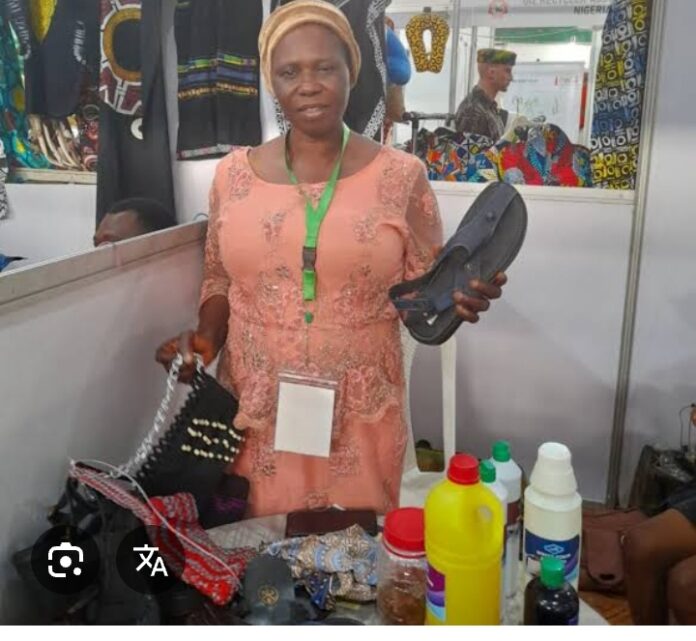
Representatives of SON, NAFDAC and other institutions attended. Entrepreneurs from the disability community showcased products including fashion items, processed foods and crafts.
The event ended with calls for stronger collaboration among government agencies, development partners, civil society and the private sector to ensure equal access to finance, markets, technology and business opportunities for persons with disabilities.
Source: National Wire


