



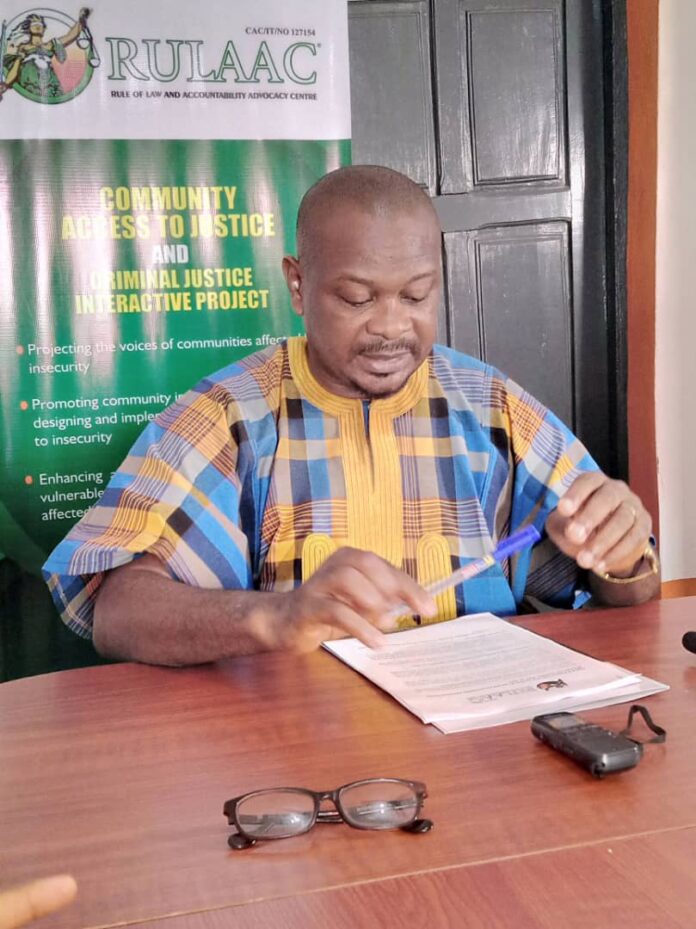
Reclaiming Nigeria’s hijacked mass movements
By Okechukwu Nwanguma
For decades, Nigeria’s history of social change has been shaped not only by political leaders but by the vibrant mass movements that challenged state repression, defended public interest, and articulated a progressive national vision. The student movement, the labour movement, the academic unions, and professional associations were once the conscience of the nation. They offered intellectual clarity, moral authority, and collective action at moments when political leadership faltered.
But by the late 1990s, something fundamental broke.
Nigeria’s mass movements, especially the student movement, began to lose focus, vibrancy, independence, and their commitment to principles and ideals. What happened was not a natural decline – it was a systematic hijack.
How the State Crippled Radical Movements
Military rule in the 1980s and 1990s understood the power of organized resistance. Student protests toppled unpopular policies. ASUU strikes exposed the decay in the education sector. The labour movement challenged economic mismanagement. Even professional associations such as the Nigerian Bar Association (NBA) and the Nigerian Medical Association (NMA) once took uncompromising stances against authoritarianism.
To neutralize these forces, the State adopted a simple but effective strategy: capture and replace.
It infiltrated unions and associations, funding pliable factions, sponsoring reactionary actors, and using coercion, patronage, and divide-and-rule tactics to weaken the hold of principled leaders. The goal was clear: remove ideologically driven activists and replace them with individuals who had no political education, no historical consciousness, and no commitment to social justice or national transformation.
The National Association of Nigerian Students (NANS) became one of the biggest casualties of this strategy. From being a radical, pan-Africanist, pro-people force in the 1970s, 80s, and early 90s, NANS descended into internal rivalry, opportunism, and political mercenarism. Instead of defending students or holding government accountable, many of its leaders became appendages of the very forces they were meant to resist.
But NANS was not alone. ASUU faced repeated attacks, proscription, intimidation, and co-optation attempts.
The Nigeria Labour Congress (NLC) was splintered and pressured.
The NBA, once a bulwark of democracy and the rule of law, witnessed phases of internal compromise.
The NMA and other bodies were pressured into silence or compliance.
The result was the same across all sectors: radical, people-centred leadership replaced by individuals without vision, patriotism, or ideological clarity.
The Consequences: A Nation Without Institutional Defenders
Nigeria’s present crisis – governance failure, insecurity, economic hardship, impunity, and institutional decay – cannot be understood without acknowledging the collapse of these mass movements.
A weak student movement means no youth-driven resistance when policies harm the public.
A compromised labour movement means unchecked exploitation and anti-worker policies.
An intimidated academic community means the diminishing of critical thought and intellectual resistance.
A subdued professional class means silence where there should be moral outrage.
Once, these movements acted as pressure valves, watchdogs, and ideological schools. Today, many are shadows of their former selves.
The State knew that to control society, it must first control the institutions that give society a voice – and it succeeded.
Reclaiming the Movements: A National Imperative
If Nigeria is to be rescued from its current trajectory, progressive forces must reunite to reclaim these movements. This is not romantic nostalgia – this is a strategic necessity.
The revival of Nigeria’s mass movements must be:
1. Ideological
There must be a return to political education, critical thinking, and historical consciousness. A movement without ideology is easily bought, infiltrated, or destroyed.
2. Organisational
New structures must be built to resist state capture. Transparency, internal democracy, and accountability must be prioritized to prevent opportunists from hijacking platforms.
3. Independent
Movements must rediscover their autonomy from government, political parties, and vested interests. Their legitimacy rests on their ability to confront power, not serve it.
4. Youth-driven but intergenerational
Nigeria’s youth must reclaim their legacy of activism, but they must be supported by older generations with experience in advocacy, organizing, and movement building.
A New Era of Civic Resistance Is Possible
Despite the setbacks of the last three decades, the possibility of renewal is real.
We have seen glimpses of it: the resistance movements around #EndSARS, the push for better governance by young professionals, emerging civic technology groups demanding transparency, and a growing network of rights organizations challenging authoritarianism.
But these efforts will remain fragmented unless they are anchored in strong, coherent, ideologically grounded mass movements.
The Work Ahead
Nigeria cannot be rescued by elections alone. It cannot be rescued by political elites who benefit from the status quo. It cannot be rescued by fragmented advocacy.
Nigeria will be rescued when its people reclaim the institutions that historically held the powerful accountable.
Reclaiming NANS, ASUU, the labour movement, the NBA, the NMA, and other civic platforms is not merely about nostalgia – it is about rebuilding the pillars of democracy, social justice, and national transformation.
For Nigeria to rise again, its mass movements must rise again.
And that responsibility falls on all progressive forces committed to a just, equitable, and truly democratic future.
Nwanguma, a former student leader, a frontline human rights campaigner, and rule of law advocate wrote from Lagos


