



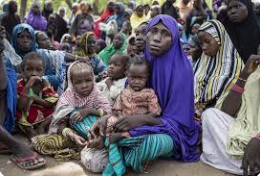
Nigeria slides to 115th out of 125 countries on GIH, experts demand renewed strategy to make food affordable
By Jeph Ajobaju, Chief Copy Editor
Nigeria is now ranked 115th out of 125 countries on the Global Hunger Index (GHI), with hunger score indicators showing severe food insecurity driven by high poverty rate, galloping inflation, capped by pervasive general insecurity of life and property.
The ranking reiterates the findings and agitation of local human rights activists and multiple reports and warnings by other external bodies such as the World Bank, the International Monetary Fund (IMF), and the United Nations Children’s Fund (UNICEF).
The GHI, an international documentary index, is anchored on comprehensive measurement and tracking of hunger ratings at global, regional, and national levels, based on four component indicators – Under nourishment, Child Stunting, Child Wasting, and Child Mortality.
Propcom+ Nigeria Country Representative Adiya Ode expressed concern that the ranking may worsen, as over 31.8 million Nigerians are already suffering acute food insecurity among the 139 million poor.
Ode lamented at a Nutritious Food Fair in Kano that the increasing level of malnutrition and child stunting in Nigeria compounds the hunger crisis, and advocated for a renewed strategy to make food affordable.
He gave the commitment of Propcom+, a support agency based in the United Kingdom, to partner with Nigeria in driving food security initiatives through climate-smart and market-driven solutions.
His words: “Our partnerships are the cornerstone of this mission. A good example is the partnership with the Kano State Government and HarvestPlus, which is strengthening the seed-to-shelf journey of nutrient-dense foods, ensuring that farmers earn more, consumers eat better, and markets grow stronger.
“These partnerships remind us that transformation happens fastest when collaboration leads the way, just like the theme of this year’s World Food Day states.
“But we know that real change happens when more partners join in. That’s why we continue to invite the private sector, investors, and policymakers to collaborate with us – to expand innovation, scale impact, and unlock the full potential of Nigeria’s agrifood sector.”
HarvestPlus Nigeria Country Manager Yusuf Fu’ad expressed optimism that Nigeria can overcome the food crisis if the government enhances farmers’ productivity with nutrient-enriched staple crops.
He said the 11th edition of the Nutritious Food Fair, organised by HarvestPlus Nigeria in collaboration with the Kano Government, aims to scale innovations that enable farmers to cultivate nutrient-enriched staple crops and gain direct access to essential vitamins.
“The National Food Consumption and Micronutrient Survey shows that most people in our rural communities consume what they produce from their farms. This presents a great opportunity – when farmers cultivate nutrient-enriched staple crops, they gain direct access to the essential vitamins and micronutrients their families need,” Fu’ad stressed.
“This makes the food-based approach one of the most cost-effective and sustainable solutions to tackling hidden hunger in our communities. However, for us to make lasting progress, we must coordinate our nutrition efforts more effectively.”
Kano Health Commissioner Abubakar Yusuf disclosed efforts by the state government to reverse worsening malnutrition through the reactivation of over 65 Centres for Malnutrition Treatment to detect and manage nutritional deficiencies.
Over ₦1 billion counterpart funding has been released to support ready-to-serve nutrient foods and their management to reduce the rate of stunted children, he added.
Read also:
IMF ignores Abuja’s false narratives, omits Nigeria from list of fastest-growing economies in Africa


, with hunger score indicators showing severe food insecurity ..)