



By Jeph Ajobaju, Chief Copy Editor
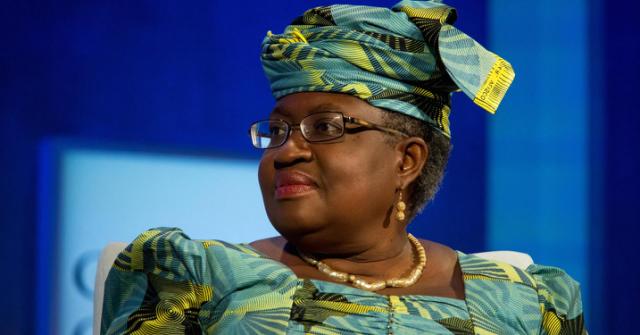
Ngozi Okonjo-Iweala has been endorsed by former Australian Prime Minister, Julia Gillard, for the post of World Trade Organisation (WTO) director general (DG), even though the former Nigerian finance minister is up against seven others.
Eight candidates, from Nigeria to Mexico and Moldova, are vying for the job to replace Roberto Azevedo, who steps down at the end of August. They have until September 7 to lobby the 164 member states.
“My brilliant co-author of Women and Leadership, Real Lives, Real Lessons, Dr. Okonjo-Iweala is in the running to be the next Director-General of the World Trade Organisation. An excellent negotiator and leader, she would be a wonderful choice,” Julia Gillard tweeted on August 3.
In response, Okonjo-Iweala tweeted, “Julia, thank you so much for this endorsement for the leadership of World Trade Organisation. Coming from you the first female Prime Minister of Australia, you know what it takes to be a true leader.”
She has described herself as “the best woman for the job”, saying the WTO needs a fresh pair of eyes to take its leadership.
If Okonjo-Iweala is picked, she will be the first woman and first African to head the WTO, which was created in 1995 to reduce tariff and other barriers to international trade.
It is based in Geneva, and its budget in 2018 was $209 million.
Immediate challenges on the job
Reuters reports that the next WTO DG would broker international trade talks in the face of widening United States-China conflict, protectionism increased by the COVID-19 pandemic and pressure to reform trade rules.
U.S. President Donald Trump’s “America First” policies have upended the global trading order and presented an existential threat to the WTO.
Trump has called the institution “broken” and “horrible”. Washington has blocked appointments to the WTO’s Appellate Body that settles trade disputes, which now no longer has the minimum number of judges to convene.
How the DG is chosen
The candidates have been given two months to campaign until September 7. Normally this would involve trips to national capitals, but with the pandemic much of that is being done in a virtual format, according to Reuters.
The next phase involves whittling down the field, initially to five then two, before a final decision is taken.
The WTO is a members-driven organisation with decisions reached by consensus among 164 countries.
Three WTO ambassadors who chair leading committees will lead the process, seeking to establish which candidates have the widest support.
In so-called “confessionals”, members will tell this “troika” their preferences, without ranking them and without vetoes in a process expected to last two months.
The first phase will be between September 7 and 16. Voting on the next DG is seen only as a last resort if consensus cannot be reached.
The process does not always work smoothly, Reuters says.
In 1999, former New Zealand Prime Minister Mike Moore and Thailand’s Supachai Panitchpakdi divided WTO members, with a compromise finally found to give each a term, shortened to three years from four.
Azevedo’s term will finish before his replacement takes office, but WTO members failed to agree on a temporary caretaker director-general, meaning the four deputies will stay on in their current roles.
Essentially soft power
The Marrakesh Agreement that established the WTO in 1995 does not give a detailed description of the director-general role. The responsibilities should be “exclusively international in character”.
The incoming DG would be expected to appoint four new deputies, present budget proposals, and chair the trade negotiations committee which oversees multilateral accords such as on fishing subsidies.
The DG can also intervene in trade disputes, in very rare cases offering mediation, more often by appointing people to adjudicating panels when parties cannot agree.
Otherwise, the DG does not forge global trade policy, but is meant to act as a neutral broker: part administrator, part peacemaker.


