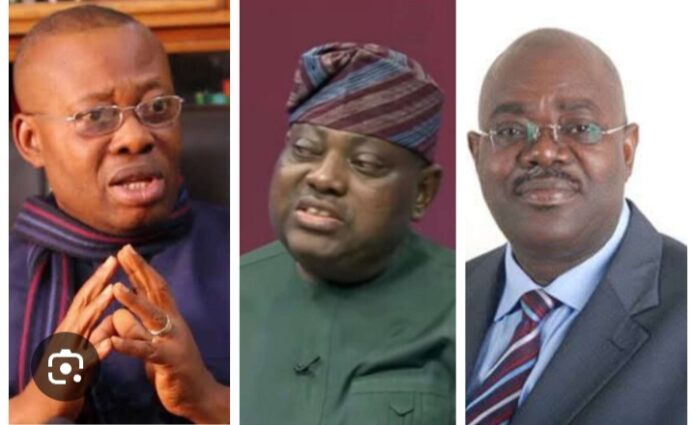
2027: Ubani, Bello, Oroh, others seek credible elections at Business Hallmark’s virtual lecture series
Stakeholders in the nation’s socio-political space have called for the enhancement of existing electoral laws in Nigeria as the country prepares for the 2027 general election.
The stakeholders made the call on Thursday during the March 2026 edition of Business Hallmark Newspaper Virtual Lecture Series with the theme: “Nigeria 2027: The New Electoral Act, Electoral Integrity and the Future of Governance”.
The lecture, which brought together legal and public policy experts, was put together to analyze the strengths and weaknesses of the country’s current electoral framework.
While delivering his lecture, the Lead Speaker, human rights lawyer, Monday Ubani (SAN), stressed the need for credible elections in Nigeria, arguing that transparent electoral processes are essential for holding public office holders accountable.
The former Second Vice-President of the Nigerian Bar Association (NBA) said the credibility of the 2027 general elections would play a decisive role in restoring public trust in governance and boosting voter participation across the country.
According to him, elections that reflect the genuine will of the people encourage citizens to remain engaged in the democratic process.
He pointed to the election that produced Gov. Alex Otti of Abia State as an example of how transparency can drive accountability, noting that the process has kept the governor responsive to the electorate.
Ubani, however, identified rebuilding confidence in the Independent National Electoral Commission (INEC) as a major challenge. He said the electoral body must demonstrate its ability to conduct free, fair and credible polls, amid declining public trust.
He commended the returning officer in Abia’s 2023 governorship election, Prof. Nnenna Oti, for resisting pressure and ensuring that declared results reflected actual votes cast.
Ubani described her actions as a watershed moment, while raising concerns about whether other electoral officials would exhibit similar integrity.
On electoral reforms, the renowned lawyer criticised the National Assembly for not making electronic transmission of results to the INEC Results Viewing (IReV) portal compulsory in the Electoral Act 2022 (as amended).
He argued that full adoption of technology would enhance transparency and strengthen the credibility of elections.
He also expressed concern over the increasing role of the judiciary in deciding election outcomes, noting the high number of post-election litigations. He called for improvements in the electoral system to reduce dependence on the courts and ensure that outcomes are determined at the polls.
Ubani further decried delays in resolving election disputes, stating that prolonged court proceedings and the calling of numerous witnesses often complicate cases unnecessarily.
He urged political parties to field candidates with genuine public support, while calling on the government to adequately fund INEC without interfering in its operations.
He also tasked policymakers, stakeholders and the media with strengthening the electoral system, warning that democracy is at risk when citizens lose faith in elections.
In his remarks, one of the Lead Discussant, former House of Representatives member, Hon. Abdul Oroh, expressed concern over the low voter turnout recorded during the 2023 general elections, noting that fewer than 30 million of the 84 million registered voters participated.
Oroh called on Nigerians to rebuild confidence in the electoral process and urged political parties to present credible candidates.
He said improved public trust could lead to higher voter turnout in states such as Abia State in the 2027 elections.
While advocating tougher penalties for electoral offences, particularly vote buying, which he described as widespread, Oroh criticised the National Assembly for failing to mandate electronic transmission of results, calling it a missed opportunity to improve transparency.
He also emphasized the need to deepen democracy, urging INEC and other stakeholders to ensure that election outcomes are decided at polling units rather than in courtrooms.
Offering a different view, the 2nd Lead Discussant, Pro-Chancellor and Chairman of the Governing Council of Obafemi Awolowo University, Hon. Adejare Bello, backed the National Assembly’s decision to allow both manual and electronic transmission of results.
Adejare noted that relying solely on electronic transmission could be problematic due to network challenges in some areas. He disagreed with those kicking against the provision that allows the manual transmission of results in areas where electronic transmission of results fails.
“What is the remedy for the millions of voters whose legally casted votes would be affected in the event of a network glitch, if we insist only on electronic transmission of results”, the former Osun speaker demanded.
He commended the 10th National Assembly for introducing reforms such as digital voter registration and encouraged Nigerians to actively participate in the 2027 elections.
He added that ongoing reforms under President Bola Tinubu could further enhance the credibility of future elections.
Other speakers at the lecture highlighted key provisions of the Electoral Act, emphasizing the importance of transparency, accountability, and adherence to due process in conducting free and fair elections.
They also highlighted the role of electoral bodies and the judiciary in Nigeria’s elections, stressing that their independence is critical to ensuring credible outcomes.
A former bank MD, Emma Nwosu, raised concerns over recurring challenges such as electoral malpractice, voter suppression, and institutional weaknesses that could undermine public trust if not properly addressed.
Nwosu particularly kicked against the adoption of manual transfer of election results as backup by lawmakers, warning that scrupulous politicians will manipulate the provision.
The participants thanked the management of Business Hallmark for organising the lecture, saying the discussion is timely, as Nigeria continues to grapple with electoral credibility issues from previous elections.
While noting that such lectures have become important platforms for public education, enabling broader participation in national conversations about democracy and governance, they advised citizens, policymakers, and stakeholders to take proactive steps in strengthening democratic institutions before the next election cycle.