2027: Nigeria needs ideas, not coalition — Adewole Adebayo
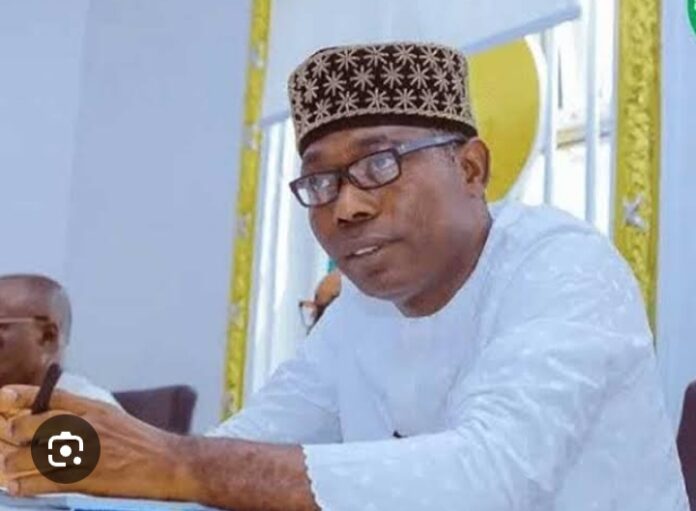
As political realignments gather pace ahead of the 2027 general election, former Social Democratic Party (SDP) presidential candidate, Adewole Adebayo, has dismissed the wave of coalition talks among opposition figures, insisting that Nigeria’s problems require a fundamental shift in ideas and governance philosophy, not just alliances among familiar political actors. In this interview, he argues that the focus should move away from elite negotiations and power blocs to issue-based politics rooted in the needs and aspirations of ordinary Nigerians. Henry Nnaemeka reports.
What is your reaction to the fact that the SDP is not part of the coalition moves around the ADC to challenge the APC in 2027?
That is not relevant to me. What matters is that my political position aligns with the aspirations of Nigerians, the Constitution, and the vision of our founding fathers.
If 36 governors decide to move to one party, it is not my concern. I have been in the SDP since 1991, and I am not going anywhere. Others may choose a more itinerant political lifestyle—moving from one platform to another—but that is their choice.
There is also a lot of hypocrisy in how these movements are discussed. Some people criticise defections to the APC, yet celebrate when lawmakers cross over to their own side. That is not my line of thinking.
The real issue is the quality of those moving. Are they moving with the people? What is their performance record? Across Nigeria, you will find that many of these incumbents—regardless of party—have failed to deliver on security, employment, accountability, and governance. There is hardly any state without serious governance challenges.
So, if such individuals all migrate to one party, it does not concern me. It does not change the fundamental issues.
As for the question of who constitutes the “main opposition,” we are not operating a parliamentary system. What some parties are doing—trying to mirror the APC by assembling political heavyweights—is still part of the same politics of incumbency.
We have consistently maintained in the SDP that many of these parties share the same roots. The APC emerged from the PDP, and others are offshoots of the same political culture. What you see is a relay of failure—power moving from one group to another without real change.
Some of these actors are simply trying to reposition themselves because they are no longer favoured within the current power structure. Their rhetoric is often personality-driven, not principle-based.
That is not our approach. Our focus in the SDP is ideological—realigning governance with the Constitution, particularly Chapter Two, which deals with fundamental objectives and directive principles of state policy, accountability, and social investment.
We are not interested in opportunistic alliances or personality-driven politics. Our position is clear: the current system needs a reset, not a rearrangement of the same actors.
What kind of politics are you rejecting?
I reject the politics of hypocrisy. Take, for example, individuals who spent decades in positions of power—20 years in the Senate, including time as Senate President—without making meaningful contributions to electoral reform, transparency, or democratic deepening. They had opportunities, including during the consideration of key reform reports, but failed to act.
Now that they are out of power, they suddenly present themselves as champions of reform. That is the kind of politics we reject.
The same applies to those who held positions such as Attorney-General or Minister of Justice during periods marked by weak rule of law, corruption, and constitutional breaches, but now speak loudly about accountability.
Our position is that politics must be based on principle, not convenience. It cannot be about jumping from one platform to another depending on what is politically advantageous at the moment.
In the SDP, we are not trying to attract defecting lawmakers or benefit from a broken incumbency system. Instead, we support initiatives like the “FixNASS” movement, which calls for a wholesale renewal of the National Assembly.
If you look at Nigeria’s legislative history since 1999, trillions have been appropriated with little to show in terms of development. The country needs a new National Assembly—one with minimal return of incumbents.
We are asking Nigerians to seize the opportunity to elect patriotic, competent, and independent-minded representatives—not recycle the same political actors.
That is the only way to break the cycle of underperformance, blame-shifting, and repeated failure. What Nigeria needs is a fundamental shift in its politics—not a continuation of the same patterns under different alignments.
Why should Nigerians trust a smaller party over larger parties with more visibility?
Your question reflects some of the deeper problems in Nigeria’s political space. First, we don’t really have a coherent political class. What we have is a mix of actors shaped by the transition from military rule in 1999—people who are largely driven by access to power rather than commitment to ideology or public service.
Many politicians today are not loyal to any party; they are simply desperate to be in government. That is why you see constant movement across parties.
Secondly, the APC itself is not the root problem but a symptom. It emerged as a coalition of politicians who had little in common ideologically but were united by the desire to stop the PDP from retaining power. There was no real philosophical alignment—just political convenience. That is why many of the promises made at formation could not be fulfilled.
What Nigeria needs now is not the recycling of the same political actors from one platform to another. We need to reopen the political space to fresh ideas and credible individuals—people with integrity, professional backgrounds, and a track record of leadership.
That is why I joined politics actively after years of commentary. We need citizens—people of character and competence—to step forward. The current political class, as it stands, has very little to offer in terms of real transformation.
Many Nigerians struggle to differentiate between parties like the SDP, APC, and ADC. Do you think ideological differences are clear enough?
Anyone who thinks Nigerians cannot tell the difference underestimates them. Nigerians are not confused—they are simply tired of politicians who avoid the real issues.
People are not interested in personal attacks, ethnicity, or religious rhetoric. They want solutions to insecurity, poverty, unemployment, healthcare, and education. These are the issues they pray about every day—in churches and mosques.
What matters to Nigerians is simple: Can I go home safely? Will my children be secure? Can I access good healthcare, education, and housing?
In the SDP, we focus on these real concerns. We are clear about our positions—credible elections, electronic transmission of results, an independent electoral body, and zero tolerance for violence or manipulation.
Once elections become truly credible, you will begin to see a clear shift in political outcomes. The SDP is not a new party; we have a long-term vision to build political consciousness among Nigerians and align governance with national objectives.
Party primaries are increasingly determined by consensus or direct selection. What is your view?
My position is that the current administration, led by Bola Ahmed Tinubu, missed an opportunity to strengthen the electoral framework. The Electoral Act could have been a legacy reform, but it was not handled as effectively as it should have been.
That said, democracy does not rise or fall on one individual. Nigeria has conducted elections under colonial and military rule. Even under difficult conditions, the people have found ways to express their will.
So, while there may be imperfections in the law, the ultimate determinant is the Nigerian people. If citizens are engaged, determined, and participatory, they can overcome institutional obstacles.
The timetable for elections is not the main issue. The real issue is whether Nigerians are willing to participate actively. If people become indifferent or disengaged, democracy suffers. But if they mobilise, no amount of manipulation can override their collective will.
Peter Obi recently expressed uncertainty about securing a presidential ticket within the ADC. Does this not reflect poor organisation within opposition parties?
I don’t think democracy should be reduced to the movement or ambitions of individuals. It is not about one person moving from one party to another.
All these names being mentioned are not the real issue. The real issue is the condition of Nigeria and the direction the country should take.
But he performed strongly in the 2023 election. Doesn’t that make him relevant?
No one can claim overwhelming success when the overall mandate remains limited. Even the current president secured victory with a relatively narrow margin.
But he is still the president today.
Yes, and that is precisely why governance must be more inclusive. Leadership requires carrying people along.
That sounds like a personal opinion.
Of course, you invited me to share my views. But beyond opinion, we must look at outcomes—economic performance, employment, security. These are objective indicators.
The implication is that the next president must have a deeper connection with Nigerians and a broader mandate. Personally, I would want to be elected with at least 40 million votes—not a narrow base.
Do you have what it takes to achieve that?
You will have what it takes if you represent what Nigerians truly want.
And do you believe you represent that?
Yes, I believe I understand the issues Nigerians face. But I am not interested in grabbing power. I want a process that is participatory, transparent, and inclusive. That is why we emphasise electoral reforms—to encourage high voter turnout. Ideally, we should be seeing participation levels of 70 to 75 per cent. A government elected on that basis will have the legitimacy needed to tackle Nigeria’s challenges.
The task ahead requires Nigerians themselves to be part of the solution. People must believe in the system for it to work. That is why the focus should not be on personalities but on issues—security, economy, justice, and national development.
Will you contest in 2027?
By God’s grace, I have informed my party of my intention to seek the presidential ticket of the SDP in 2027, and I intend to win for the Nigerian people.
But beyond personal ambition, 2027 should be seen as a turning point. Nigeria cannot continue on its current path—rising insecurity, poverty, unemployment, inflation, failing infrastructure, and weak public services.
We need a fundamental shift—one that ensures resources are used to develop the country, opportunities are distributed fairly, and citizens regain confidence in leadership.
At what point does criticism become alarmism that could weaken public confidence?
The first responsibility lies with the government. It has the primary duty to inspire confidence, unite the country, and deliver results.
When a government falls short, it is the responsibility of the opposition to point it out—not to weaken the country, but to strengthen it by encouraging correction.
This administration is about three years in. What evidence supports your claim that it is underperforming?
If you assess performance over time, results matter. Governance is not judged by promises but by outcomes.
At this stage in the cycle, there should be measurable improvements. If those improvements are not visible, it is fair to raise concerns and demand better performance.
Are you suggesting that frequent foreign trips by the president amount to leadership failure?
Not necessarily. However, leadership requires presence and responsiveness.
When travel appears frequent and poorly timed, especially during critical domestic situations, it can create the perception of disconnect. Effective governance requires strong systems that function even in the leader’s absence.
Does the SDP have the financial capacity to compete in 2027?
We do not believe in money politics. We believe in people-driven politics.
Where you have genuine support from the people, resources will follow—through legitimate contributions. Our party also places limits on individual donations to prevent domination by a few wealthy interests.
Our focus is on credibility. We do not engage in vote-buying, manipulation, or electoral malpractice. We want a system free of violence and intimidation, where Nigerians can participate freely.
Ultimately, our strength lies not in money, but in trust, participation, and the collective will of the people.