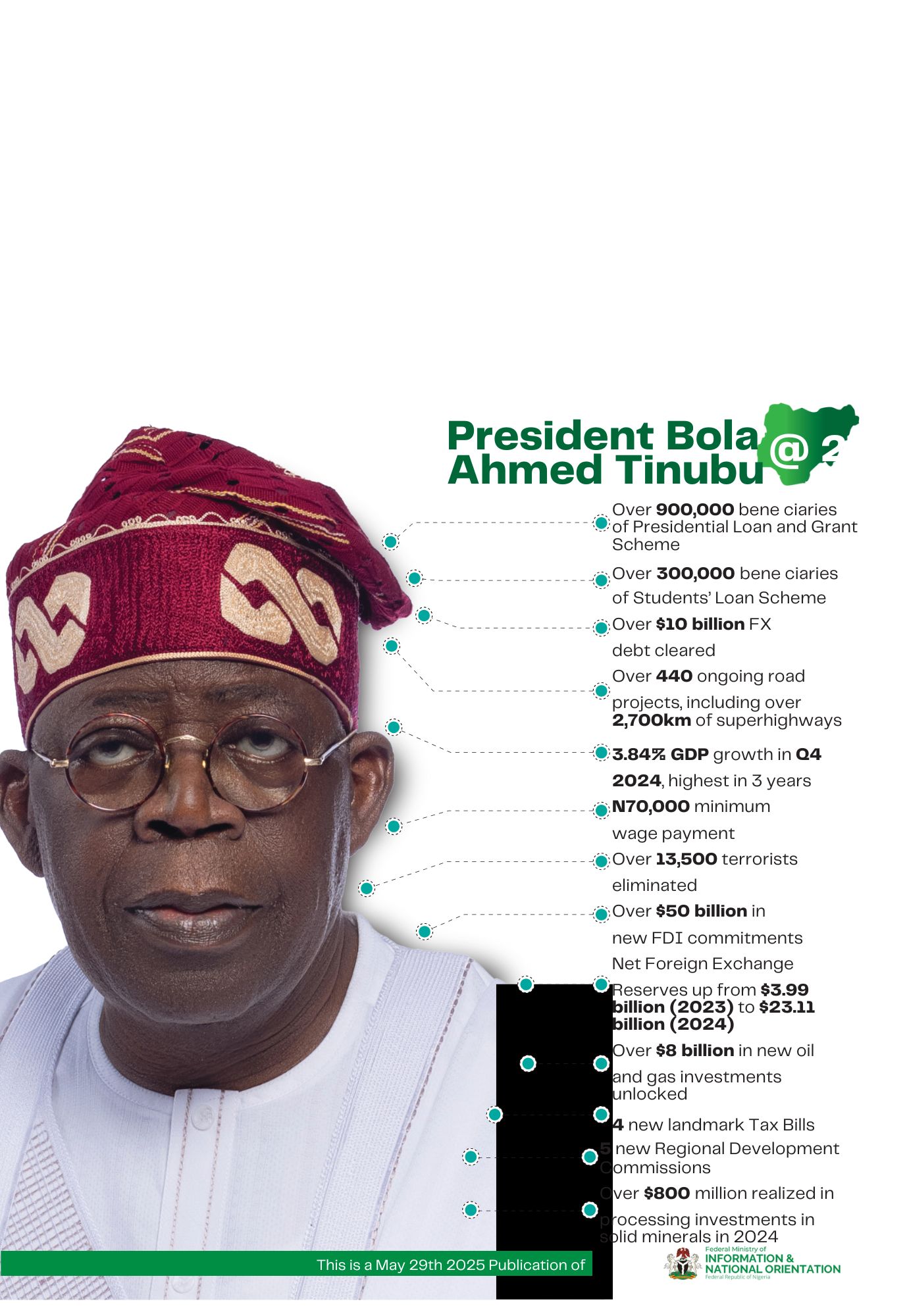
2027 elections: Nigerian politicians are not preparing for elections in 2027. They are heading for a war where innocent people, sadly, will be collateral damage. Two things will happen. Disillusioned and wary Nigerians, having come to the inevitable conclusion that democracy in Nigeria is a lost cause, a hollow ritual without meaning, may decide to stay home on Election Day, thereby exacerbating the voter apathy crisis, which is already at an all-time low. When that happens, Tinubu and APC will have their way even when democracy becomes the will of the minority – an absurdity. On the other hand, opposition politicians, convinced that no one has the monopoly of violence, may decide to dare the political bullies by fighting fire with fire. Whichever way, Nigeria will be worse for it, just because Tinubu has decided to hollow out the same democracy that has afforded him all.
By Ikechukwu Amaechi
I am gravely worried about the 2027 elections. Other well-meaning Nigerians, who want the best for the country, are worried too. And this is not about being an alarmist. No! It is realism. The augury is too stark that one needs not be endowed with the gift of clairvoyance to read the handwriting on the wall.
Whenever politicians hollow out democracy, as Tinubu is doing right now, it ends badly. It happened in the past. And unless these political merchants are reined in, the destination is already foretold.
Democracy operates on the basic assumptions that legitimate government authority stems from the people in an environment that guarantees political equality, protection of individual rights, credible elections, rule of law, and an informed, active citizenry. Without these fundamental principles, a governance system can be anything but democratic. In other words, the idea that government operates with the consent of the governed, and power can be transferred peacefully in credible elections held on multi-party paradigm, and where each of the three arms of government acts as a check on the other in order to create the necessary balances, are the very essence of democracy. They are the guardrails, without which democracy flounders. When they are lacking, rule of law retreats and governance becomes cultic, resulting in fundamental human rights taking a hit.
The violation of these basic principles led to the collapse of the First Republic and the tragic aftermath. In particular, the unconscionable falsification of election results in the old Western Region in 1965 led to violent protests dubbed Operation Wetie where many victims were killed by necklacing, a method of execution carried out by forcing a tyre drenched with gasoline around a victim’s neck, and setting it on fire. The attempt by the then ruling National Party of Nigeria (NPN) to expand its hegemony without the people’s consent also led to the collapse of the Second Republic on December 31, 1983.
So, why are Nigerian politicians refusing to learn from the past? Why are they making the same mistakes that left the country in the lurch for so long? Why is it that as we inch closer to the 2027 elections, it is all déjà vu? Long before the 2027 elections, the APC-led government has methodically dismantled most, if not all, the guardrails of democracy in Nigeria. The idea of a limited government where constitutional checks and balances exist to limit the power of government was guillotined. Under Tinubu’s watch, there is only one arm of government – executive. The others – legislature and judiciary – have been reduced to mere appendages of the presidency.
Consequently, we have a president who is above the law, and government officials who are no longer accountable for their actions. Yet, what is unfolding before us is even more troubling. Even when Tinubu has all institutions of state – Independent National Electoral Commission (INEC), police, military and paramilitary agencies, the judiciary and, indeed, the key to the national treasury – that will make his reelection almost a fait accompli, he is not letting up on the destabilization of opposition parties.
Today, the PDP, the same party which former chairman, late Prince Vincent Ogbulafor, once predicted would rule for 60 years is in death throes, courtesy of the machinations of the ruling party. When Ogbulafor made that prediction in 2008, PDP, touted then as the largest party in Africa, was controlling 28 states, the National Assembly, and the presidency. Despite the 2015 political shellacking, the party still held sway in 13 states – Bauchi, Bayelsa, Adamawa, Akwa Ibom, Delta, Edo, Oyo, Plateau, Rivers, Taraba, Zamfara, Taraba and Osun – after the 2023 polls. But on the eve of the 2027 elections, the same party is left with two governors – Seyi Makinde of Oyo State and Bala Mohammed of Bauchi State. Except for Osun State Governor, Ademola Adeleke, who defected from the PDP to Accord Party, APC is the primary beneficiary of the defections. Thus, the ruling party that had about 21 governors in 2023, today has 31 governors, 82 senators and 242 out of 360 members of the House of Representatives, all pledging allegiance to the Tinubu-orchestrated political hegemony.
But that is only one side of the toxic political coin. The other side is that with the state sponsored leadership crisis wracking the main opposition parties, they may not be able to present candidates for the 2027 elections. So, technically, the PDP as at today is dead and so is the Rabi’u Musa Kwankwaso-led New Nigeria People’s Party (NNPP). The Labour Party has been given a breather because its 2023 presidential candidate, Mr. Peter Obi, left. It is instructive that the judiciary finally got the courage to give a ruling on the leadership crisis rocking the party shortly after Obi’s exit.
READ ALSO: Attack on Peter Obi: If I were Tinubu
With 31 state governors and comfortable majority in the two chambers of the National Assembly, any other president will go to sleep, if indeed democracy is a game of numbers. But not Tinubu with his scorched earth brand of politics. He is aware that in a free and fair election, where the people’s votes count, the statistics which the APC is parading as evidence of acceptance tell a lie. So, the president and his party have resorted to acts of brigandage aimed at ensuring that the African Democratic Congress (ADC), the only political party with a modicum of viability, neither campaigns nor carries out its civic obligations including membership registration drive.
In August 2025, chaos erupted at the official inauguration of a transition committee jointly set up by opposition political parties in Kaduna State when hoodlums armed with dangerous weapons disrupted the proceedings. The committee brought together members of an APC faction opposed to the state leadership alongside the PDP, NNPP, LP, ADC and Social Democratic Party (SDP).
A month later, it was the turn of Lagos State when political thugs invaded a rally organised by the ADC inflicting injuries on their victims. The rally, which held at the Lion Field in Alimosho Local Council to welcome Peter Obi and Gbadebo Rhodes-Vivour, the Labour Party 2023 governorship candidate in Lagos, was also aimed at mobilising youths for the 2027 elections. In February 2026, Obi and other leaders of the ADC escaped death by the whiskers in Edo State when they welcomed Olumide Akpata into the party’s fold. Last week, gunmen attacked the convoy of Rotimi Amaechi, former governor of Rivers State, when he visited his hometown of Ubima to register as a member of the ADC. The political thugs had earlier set the party’s office in Ubima ablaze. During the recently held Abuja AMAC election, ADC agent, Musa Abubakar, was brutally murdered while trying to defend his party’s vote at Gwagwa.
Interestingly, in all these cases, except in Edo where the DSS claims to have arrested one suspect linked to the attack on Peter Obi and other ADC leaders, these apparently state sponsored miscreants are walking about freely. No accountability.
And perhaps, as a counterforce to APC’s deployment of violence in castrating opposition political parties, violence erupted across parts of Oyo State last week as political thugs launched coordinated attacks on local government congresses organised by a faction of the PDP loyal to Nyesom Wike, Federal Capital Territory Minister, leaving several party members injured and property destroyed. All fingers of blame point to the Makinde-led faction of the party. Even the residence of a former deputy governor, Hazeem Gbolarumi, in Ibadan, was not spared.
I am worried because these are early days. In the coming weeks and months, governors will decide who campaigns and eventually votes in their states. That is why Monday Okpebhelo will confidently threaten resignation if he fails to deliver Tinubu, even when he has only one vote. In 2027, party affiliation will determine ‘voter eligibility’ in some quarters. Wike proved in 2023 that such anti-democratic antics are possible without consequences. He owes his current political standing with Tinubu to that brazen impunity. As a self-acclaimed ‘Mr Fix It,’ he has been mandated by his principal to do an encore in 2027, the reason he is above the law – a political untouchable.
Nigerian politicians are not preparing for elections in 2027. They are heading for a war where innocent people, sadly, will be collateral damage. Two things will happen. Disillusioned and wary Nigerians, having come to the inevitable conclusion that democracy in Nigeria is a lost cause, a hollow ritual without meaning, may decide to stay home on Election Day, thereby exacerbating the voter apathy crisis, which is already at an all-time low. When that happens, Tinubu and APC will have their way even when democracy becomes the will of the minority – an absurdity. On the other hand, opposition politicians, convinced that no one has the monopoly of violence, may decide to dare the political bullies by fighting fire with fire.
Whichever way, Nigeria will be worse for it, just because Tinubu has decided to hollow out the same democracy that has afforded him all.